
Last updated September 20, 2026
Free on-site gate assessment - hinges, posts, and your LiftMaster or Nice gate operator checked before anything is quoted
The assessment is free and the quote is the invoice.

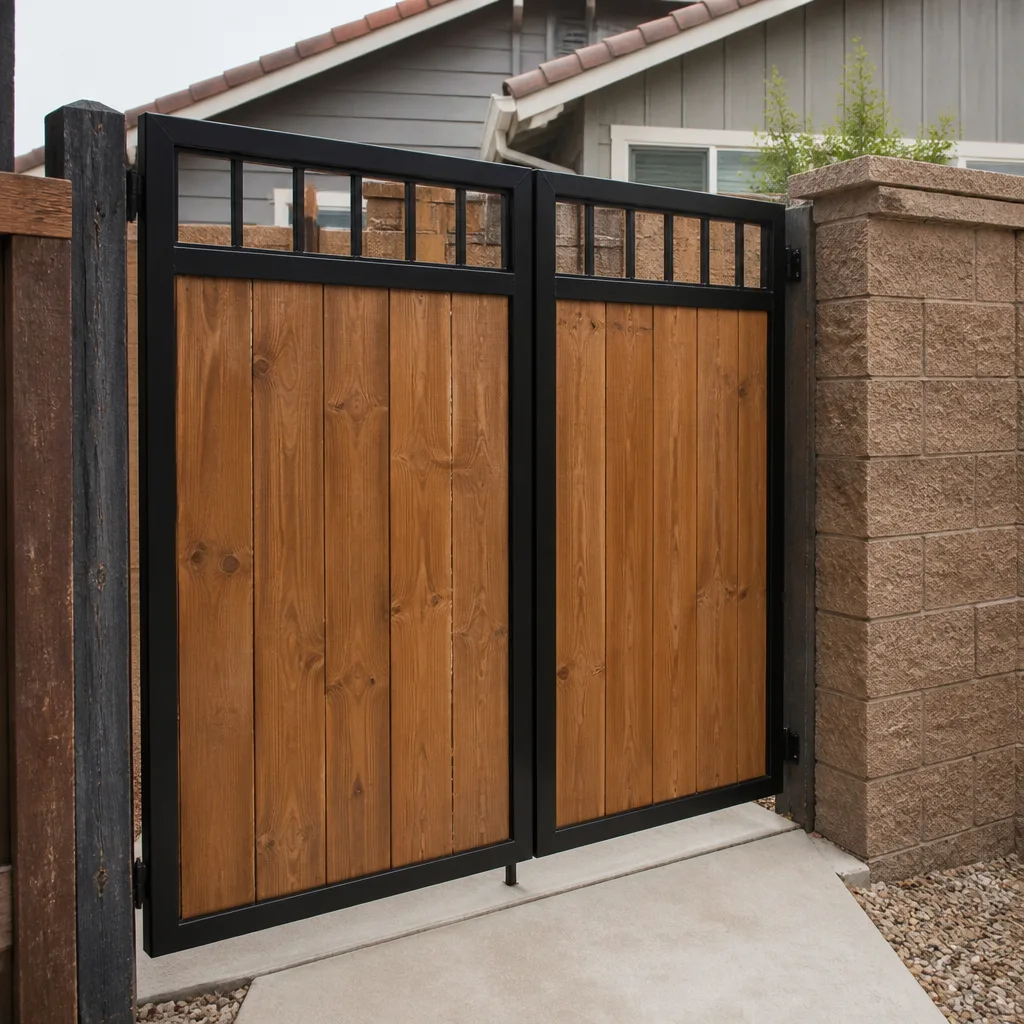


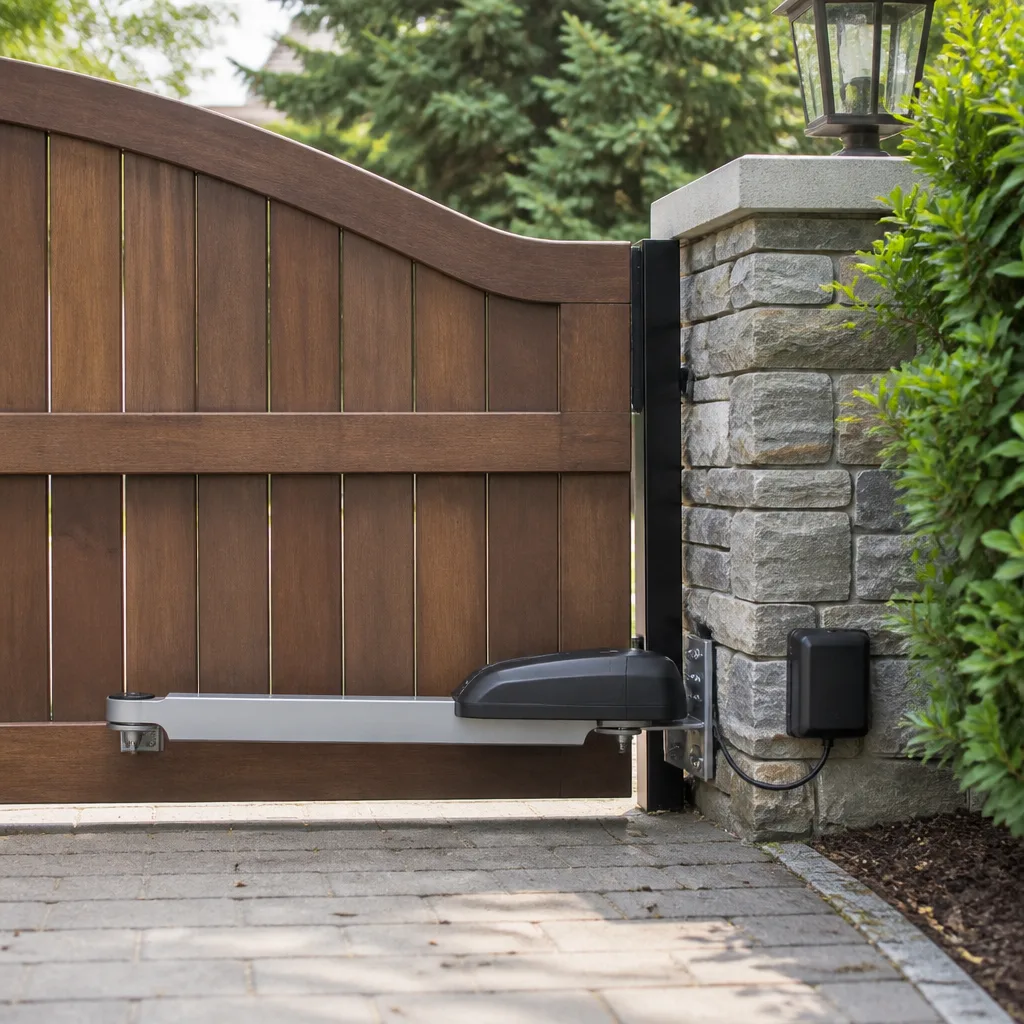
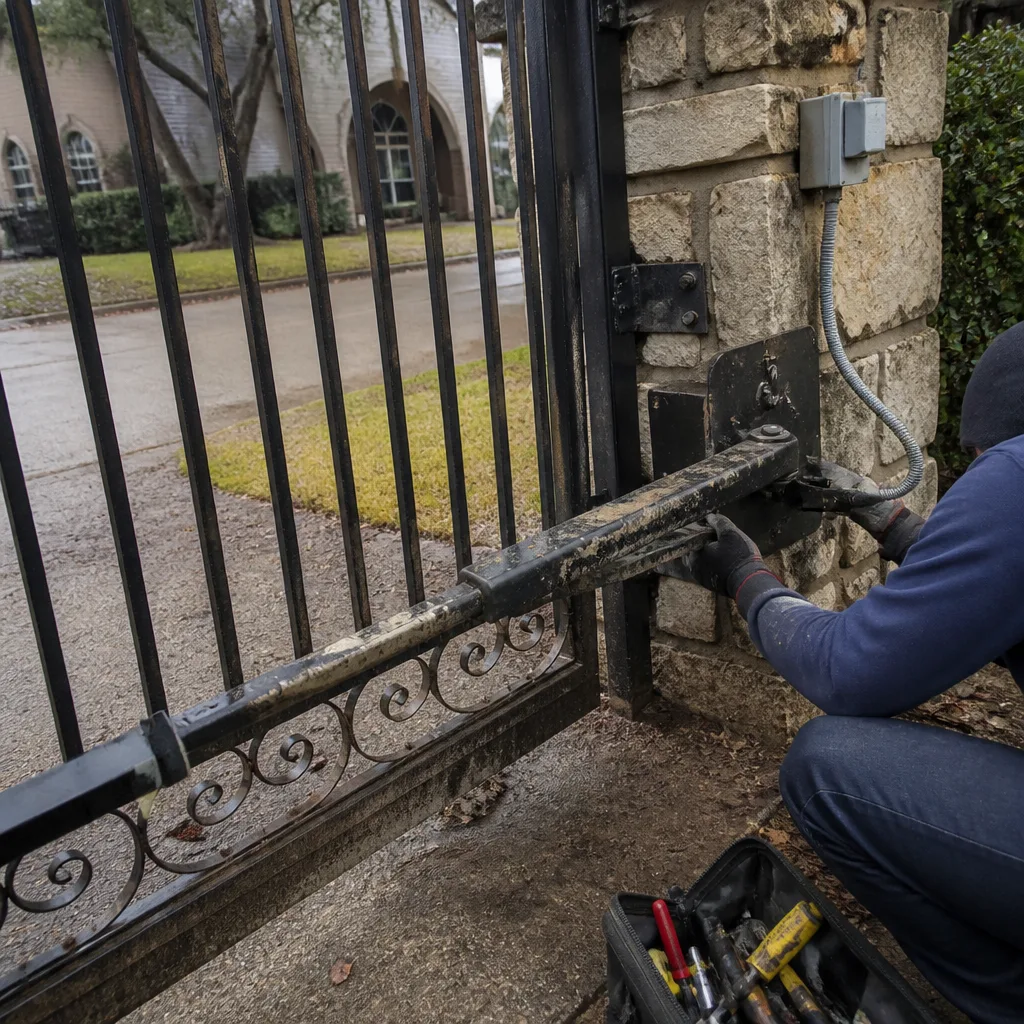 Before
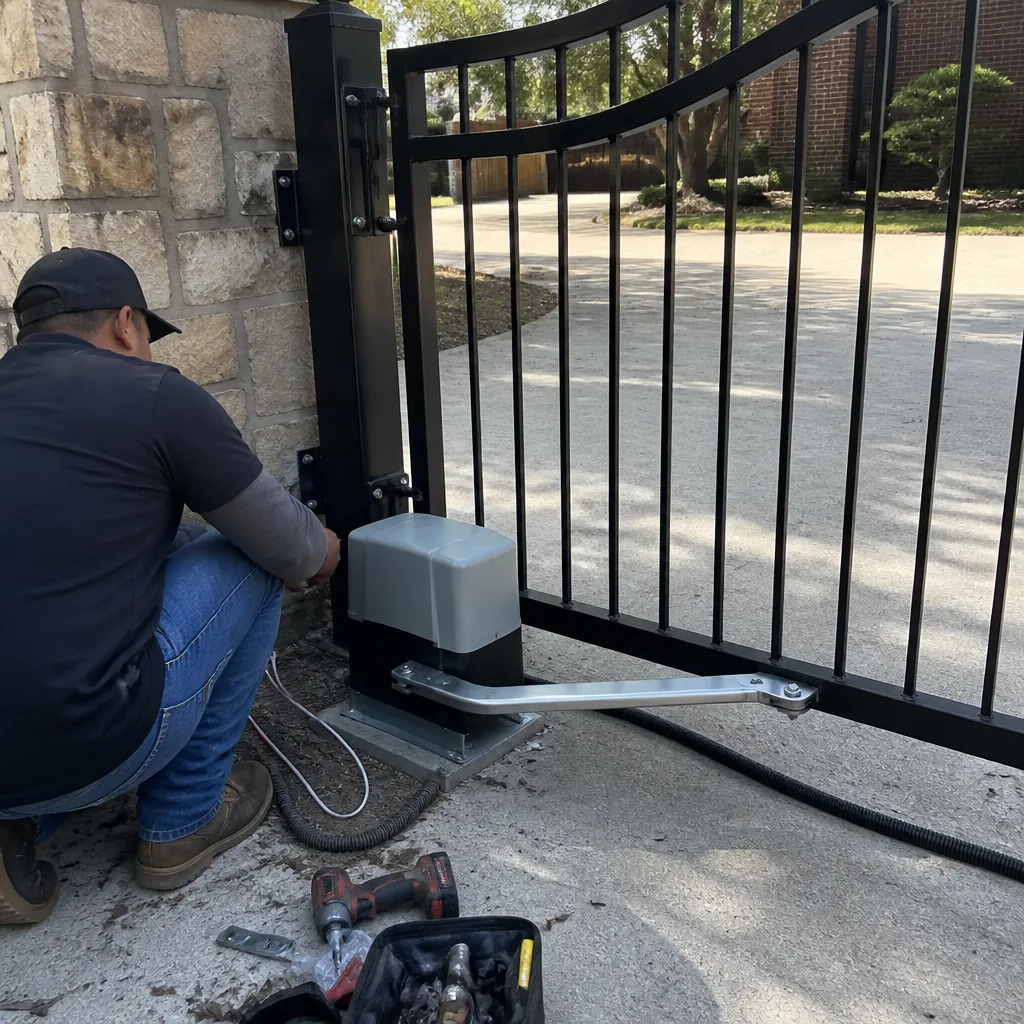 After
After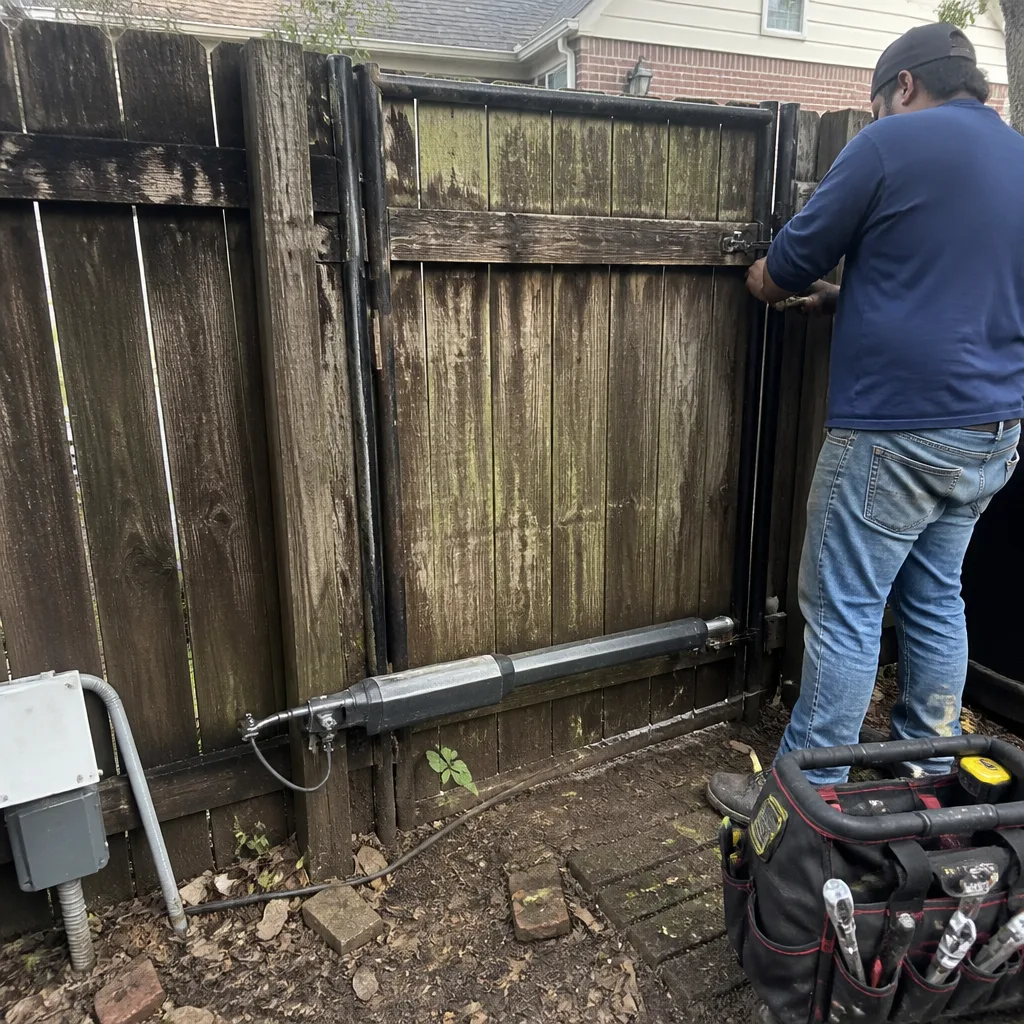 Before
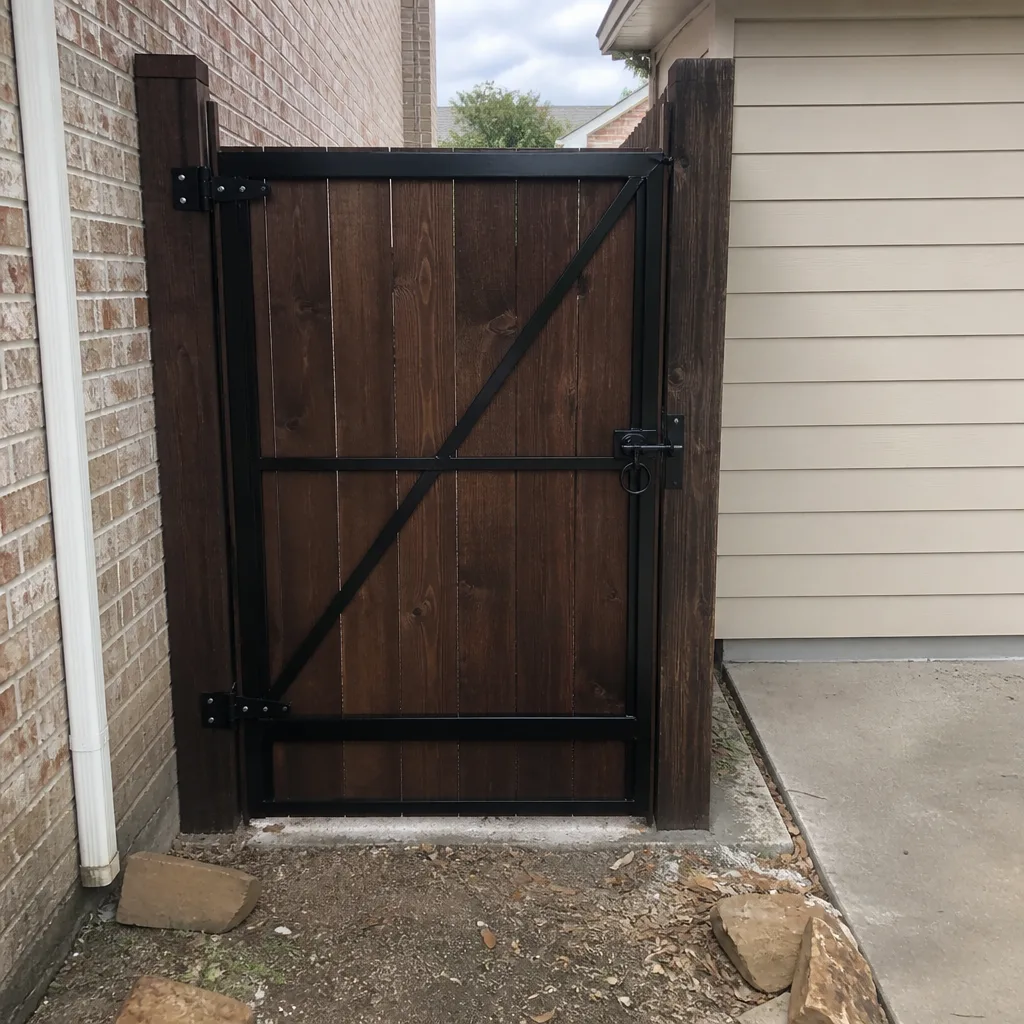 After
After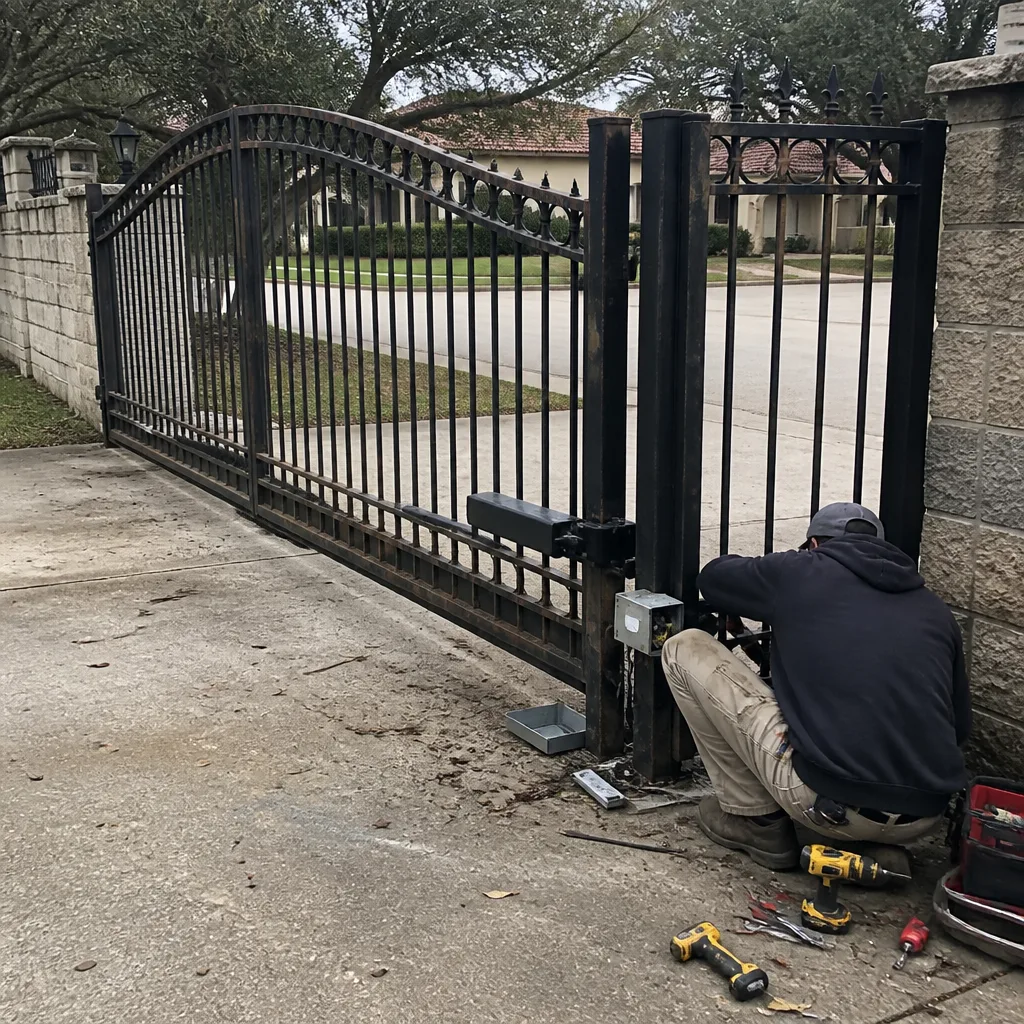 Before
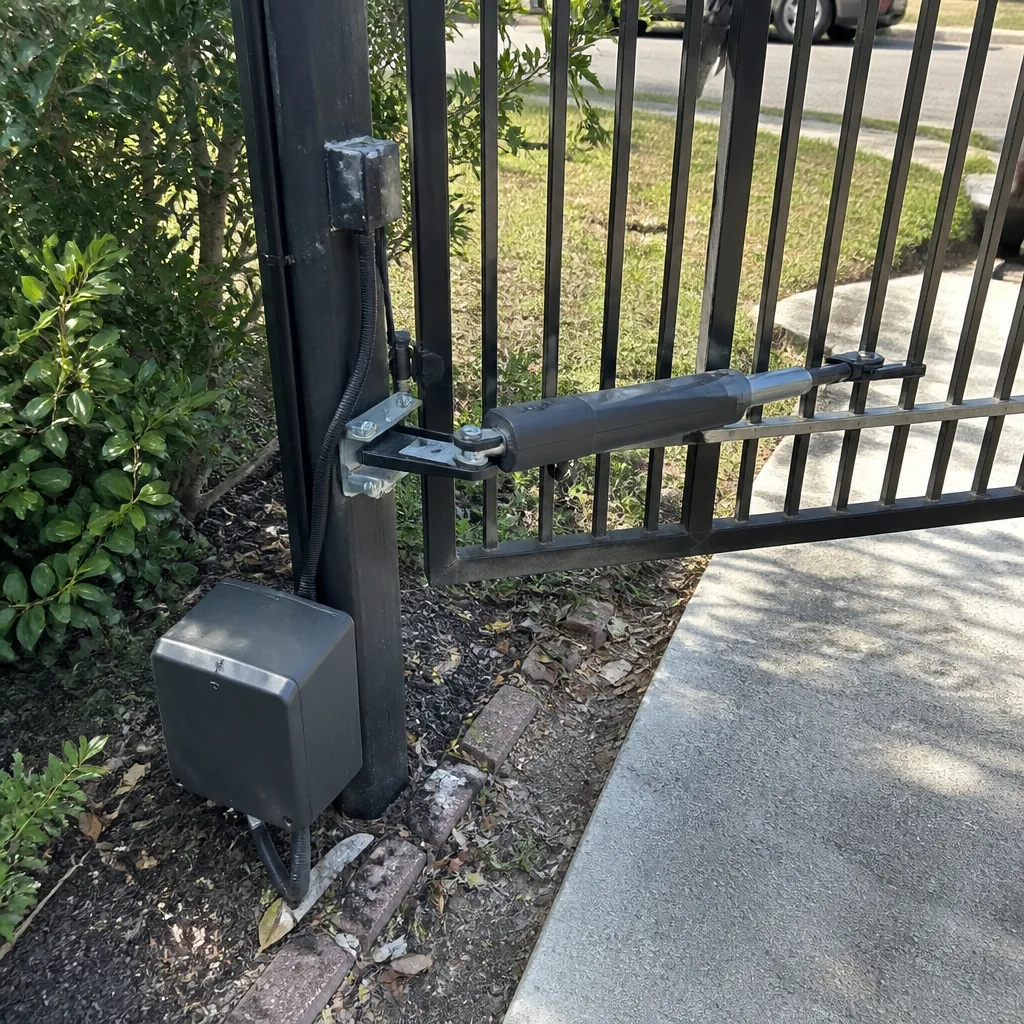 After
AfterGate Repair Permits, Codes & Inspections in TX: What You Need to Know
Homeowners who skip the permit question on gate work aren’t usually breaking the law. But the ones who needed a permit and didn’t get one often find out during a home sale inspection, when it’s the worst possible time to fix it. Most gate repairs in Texas need no permit at all. A new circuit board, a spring replacement, a welded hinge: none of that touches the permitting system. The trouble starts when a repair crosses into an improvement, and that line is drawn differently in Fort Bend County than almost anywhere else in Texas. Missouri City in particular layers its own rules on top of the county’s, and the difference between “repair” and “improvement” can mean a four-figure correction bill three years from now. This guide maps out where the line sits, what it costs to stay on the right side of it, and which neighborhoods carry extra HOA rules that city code never mentions.
Quick Answer
Most gate repairs in Texas, including motor swaps, hinge welding, and circuit board replacement, do not require a permit. However, installing a new gate operator where none existed before, replacing a structural gate post, or moving a gate’s footprint closer to a property line often does require a permit, and Fort Bend County enforces this through its residential improvement rules. HOA approval in Missouri City is frequently stricter than city code, and skipping it can cloud a title and complicate a homeowners insurance claim.
Table of Contents
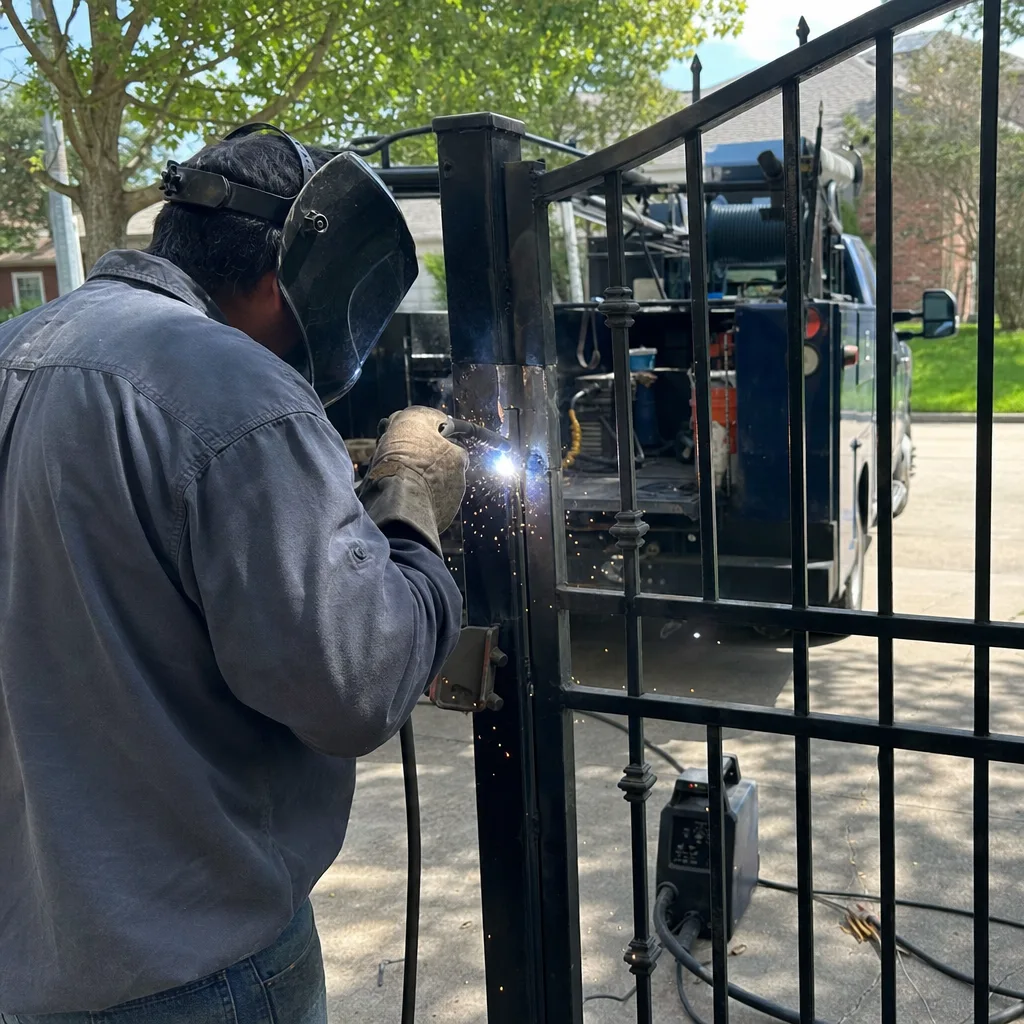
- Where Texas Draws the Line: Repair vs. Improvement
- Fort Bend County and Missouri City: The Specific Rules That Apply
- The HOA Overlay: Why Missouri City Neighborhoods Are Their Own Permitting Layer
- What an Unpermitted Gate Operator Looks Like on a Title Search
- Texas Fence Line Setbacks and What They Mean for Gate Posts
- How to Pull a Permit Yourself in Missouri City (and When That’s a Red Flag)
- What Inspectors Actually Check on Gate Work
- Common Mistakes to Avoid
- When to Call a Professional
- Frequently Asked Questions
- The Bottom Line
BeforeAfterWhere Texas Draws the Line: Repair vs. Improvement
Texas building code doesn’t have a single statute that says “gate permits required here.” Instead, the state delegates to counties and municipalities, and the working definition that governs most gate work is the distinction between repair and improvement. A repair restores something to its original function. An improvement adds something new, changes a structure’s footprint, or alters its load-bearing elements. Under that definition, replacing a LiftMaster motor on an existing operator arm is a repair. Installing an operator on a gate that has always been manually opened is an improvement, because you’re adding an electrical system, a power run, and safety devices that didn’t exist before.
We see this confusion constantly in Missouri City. A homeowner replaces a rusted gate post after a storm, treats it as maintenance, and then discovers during a refinance that the county views a new post as a structural improvement that triggers the permitting requirement. The gate itself is the clue: if the post carries any part of the gate’s weight or anchors an operator arm, it’s structural. Replacing it changes the load path, which is improvement territory. Replacing a vertical picket or a hinge is repair territory. The distinction matters because Fort Bend County’s improvement rules carry permit fees, inspection requirements, and a recorded paper trail that follows the property.
For most residential work, the practical test we give homeowners is simple: did the gate function the same way before and after the work? If yes, it’s likely a repair. If the gate now opens automatically when it didn’t before, or the footprint changed, or a structural member was replaced, it’s likely an improvement. When in doubt, call the Fort Bend County Permits Department, describe the work in plain language, and ask specifically whether it falls under the county’s residential improvement permit requirement. For additional context, see our Gate Repair Warning Signs: A Missouri City Homeowner’s Reference Guide. Don’t ask “do I need a permit for gate repair” because that phrasing invites a “no.” Ask “does replacing a structural gate post trigger the residential improvement permit requirement” and you’ll get a useful answer.
Fort Bend County and Missouri City: The Specific Rules That Apply
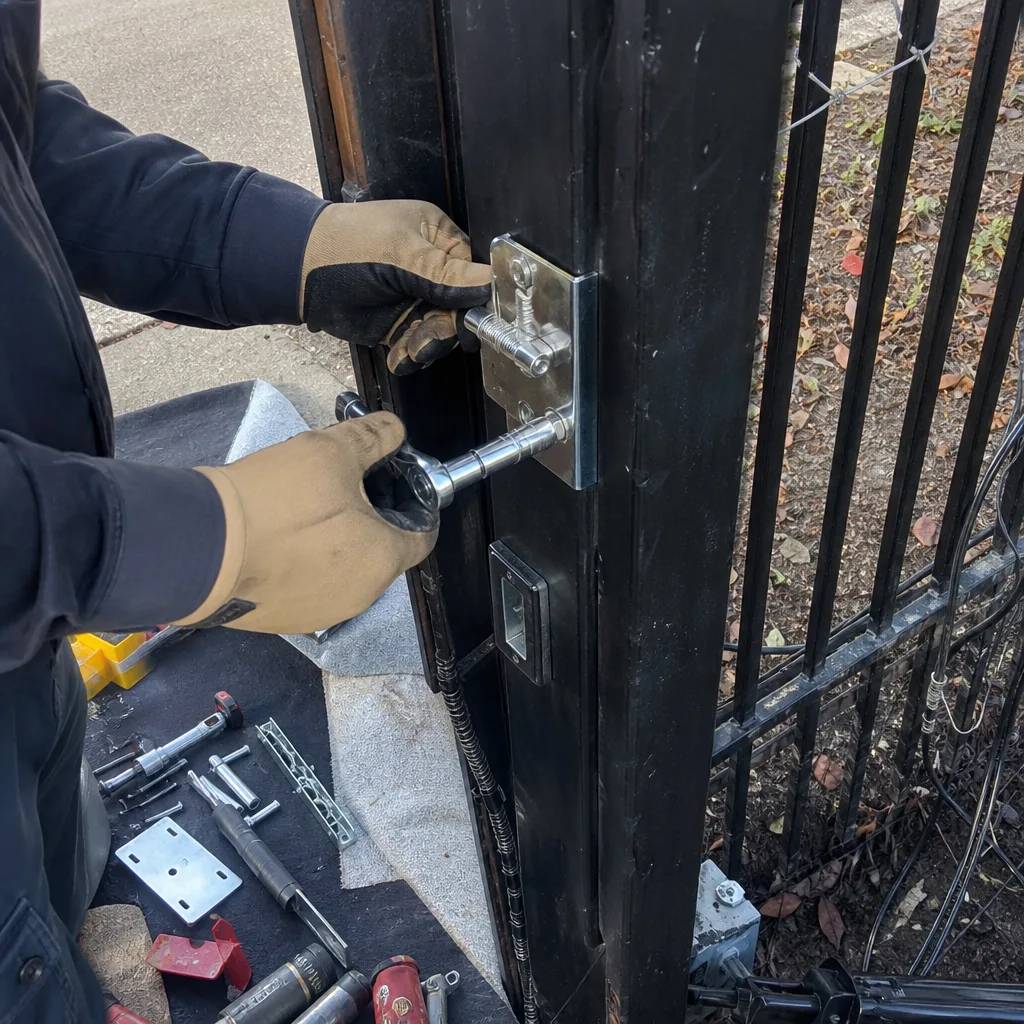
Fort Bend County is one of the fastest-growing counties in Texas, and its permitting framework reflects a jurisdiction that has spent two decades trying to keep residential growth orderly. The county issues permits through its Permits Department, and while every city within the county has its own overlay, Missouri City has its own building inspection division that handles permits for work inside city limits. What trips up gate work specifically is that Fort Bend County treats driveway gates attached to fence lines as fence improvements, not as standalone structures. That means the rules that apply to fence replacement, fence height, and fence setback also apply to gate posts and gate frames when they’re attached to or adjacent to a fence.
The threshold where gate work crosses into permitted improvement in Fort Bend County includes: installing a new gate operator with a new electrical run, replacing a structural post or footer, relocating a gate’s footprint, and building a new gate where none existed. The permit for this work typically requires a site plan sketch, a description of the work, and in some cases an electrical inspection if the operator is hardwired rather than plug-in. Missouri City’s inspection division adds a requirement that the permit be posted visibly during the work, which is rare among Texas cities and frequently missed by out-of-town contractors.
Fees for a residential improvement permit involving gate work in the Missouri City area generally run between $75 and $250 depending on whether electrical inspection is required and whether the work is classified as minor or major improvement. The exact fee schedule changes periodically, and Fort Bend County and Missouri City don’t always align on classification, which is why we recommend confirming the current fee at the time of the work rather than relying on a number from a three-year-old forum post. The fee is not the expensive part of this process. The expensive part is discovering the permit was needed after the work is done and the concrete is cured.
The HOA Overlay: Why Missouri City Neighborhoods Are Their Own Permitting Layer
Missouri City has one of the highest HOA participation rates of any city in the Houston metro. Entire planned communities like Sienna, Riverstone, Lake Olympia, and Quail Valley operate under deed restrictions that require architectural review of any exterior change, and gate work falls squarely within that scope. This layer exists entirely independent of city or county code. A gate repair that Fort Bend County doesn’t care about can still be a deed restriction violation if the HOA’s architectural control committee never approved it, and Missouri City HOAs have the legal authority to levy fines, place liens, or file suit over unapproved exterior changes.
The neighborhoods with the strictest gate appearance rules tend to be the newer master-planned communities. Sienna is known among local contractors for requiring specific gate material and color matching, and Riverstone’s guidelines include provisions about ornamental gate design that don’t exist anywhere in the city code. Quail Valley, as an older community, has less prescriptive rules but still requires architectural approval for structural changes. Lake Olympia sits in a middleground: the HOA is active, but its gate rules focus more on setback and height than on material or design.
The practical advice we give to any homeowner in a Missouri City HOA is to check for architectural approval language before doing any gate work that changes appearance, footprint, or operation. A motor replacement that leaves the gate looking identical rarely triggers HOA review, because there’s nothing visible to review. A new gate frame, new posts, or an added operator arm generally does. The HOA approval process in most of these communities takes two to four weeks, so plan for that before the gate comes down. Some homeowners skip the HOA approval on the theory that no one will notice, and it’s true that no one will notice for months. It’s the home sale inspection years later where the missing approval surfaces, because the title company will ask for it.
What an Unpermitted Gate Operator Looks Like on a Title Search
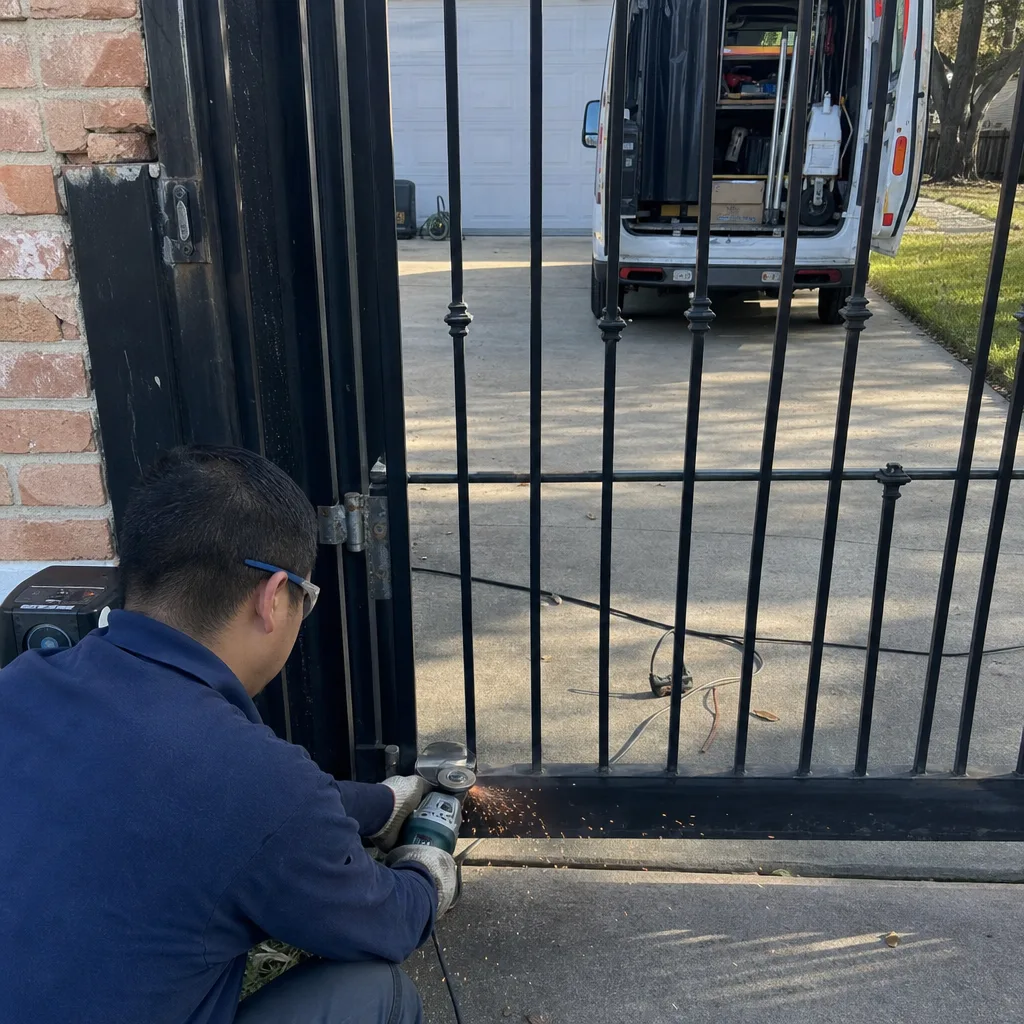
An unpermitted gate operator installation rarely becomes a problem because a city inspector drives by and spots it. It becomes a problem because the permitting process creates records, and title searches look for records. When you sell a home in Fort Bend County, the title company runs a search that includes permits pulled against the address. If the home has an automated gate operator and no corresponding electrical or improvement permit ever existed, the title company flags it as a potential unpermitted improvement. That flag doesn’t necessarily kill the sale, but it forces disclosure, and disclosure forces the question of whether the work was done to code, which often leads to a demand for an after-the-fact inspection and corrective work at the seller’s expense.
Homeowners insurance adds a second layer. Most Texas homeowners policies contain language requiring that electrical improvements be done to code and with any required permits. If a gate operator causes damage, a fire for example from a fault in an improperly run power line, and the insurer discovers the operator was installed without a required permit, the claim can be denied on the grounds that the improvement was unpermitted and not code-compliant. We’ve seen this play out in Missouri City specifically with operators that were hardwired by handymen using the wrong gauge wire. The damage was real, the permit was absent, and the denial was upheld.
The fix for an unpermitted operator is not catastrophic. After-the-fact permits exist precisely because this scenario is common, and Fort Bend County processes them routinely. The process involves pulling the permit retroactively, paying the fee plus a late penalty, and scheduling an inspection of the existing work. If the inspection finds code violations, those get corrected, and the permit closes normally. The cost is almost always higher than the original permit would have been, but it’s a fraction of what the problem costs if it surfaces during a sale with a closing date attached.
Texas Fence Line Setbacks and What They Mean for Gate Posts
Texas property law treats fences and fence-attached gates as boundary improvements, and the operative concept is the setback. A setback is the minimum distance a structure must sit from a property line, and for fences and gates on residential lots in Fort Bend County, the setback is typically zero on the sides and rear, meaning the fence can sit directly on the property line. The complication comes from the word “typically,” because zero-lot-line placement is subject to easements, utility rights-of-way, and recorded plat restrictions that vary from one Missouri City subdivision to the next.
When a gate post fails and needs replacement, the setback question is whether the replacement post sits in exactly the same spot. If it does, and the original fence was properly permitted and recorded, the replacement is almost always treated as a repair and needs no new permit. If the replacement post moves even a few inches, or if the homeowner takes the opportunity to widen the gate opening, the footprint changes, and the setback question reopens. At that point, the work is an improvement, and the county may require a survey or a site plan showing the new post location relative to the property line and any easements.
The specific trap in Fort Bend County is the utility easement. Many Missouri City lots have a recorded utility easement running along the rear or side property line, typically ten to fifteen feet wide. Fences and gates can sit inside a utility easement, but the easement holder, usually CenterPoint Energy or a water district, retains the right to remove the fence or gate if access is ever needed, and the county will not issue a permit for a new permanent structure inside an easement without the easement holder’s sign-off. If a gate post fails inside an easement and the homeowner replaces it in place, that’s a repair and no sign-off is required. If the homeowner moves it or adds a concrete footer that extends into the easement, the easement becomes a permitting obstacle. We see this most often in the older sections of Missouri City where easements from the 1970s and 1980s are underdocumented and homeowners don’t realize the easement exists until a permit application stalls.
For practical purposes, the rule we give Missouri City homeowners is this: replacing a post in the same hole is a repair, full stop. Moving a post, widening an opening, or adding a gate where a fence panel used to be is an improvement, and the setback and easement rules apply. Measure the opening before the post comes out, and put the new post back in the same place, and most of the permitting murkiness disappears.
How to Pull a Permit Yourself in Missouri City (and When That’s a Red Flag)
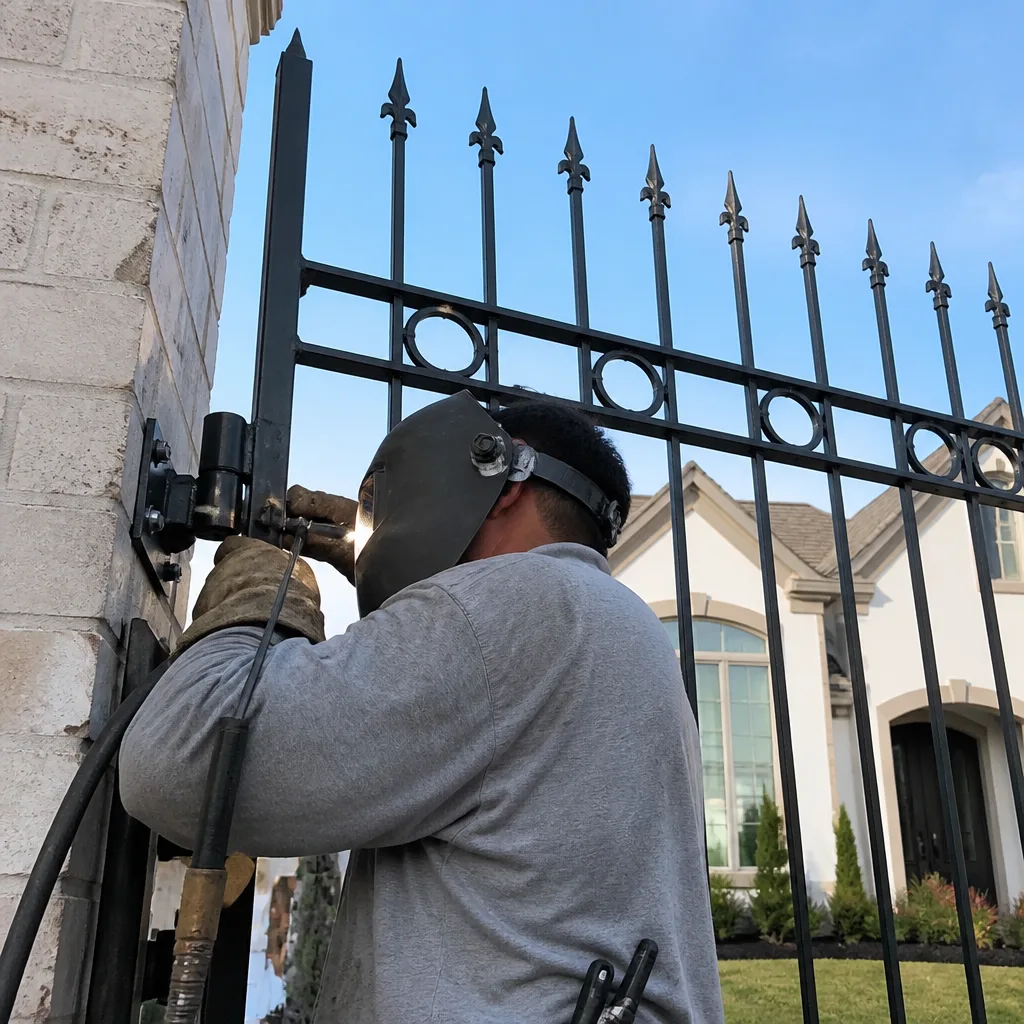
Pulling a residential improvement permit for gate work in Missouri City is not technically difficult. The process is designed for homeowners, not just contractors, and the city’s inspection division is staffed by people who answer phones and return calls. If your contractor won’t pull the permit, you can do it yourself, and the fact that you’re willing to often changes the contractor’s posture. Here are the steps:
- Confirm the work requires a permit. Call the Missouri City Building Inspection Division and describe the work in plain language. Ask specifically whether it falls under residential improvement permitting. Write down the name of the person you spoke with and the date.
- Gather the required documents. You’ll need a site plan sketch showing your lot, the property line, the location of the gate, and any easements. A simple hand-drawn sketch on graph paper is usually acceptable for residential gate work. If the work involves electrical, note the power source and the route of the electrical run.
- Complete the application. Missouri City uses a standard residential improvement permit application. Include the description of work, the estimated cost, and your contractor’s name if you’ve selected one. Be accurate on the cost estimate; it drives the permit fee.
- Pay the fee and post the permit. Once approved, the permit must be posted visibly at the job site. Missouri City enforces this more actively than most Texas cities.
- Schedule the inspection. If the work includes electrical or structural elements, the city will require a final inspection before the permit closes. Call to schedule it as soon as the work is done. The permit remains open until the inspection is completed and signed off.
If a contractor tells you the permit isn’t needed when you’ve confirmed with the city that it is, or tells you that pulling the permit is “your responsibility” and then resists providing the documentation the city requires, that’s a signal to find a different contractor. A licensed, established gate contractor in Missouri City has pulled dozens of these permits and treats the paperwork as part of the job. A contractor who avoids the permit process is often avoiding the inspection process, and the inspection process is what keeps unlicensed and substandard work from becoming your problem. This is also why we operate the way we do at Vance Gate Repair Missouri City home: a written scope and a written price before any work starts, including the permit line item if one applies, so there’s no ambiguity.
What Inspectors Actually Check on Gate Work
Most homeowners never see a gate-related inspection because most gate work doesn’t trigger one. When it does, the inspection is not mysterious, and knowing what the inspector checks makes the process predictable. For gate work that requires a Missouri City inspection, the typical scope is narrow, and the inspector is looking for specific code compliance rather than passing judgment on the gate’s appearance.
For electrical work, the inspector checks that the power run is code-compliant: the right wire gauge for the circuit length, proper burial depth if it’s underground, a GFCI-protected circuit, and a properly installed disconnect. For structural work, the inspector checks that the post footers meet the county’s minimum depth, which in Fort Bend County is generally 30 to 36 inches for a gate post depending on the soil, and that the post is set in concrete to the specified depth. The specific concern in Missouri City is expansive clay soil, which moves seasonally and will push a shallow footer out of alignment within a few years. An inspector who sees a 12-inch footer on a structural gate post will flag it, and correctly so.
For safety devices, which apply to any gate operator installation whether new or replacement in some jurisdictions, the inspector checks that the operator’s entrapment protection is present and functional. That means photo-eyes set at the correct height, a functioning reverse mechanism, and proper force settings. These are the same things we check on every Gate Motor & Opener in Missouri City service call, because an operator without working entrapment protection is dangerous enough to injure a child or a pet. The inspector is not being difficult by checking these things; the inspector is verifying that the operator won’t close on someone.
One detail Missouri City inspectors are known to check more carefully than other jurisdictions is the gate’s swing direction. Gates that swing outward over a public sidewalk or into a public right-of-way face additional restrictions in some Missouri City zoning classifications, and an inspector will flag a gate that was installed swinging the wrong way. This is the kind of thing that’s invisible on a site plan and only catches the homeowner’s eye when the inspector notes it in the correction report.
Common Mistakes to Avoid
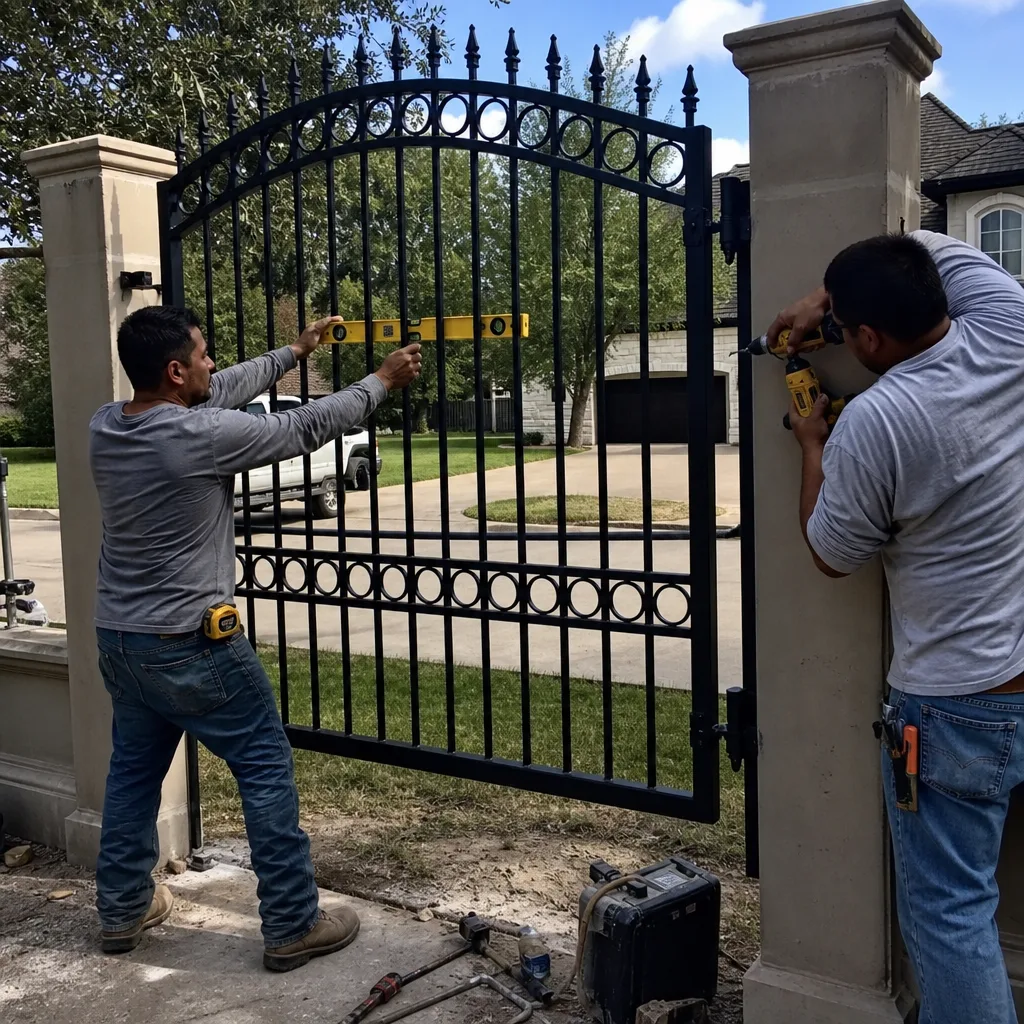
- Assuming “repair” covers a new operator. Replacing the motor on an existing operator is a repair. Installing an operator where none existed is an improvement, and in Fort Bend County it often triggers both an electrical permit and an inspection. The distinction is not about effort; it’s about whether the system existed before.
- Skipping HOA approval because the city didn’t require it. Missouri City’s HOA structure is independent of city code, and the two systems don’t communicate. A gate that passes city inspection can still violate a deed restriction, and that violation surfaces at the worst possible time: a sale.
- Replacing a post and moving it “just a little.” Any change to a gate post’s footprint reopens setback and easement questions. A shift of a few inches can turn a clean repair into a permitted improvement with survey requirements.
- Letting a contractor wave off the permit. A contractor who says “we don’t need a permit for this” may be right, or may be avoiding the inspection that would expose substandard work. Confirm with the city yourself, in writing or by noting the date and name of the person you spoke with.
- Not keeping the paperwork. The permit, the inspection sign-off, and the HOA approval letter are all records that follow the property. Store them with your closing documents. The buyer’s title company will ask for them, and producing them on demand is far cheaper than producing them under a contract deadline.
- Underestimating the clay soil. Missouri City’s expansive clay will move any gate post that isn’t set deep enough. A footer that meets the minimum depth is insurance against a $2,000+ post replacement in three years, and inspectors in Fort Bend County enforce depth for exactly that reason.
When to Call a Professional
Some gate work is genuinely DIY-friendly. Replacing a Mighty Mule control board, swapping a photo-eye, greasing hinges: none of that requires a permit or a contractor. But when the work involves a structural post, a new operator installation with a power run, or a gate that weighs more than a few hundred pounds, the risk profile changes. A gate post set in concrete that shifts because the footer was too shallow is a multi-thousand-dollar correction. A gate operator wired by someone who guessed at the gauge is a fire hazard. A gate that falls because a structural weld failed is a crushing hazard. For that class of work, the permit is the floor, not the ceiling, and a licensed contractor who pulls the permit and passes the inspection is the standard. Our How to Hire a Gate Repair Contractor in Missouri City: A Step-by-Step Guide walks through exactly what to look for. Vance Gate Repair Missouri City offers free estimates in Missouri City, handles the permit paperwork on work that requires it, and leaves you with the documentation that makes future title work simple. Call (346) 253-1761.
Frequently Asked Questions
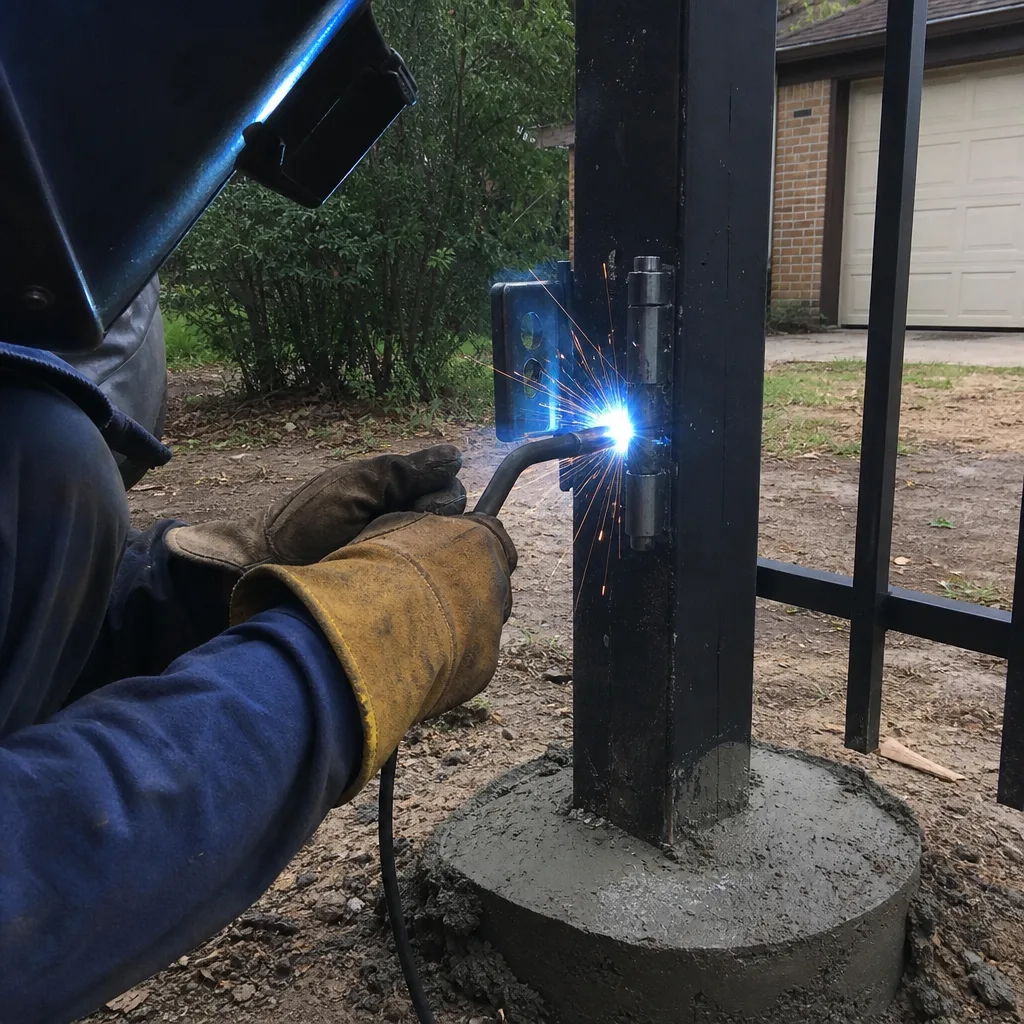
Most gate repairs in Missouri City do not require a permit, including motor replacements, hinge repairs, and circuit board swaps. Explore our more guides & resources for additional homeowner guidance. A permit is generally required when the work is an improvement, not a repair: a new operator installation, a structural post replacement, a footprint change, or a new gate built where none existed. Confirm with the Missouri City Building Inspection Division before starting any work that changes the gate’s structure or operation. Call (346) 253-1761 if you want an exact answer for your specific gate.
A residential improvement permit involving gate work in the Missouri City area typically costs between $75 and $250, depending on whether electrical inspection is required and how the work is classified. The fee schedule changes periodically, so confirm the current fee directly with the issuing office. The permit fee is minor compared to the cost of an after-the-fact permit plus corrective work if the original work fails inspection. Call (346) 253-1761 for a written estimate that includes any applicable permit fee as a separate line item.
If the operator is brand new to the property and requires a new electrical run, no, not in Fort Bend County. Installing an operator on a gate that has always been manual is an improvement, not a repair, and the electrical work it requires triggers the permitting requirement. If you’re replacing an existing operator, the work is generally treated as a repair. Missouri City also requires the permit to be posted during the work, which out-of-town installers often miss.
In most Missouri City HOAs, invisible repairs like motor replacement don’t need HOA approval because there’s nothing to review. Any change to appearance, footprint, height, or operation generally does, and communities like Sienna, Riverstone, and Quail Valley have architectural control committees that enforce their own standards independent of city code. Check your deed restrictions before any visible gate work begins.
The title company flags it during the title search, and the disclosure will force the issue of whether the work was done to code. You’ll likely be required to pull an after-the-fact permit, schedule an inspection, and correct any code violations at your expense, often under a contract deadline. The fix is routine and the cost is manageable, but it’s far more pleasant to handle on your schedule than on a buyer’s.
Yes. For work that requires a permit, we handle the application, posting, and inspection scheduling as part of the job, and the permit fee appears as a separate line item on your written estimate before any work starts. We’ve been doing this in Missouri City since 2014, and our Gate Installation in Missouri City service includes full permit handling on new gate projects. Call (346) 253-1761 for a free estimate.
The Bottom Line
Texas gate work sits on a deceptively simple line: repairs need no permit, improvements often do, and Fort Bend County plus Missouri City enforce that line more formally than most homeowners expect. The expensive mistakes are almost never the permit fee itself. They’re the after-the-fact permits, the HOA enforcement letters, the title flags, and the insurance claim denials that surface years after the work is done. The pattern is consistent: homeowners who confirm the classification before the work starts, keep the paperwork, and treat HOA approval as seriously as city code rarely have problems. If you’re in Missouri City and want a clear answer on whether your specific gate work needs a permit, Gate Repair in Missouri City service includes a free on-site assessment with a written scope and a written price.
Written by Adrian Vance, Owner at Vance Gate Repair Missouri City, serving Missouri City since 2014.