
Last updated September 20, 2026
Free on-site gate assessment - hinges, posts, and your LiftMaster or Nice gate operator checked before anything is quoted
The assessment is free and the quote is the invoice.




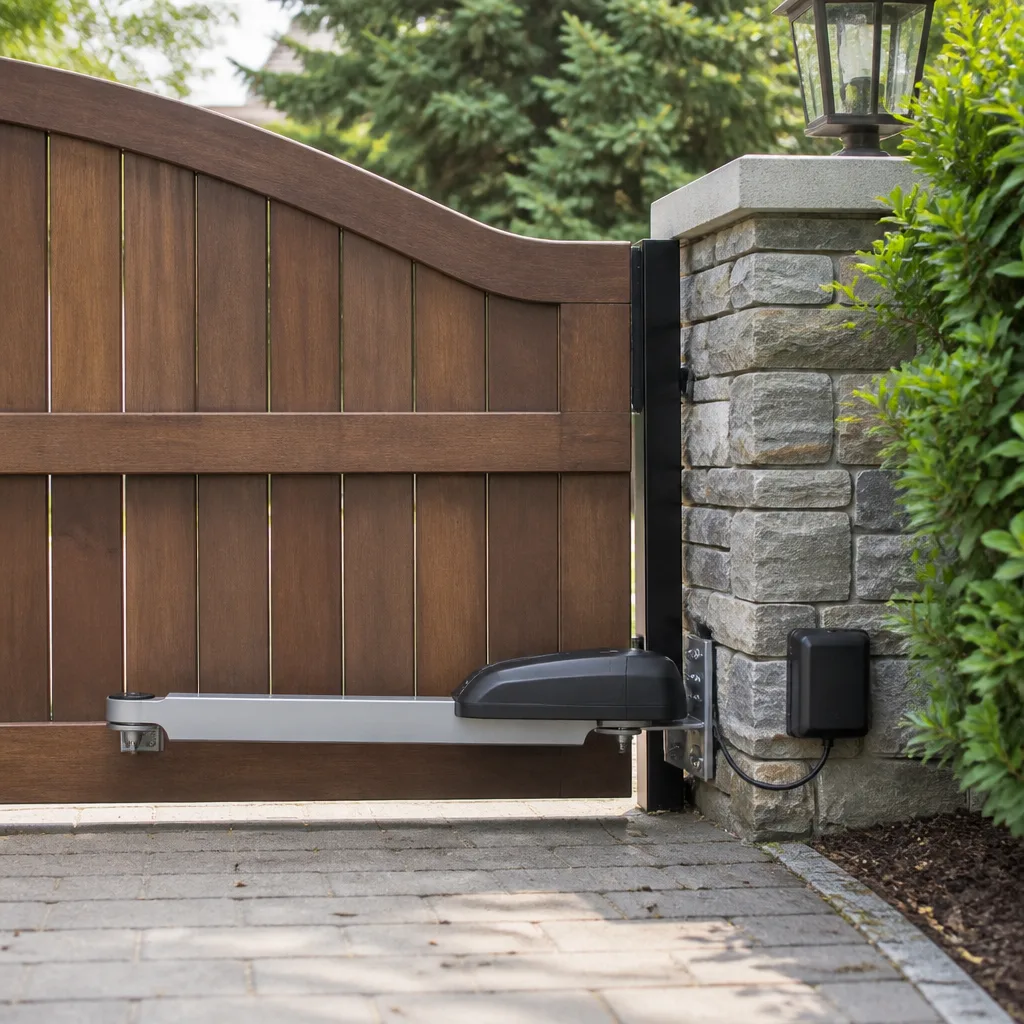
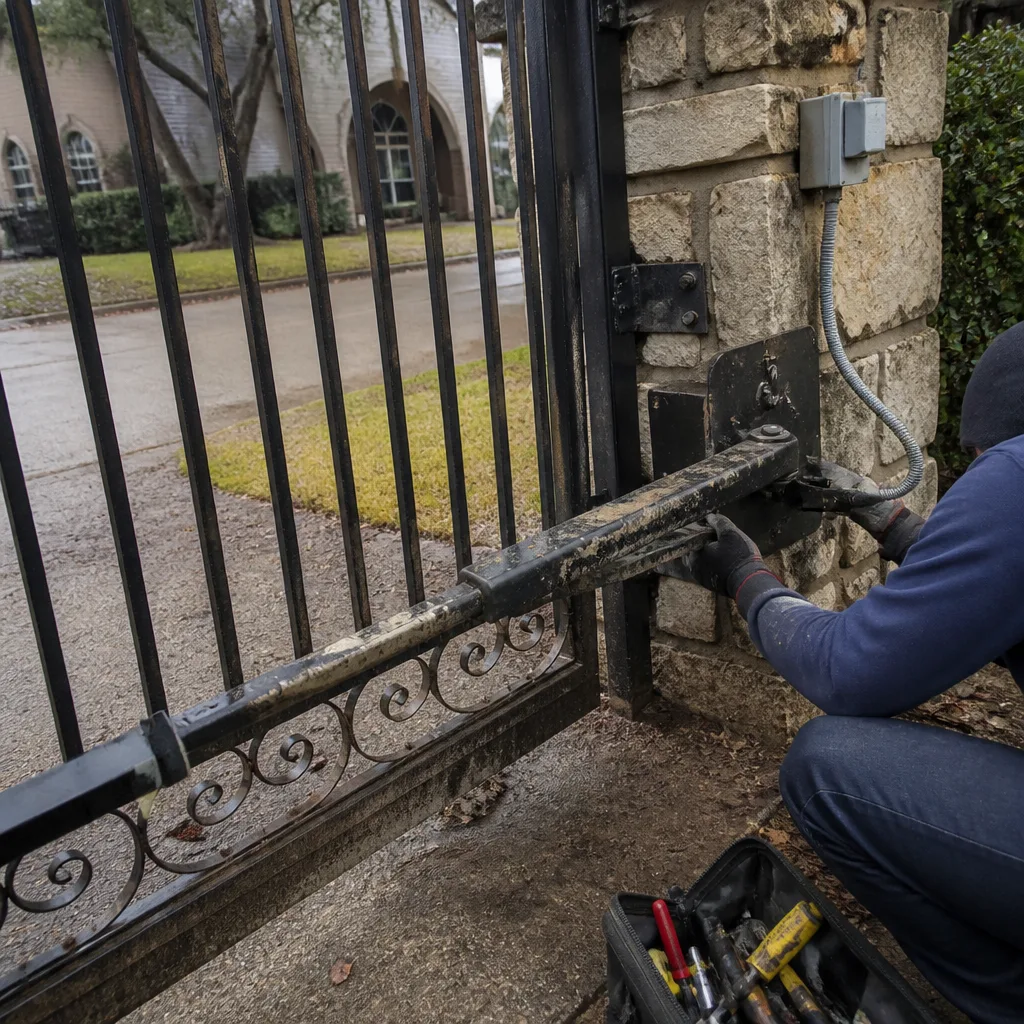 Before
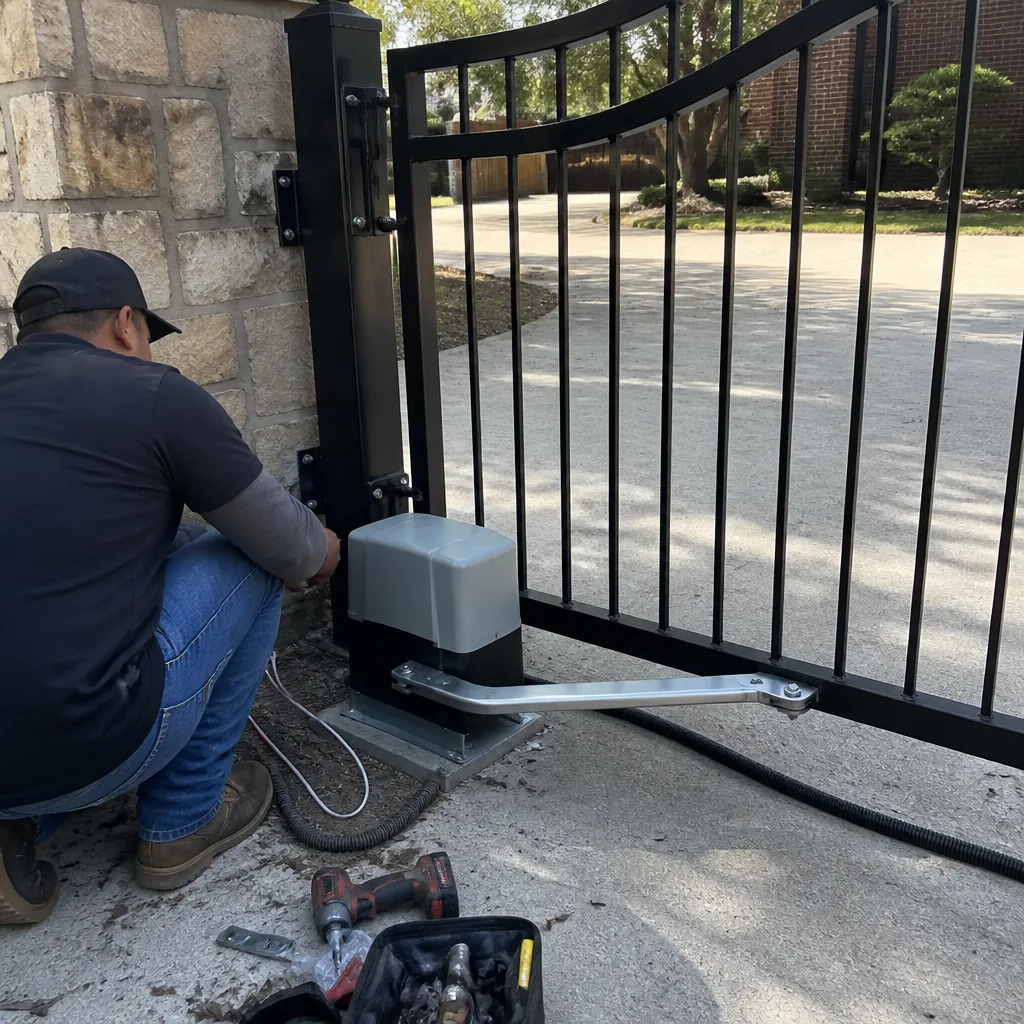 After
After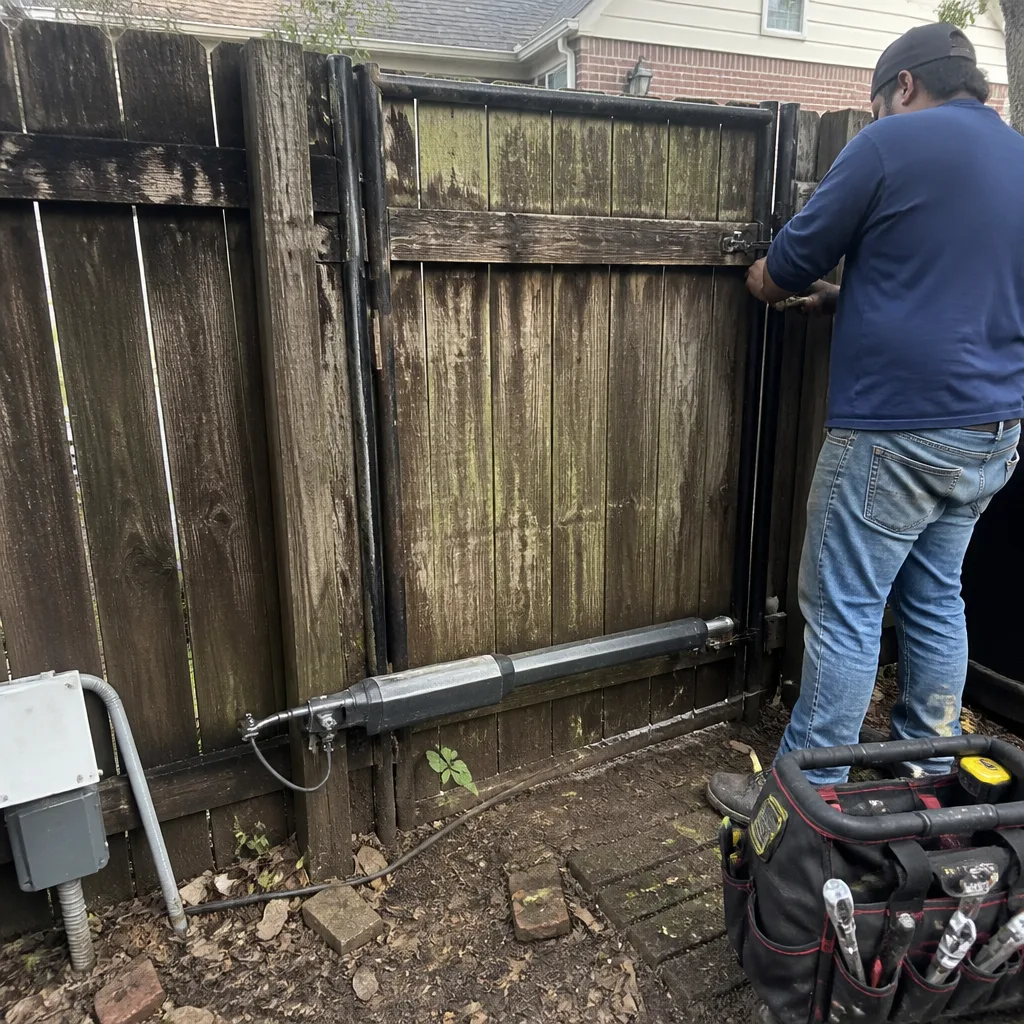 Before
 After
After Before
 After
AfterGate Repair Maintenance Checklist for Missouri City Homeowners
Most gate maintenance checklists tell you to “lubricate the chain” and “check the battery.” Neither instruction tells you what good looks like. So when a technician charges you $150 and says everything is in spec, you have no way to verify it. Here’s the counterintuitive part: the majority of gate failures we see in Missouri City are not random breakdowns. They are predictable, measurable wear patterns that were visible 90 days earlier. This guide gives you the specific readings, tolerances, and photographic records that turn a routine visit into a defensible service history, so you never pay twice to rediscover the same problem.
Quick Answer
A gate repair maintenance checklist for Missouri City homeowners should verify specific measurable tolerances, not just visual conditions: gate gap at the latch (¼ to ⅜ inch), limit-switch travel (gate stops fully open and closed without slamming or bouncing), battery voltage under load (11.8V minimum for most 12V systems), and photo-eye alignment. The checklist must include photographic documentation of hinge wear, weld seams, and operator mounting bolts. In Missouri City, the checklist must also address clay soil heave at post bases and rust at weld points from humidity.
Table of Contents
- The Measurements That Matter: What “In Spec” Actually Means
- What to Photograph and Why: Building a Visual Baseline
- Missouri City Environmental Checks: Clay Soil and Humidity
- How to Log a Maintenance Visit So It’s Useful
- The Three Items Most Maintenance Visits Skip
- How Often Should a Missouri City Gate Be Serviced?
- Battery and Electrical: Testing Under Load vs. At Rest
- A Homeowner’s Quarterly DIY Checklist
- Common Mistakes to Avoid
- When to Call a Professional
- Frequently Asked Questions
- The Bottom Line
BeforeAfterThe Measurements That Matter: What “In Spec” Actually Means
A maintenance checklist without numbers is just a list of things someone touched. Here are the specific measurements a competent gate technician records on every visit. These are the numbers we write down, photograph, and hand to the homeowner before we leave.
Gate Gap at the Latch
When the gate is closed, the gap between the gate edge and the latch post should be between ¼ inch and ⅜ inch. Less than ¼ inch and the gate will bind on hot days when steel expands. More than ⅜ inch and the gate will rattle in wind, which wears the hinge pins and lets the gate sag over time. In Missouri City, the summer heat is the real test. A gate that closes cleanly in January can bind in August if the gap was set too tight.
Limit-Switch Travel
The limit switch tells the motor where to stop. On a swing gate, the gate should fully open and fully close without slamming against the stops and without bouncing back. On a slide gate, you want the gate to fully engage the receiver at the closed position and fully clear the opening at the open position. A limit switch set even 10 degrees past travel will strain the motor and the gearbox. We routinely find limit switches that were set correctly at installation and have drifted over time due to vibration or temperature cycling.
Battery Voltage Under Load vs. At Rest
This is the measurement that separates a real maintenance visit from a drive-by. A battery can read 12.6 volts at rest, which looks perfect. Put it under load, when the motor is actually running, and a failing battery drops below 11 volts. Most 12V gate systems require a minimum of 11.8 volts under load. Below that, the motor works harder, moves slower, and eventually fails. Testing voltage at rest only tells you the battery has a surface charge. Testing under load tells you whether the battery can actually do its job.
Photo-Eye Alignment
A photo-eye is the infrared beam that stops the gate if something crosses the path. These sensors get knocked out of alignment by wind, by landscapers with string trimmers, and by the gate itself if the post shifts. The check is simple: with the beam interrupted, the gate should not move. We also check the alignment tolerance by measuring beam alignment at the sensor head. In our experience, roughly a third of “gate won’t close” service calls in Missouri City are resolved by realigning a photo-eye that was off by less than two inches.
Chain or Belt Tension
On slide gates with chain drive, the chain should have between ½ inch and ¾ inch of vertical deflection at the midpoint when pressed with moderate thumb pressure. Too tight and the chain stretches and stresses the gearbox. Too loose and the chain can jump the sprocket. Belt-drive systems have their own tension specs, usually printed on a label on the motor housing. The technician should record the measured deflection, not just “chain tension checked.”
What to Photograph and Why: Building a Visual Baseline
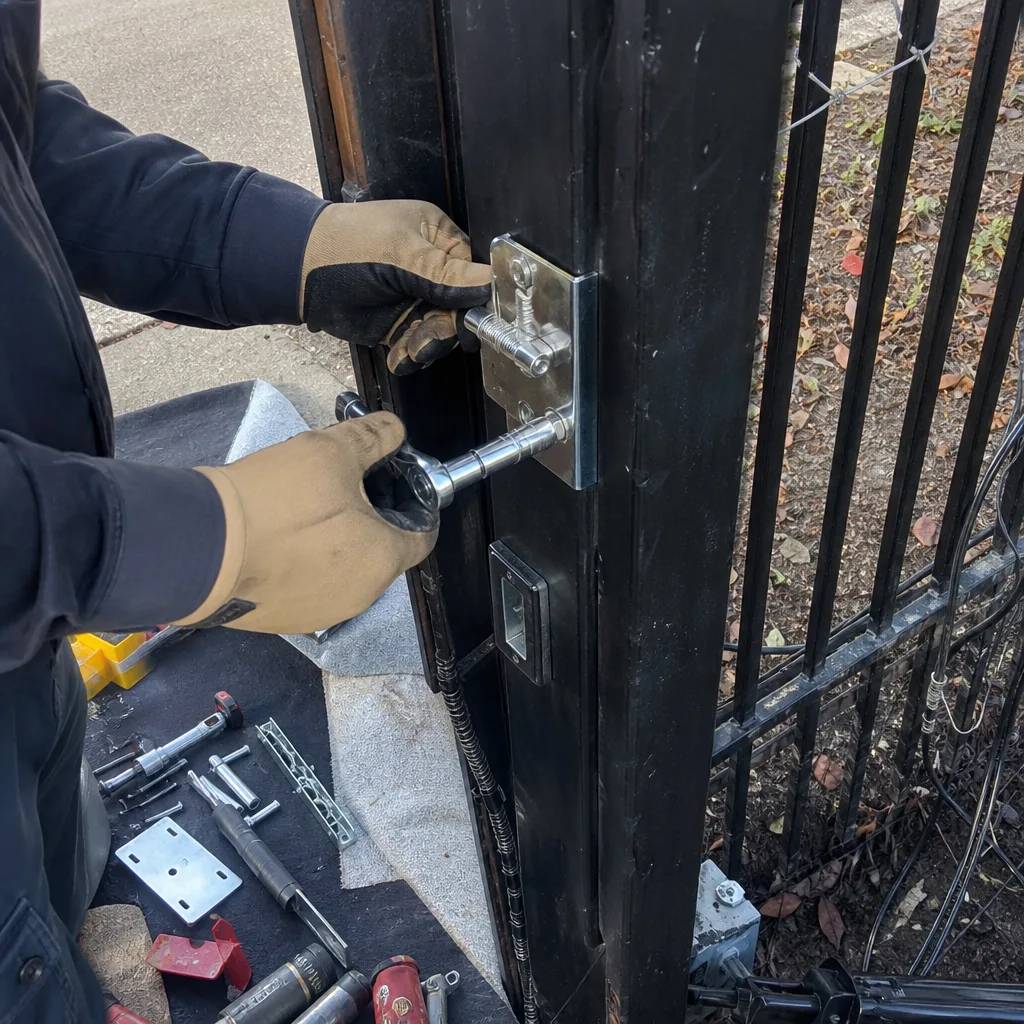
Photographs are the difference between evidence and opinion. Every maintenance visit should leave you with a visual record of the gate’s condition. Not pretty pictures. Specific, repeatable angles that let any future technician compare today against six months ago.
Hinge Wear
Photograph each hinge from two angles: straight on and from below. What you’re documenting is the gap between the hinge pin and the hinge body. Hinge wear shows up as a visible teardrop shape where the hole has elongated. Over time, worn hinges cause the gate to sag, which throws off the latch alignment and strains the operator. A photo of a hinge today gives a future technician a baseline. Without it, wear rates are just a guess.
Weld Seams
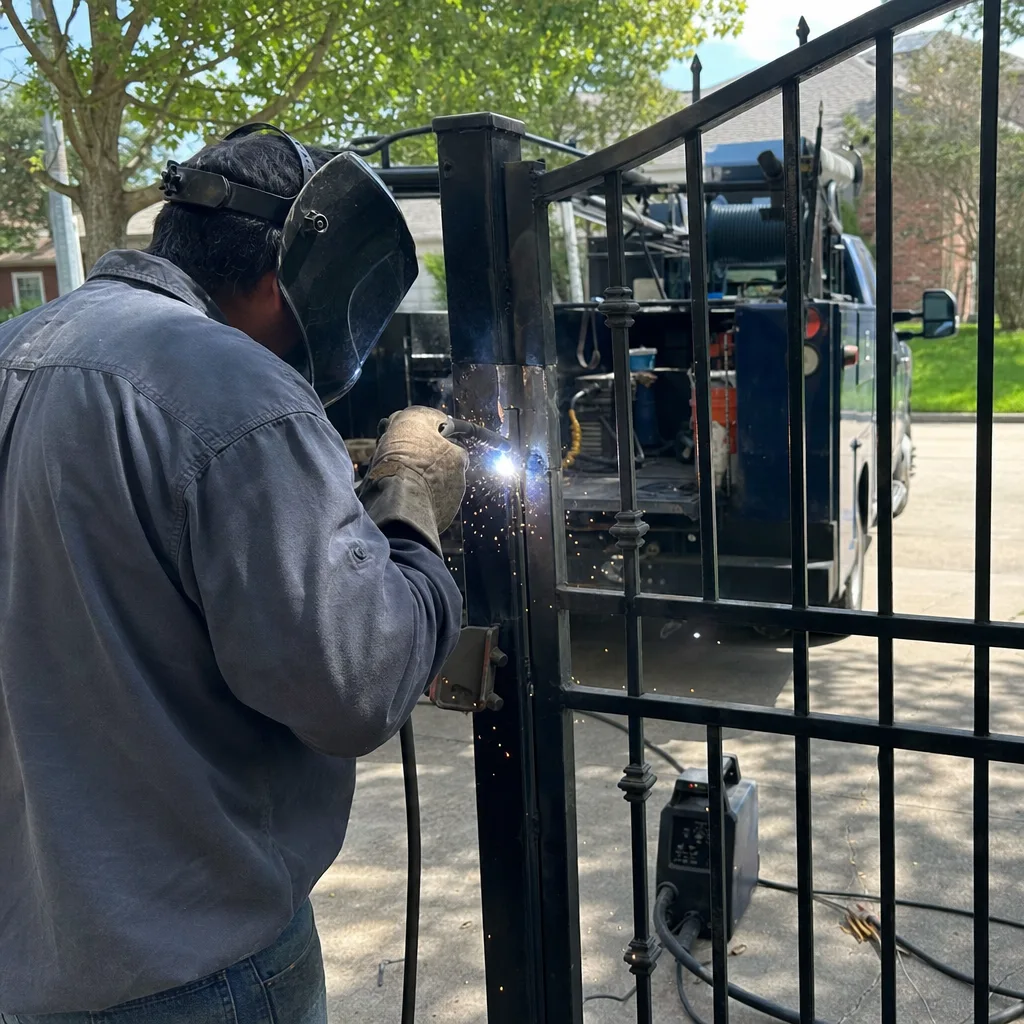
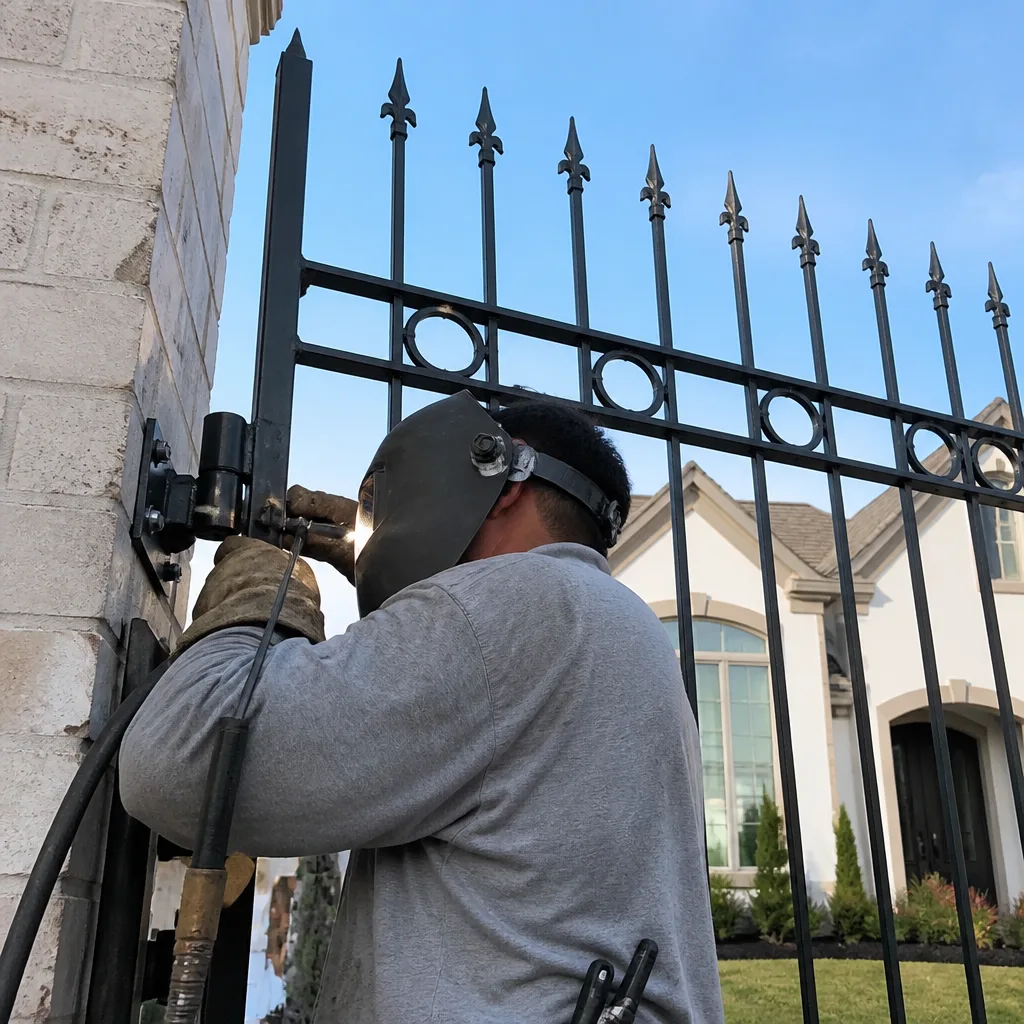
In Missouri City, humidity is relentless. The weld seams on a steel gate are the first places rust appears. Photograph every weld seam on the frame, the hinge brackets, and the operator mounting plate. Look for rust staining, hairline cracks, or flaking paint. A hairline crack in a weld today becomes a fully separated frame member in 18 months. The photo record tells you when the crack first appeared.
Operator Mounting Bolts
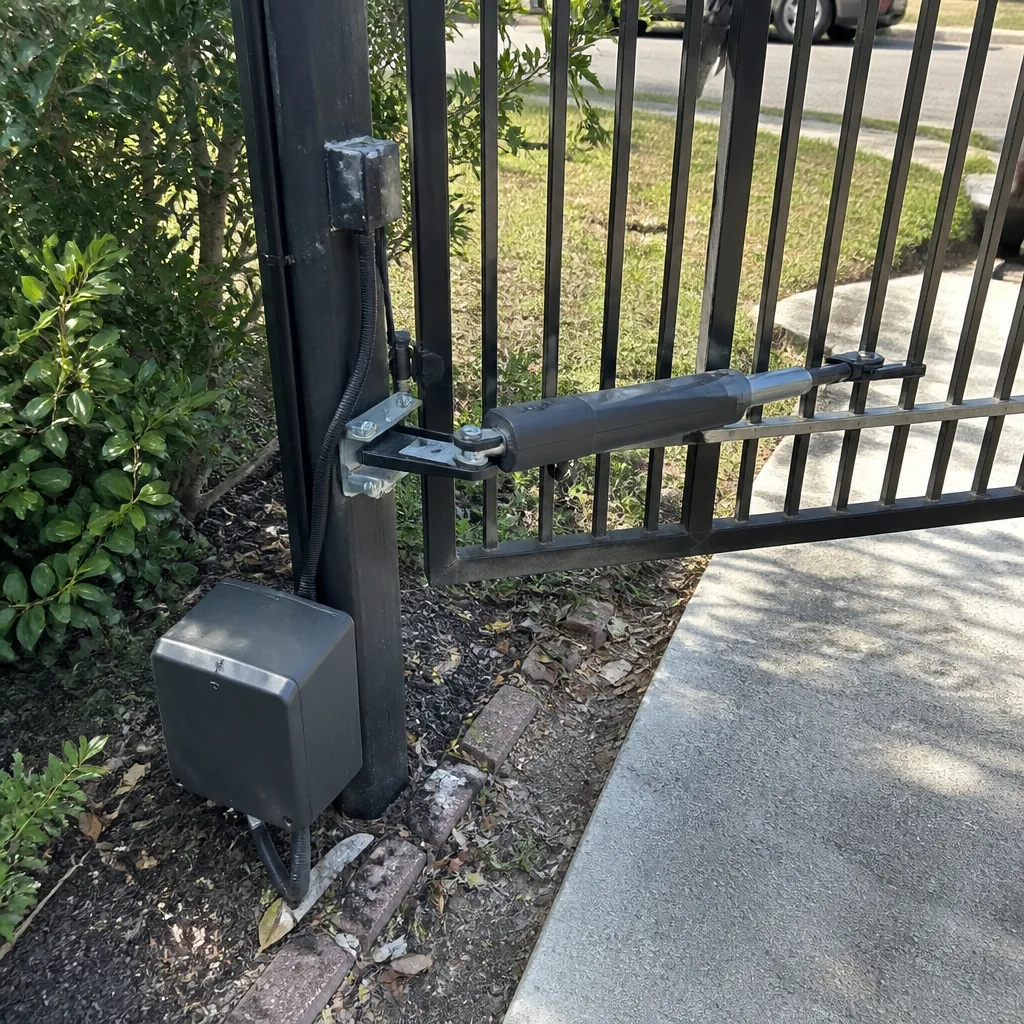
The operator is the motor that moves the gate. Its mounting bolts take constant vibration. Photograph the four mounting bolts, close enough to show whether they are flush or whether there is a visible gap between the bolt head and the plate. A loosened operator, even by 1/16 inch, causes premature gearbox wear. These bolts should be checked with a torque wrench, and the photograph documents that the technician actually looked at them.
Post Bases at Ground Level
Photograph the base of every gate post at ground level. You’re documenting soil contact, sleeve condition, and any visible gap between the post and the concrete. In Missouri City, clay soil expands and contracts with moisture. A post that sits flush today may have a ¼ inch gap by spring. The photo evidence is what proves the post moved, and when.
Missouri City Environmental Checks: Clay Soil and Humidity
Missouri City has two environmental factors that punish gates in ways other regions don’t. A maintenance checklist written for a general audience misses both. Here’s what actually matters here.
Clay Soil Heave at Post Bases
Missouri City sits on expansive clay soil. When the clay absorbs water, it swells. When it dries, it contracts. This cycle pushes and pulls on gate posts continuously. The visible symptom is a post that has tilted slightly or a gap that has opened between the post and its concrete footing. The mechanical symptom is a gate that suddenly won’t latch because the two sides of the gate no longer meet at the right angle. During a maintenance visit, the technician should check for post movement with a level, record any deviation, and photograph the post base. If movement is detected, the fix is often as simple as re-shimming the hinge or adjusting the latch, but only if it’s caught early. Left alone, a shifted post eventually fails the hinge and the operator.
Rust at Weld Points
Missouri City humidity averages over 80% in the summer months. Combined with the salt content in coastal air that drifts inland during Gulf weather systems, weld points on steel gates rust faster here than in drier parts of Texas. The check is visual: look for rust staining at every weld seam, especially on the lower third of the gate where moisture collects. Early-stage rust is a surface problem that can be arrested with a wire brush treatment and rust-inhibiting paint. Advanced rust is a structural problem that requires welding. The checklist should record rust severity on a simple scale: none, surface staining, pitting, or structural loss.
Wind Loading on Solid Panel Gates
Missouri City gets strong south winds during spring storm season and during the occasional hurricane system that tracks through the upper Gulf. A solid panel gate acts like a sail. Every maintenance visit should include a visual and tactile check of the gate’s wind load handling: are the hinge brackets tight, is the latch holding, and does the operator work against wind resistance without overheating? If a technician never checks wind load, they’ll miss the slow loosening of hardware that eventually fails during a storm.
How to Log a Maintenance Visit So It’s Useful
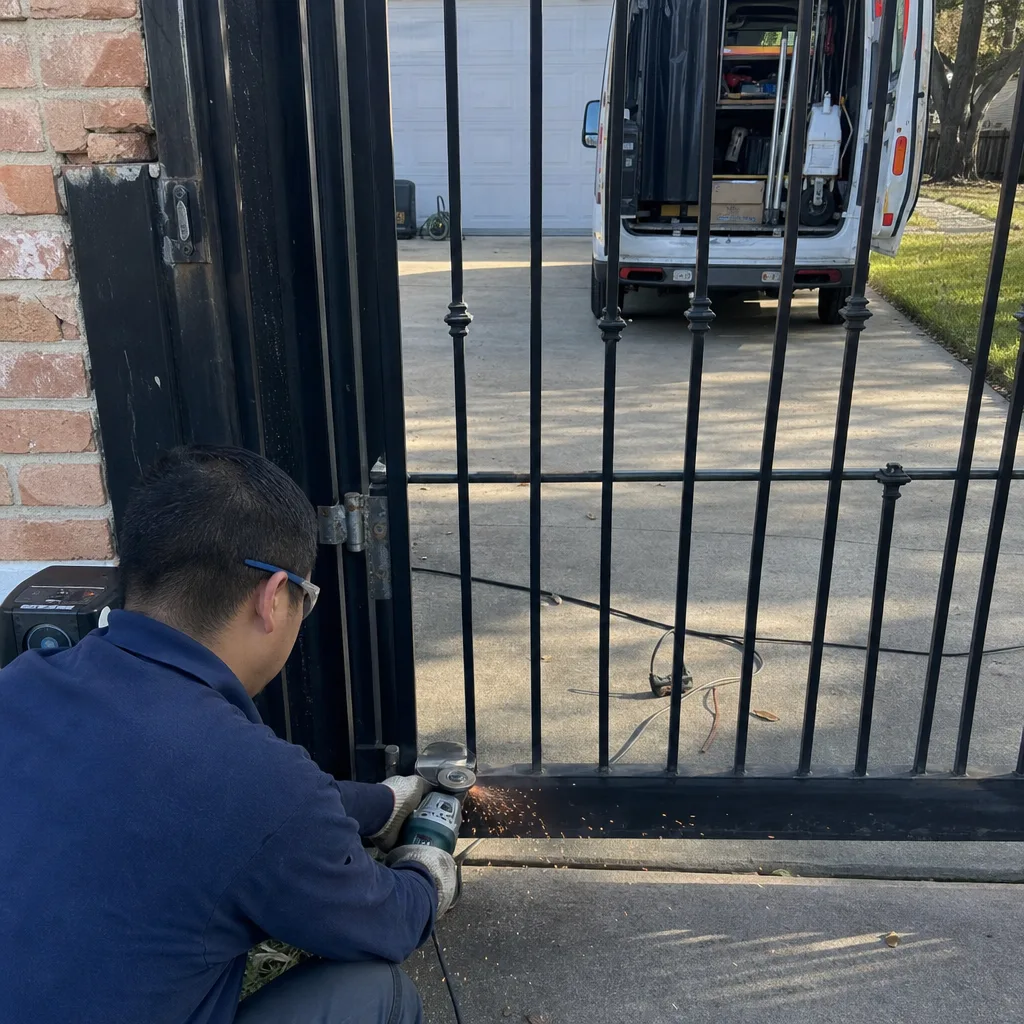
Most maintenance logs are worthless. They say “gate inspected, all good” and are signed by someone whose name you can’t read. A useful log records specific measurements, specific observations, and what was done in response. Here’s what a proper maintenance log entry includes.
- Date and technician name. Seems obvious, but over half the logs we review at Vance Gate Repair Missouri City don’t include the technician’s name. If there’s a problem later, who do you call?
- All measurements taken. Gate gap, chain tension, battery voltage under load, limit-switch travel. Recorded as numbers, not “checked” or “OK.”
- Photograph file references. The log should list the photos taken and what each one shows. The photos themselves should be saved with the log.
- Parts replaced or adjusted. Include the part number and the brand where applicable. If a Mighty Mule control board was replaced, the log says “Mighty Mule control board, part #XXXX” not “control board replaced.”
- Follow-up items. Anything noted but not done, with a reason. Maybe a hinge shows early wear but isn’t dangerous yet. That goes in the log with a recommendation to check again at the next visit.
- Next scheduled service date. So the next visit doesn’t depend on anyone remembering.
The log should live in the same place every time. A binder in the garage, a file folder, a cloud drive. What matters is that it’s accessible. When you sell the house, the gate’s service history becomes part of the property’s value.
The Three Items Most Maintenance Visits Skip
We consistently see three items left off maintenance checklists. These are not exotic items. They are routine checks that get skipped because they take an extra five minutes or require a tool. They also account for the majority of mid-year failures we repair in Missouri City.
1. Battery Load Test
Almost every maintenance visit checks battery voltage at rest. Almost none check it under load. The result is a battery that looks healthy and dies three months later, usually at 6:30 on a Monday morning when the homeowner is trying to leave for work. A load test requires a load tester or a multimeter reading during actual operation. It takes two minutes. Skipping it is the most common cause of “the technician was just here” failures.
2. Photo-Eye Realignment and Cleaning
Photo-eyes collect dust, spider webs, and grass clippings. They get knocked slightly out of alignment. A maintenance visit that doesn’t clean the photo-eye lenses and verify beam alignment will almost certainly result in a “gate won’t close” call within 60 days. It’s cheap, it’s quick, and it accounts for a disproportionate share of the service calls we run.
3. Post Base Inspection
Technicians check the gate panels, the hinges, the operator. They rarely check the post bases at ground level. In Missouri City, with expansive clay soil, post movement is a slow and constant process. A technician who doesn’t check post bases will miss the earliest sign of a problem that eventually costs thousands. This check is specific to our soil conditions and should be on every Missouri City maintenance checklist.
How Often Should a Missouri City Gate Be Serviced?
For a typical residential swing or slide gate in Missouri City, we recommend a full maintenance visit twice a year: once in late winter or early spring, before the rainy season causes clay soil expansion, and once in mid-fall, after the summer heat has done its worst. Gates that run more than 20 cycles per day, which is common in neighborhoods with multiple drivers in the household, may need quarterly service. Gates with older operators, particularly original builders-grade equipment from the early 2000s, benefit from quarterly visits because the electronics are at end of life and fail predictably.
Between professional visits, a homeowner can do a light quarterly check. It takes 15 minutes and catches the majority of visible problems before they become service calls. The key is knowing what to look for and what’s normal, and you can find more guides & resources on our blog.
Battery and Electrical: Testing Under Load vs. At Rest
This section deserves its own treatment because battery failure is the most common non-mechanical gate failure we see. And almost every battery failure is predictable months in advance if anyone bothers to test under load.
A 12-volt gate battery at rest should read between 12.5 and 13.5 volts, depending on the charger. Most solar chargers and trickle chargers keep the battery floating at around 13.2 volts. When you press the remote and the motor starts, the voltage drops. On a healthy battery, it drops briefly to about 12.2 volts and recovers quickly. On a failing battery, it drops to 11 volts or lower and recovers slowly, if at all. That’s the test.
Here’s the problem: most maintenance visits check voltage at rest only. The battery looks fine. The technician writes “battery OK” on the checklist. Four months later, the gate won’t open and the homeowner is convinced the battery “just died.” It didn’t. It was dying at the last maintenance visit and nobody tested it properly.
If you’re doing a DIY check, you can replicate this test with a standard multimeter. Set it to DC volts, place the probes on the battery terminals, and have someone operate the gate while you watch the reading. If the voltage drops below 11.8 and stays there for more than a second, the battery is nearing end of life. This is a specific, repeatable test that costs nothing and prevents a lot of bad mornings.
A Homeowner’s Quarterly DIY Checklist

Between professional visits, here’s a simple 15-minute quarterly check any Missouri City homeowner can do. This is not a replacement for professional maintenance, but it catches visible problems early.
- Operate the gate three times in a row. Listen for changes in motor pitch, grinding, hesitation, or slamming. Any change from normal is worth investigating.
- Check the gate gap at the latch. It should be between ¼ inch and ⅜ inch. If it’s changed, note it.
- Look at the hinges. Any visible gap between hinge pin and hinge body? Any rust staining?
- Look at the post bases. Any new gap between post and concrete? Any water pooling at the base?
- Check the photo-eyes. Are the lenses clean? Is anything growing in front of them? Wave your hand in front of the beam while the gate is moving and confirm the gate stops.
- Check the operator mounting bolts. Are they flush? Can you see any movement when the gate operates?
- Look at the chain or belt. Is it visibly loose or sagging? Any rust on the chain?
If any of these checks show a problem, note it. Take a photo. Call a professional before it becomes an emergency repair. The Gate Repair in Missouri City service from Vance covers all of these items in a single visit.
Common Mistakes to Avoid
- Signing a checklist that has no numbers on it. If the maintenance record says “gate checked” but doesn’t include gate gap, battery voltage under load, or chain tension, you paid for a walk-around, not a maintenance visit. Ask for the measurements.
- Lubricating a chain that’s rusted. Lubricant on a rusted chain is a temporary fix. The rust has already compromised the chain’s integrity, and a failed chain on a slide gate can let the gate roll freely off the track.
- Treating all battery failures as “the battery died.” Sometimes the battery is fine and the charger failed. Replacing a battery without testing the charger is paying for the same failure twice. A proper maintenance visit tests both.
- Ignoring a gate that’s slightly out of level. A gate that’s an inch out of level is telling you the post is moving. In Missouri City clay soil, these things don’t self-correct. The earlier it’s caught, the cheaper the fix.
- Waiting until the gate fails to look at the photo-eyes. Photo-eye cleaning and alignment is a five-minute task during maintenance. Skipping it because the gate still operates is how you get a gate that won’t close at 7:00 AM on a rainy Tuesday.
- Hiring a technician who won’t show you the photos. If the technician can’t or won’t produce photographic evidence of what they found, assume they didn’t find anything. Documentation is the entire point of maintenance.
- Assuming a new gate doesn’t need maintenance. New gates and new operators need more attention in the first year, not less. Hinges settle, chains stretch, welds cool, and limit switches drift as everything beds in.
When to Call a Professional
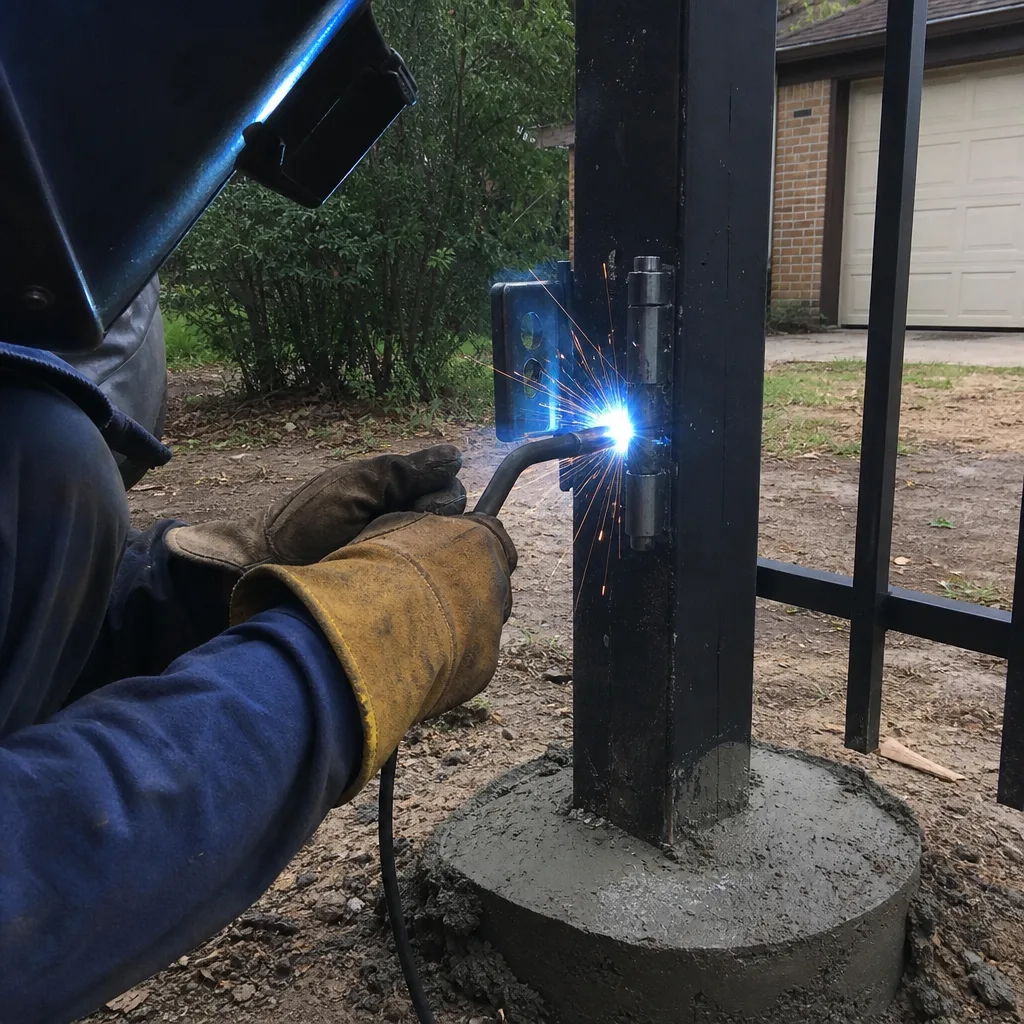
Some things a homeowner can check. Some things a homeowner should not touch. If the gate makes a new noise, that’s a professional visit. If the gate has shifted at the latch, that’s a professional visit. If the operator is running hot to the touch, that’s a professional visit same day. If the gate is rusted to the point of pitting at the weld seams, that’s a welding job, not a paint job. If the battery failed a load test, that’s a replacement with the correct charger test. And if the gate has come off its track or the operator mounting bolts are loose, stop using the gate and call someone who can document what they find. Vance Gate Repair Missouri City home service covers all residential gate types. For gate operator issues specifically, see Gate Motor & Opener in Missouri City. Vance Gate Repair Missouri City offers free estimates – call (346) 253-1761.
Frequently Asked Questions
Gate maintenance in Missouri City typically runs between $150 and $250 for a single gate with one operator, depending on the gate type, the brand of operator, and whether parts are needed. The price should be quoted in writing before any work starts. If parts are required, expect to see the part number and the line-item cost on the written quote. Call (346) 253-1761 for an exact quote on your gate.
Yes. Vance Gate Repair Missouri City dispatches background-checked, uniformed technicians same day for most maintenance and repair issues. A live person answers the phone 24 hours a day at (346) 253-1761. Same-day service depends on technician availability and part requirements.
A full maintenance visit includes measurement and adjustment of gate gap, limit-switch travel, chain or belt tension, photo-eye alignment, battery load testing, post base inspection, rust survey at weld points, and a photographed record of every finding. The homeowner receives all measurements, all photographs, and a written service record at the end of the visit. This is the standard for every job at Gate Installation in Missouri City and repair work alike.
We service nine major gate-automation brands: LiftMaster, FAAC, BFT, Linear, Viking, Ghost Controls, DoorKing, Elite, and Mighty Mule. If your opener is not on that list, call us. We’ll tell you honestly whether we can service it. We don’t steer homeowners toward replacing a repairable opener just because we don’t carry the brand.
Test the voltage under load. Use a multimeter, place the probes on the battery terminals, and operate the gate while watching the reading. If voltage drops below 11.8 volts and stays there for more than a second, the battery is nearing end of life. A reading at rest is not sufficient; a failing battery can read 12.6 volts at rest.
Yes. Every estimate is free and every price is written down and handed to you before any work begins. This is Haven Standard Clause 1: have it in writing. Call (346) 253-1761 to schedule a free estimate.
The Bottom Line
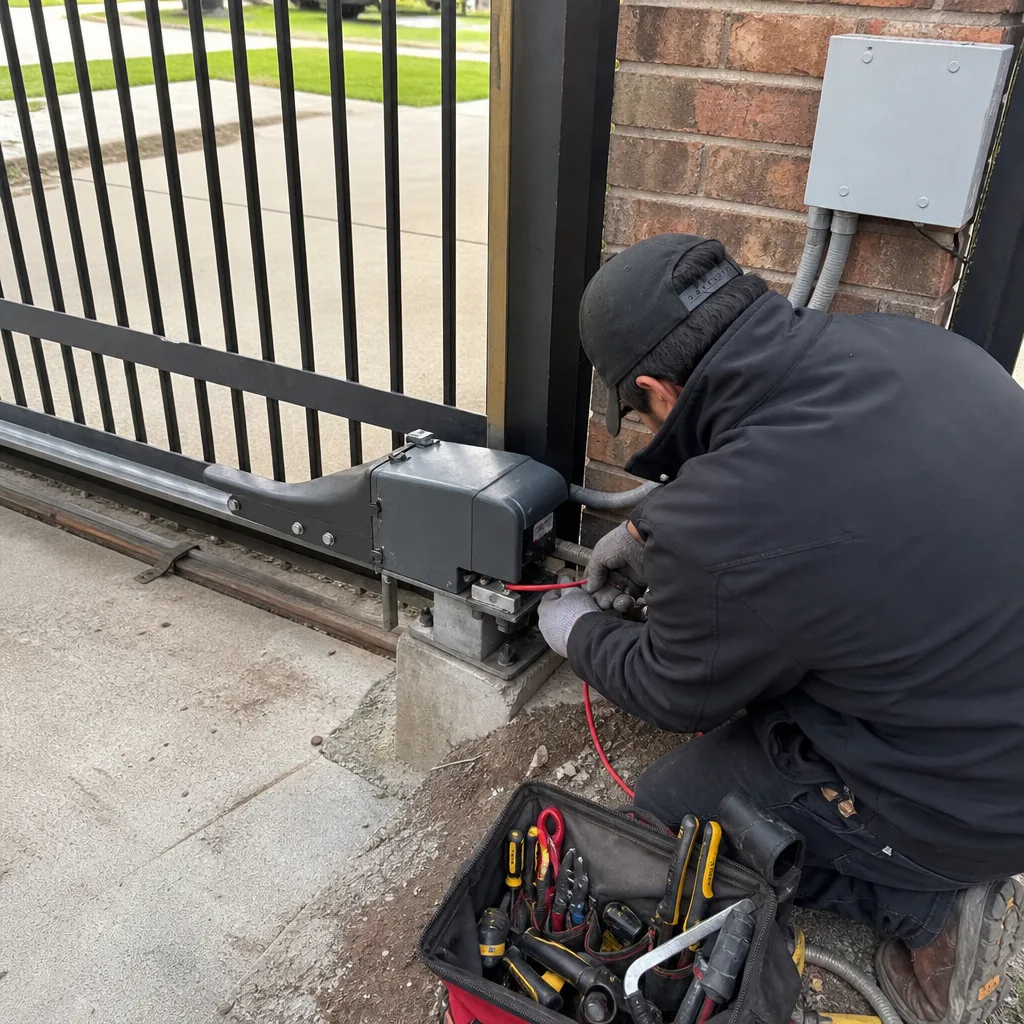
A maintenance checklist that skips measurements is just a list of things someone touched. A real maintenance visit in Missouri City records specific numbers: gate gap at ¼ to ⅜ inch, battery voltage under load at 11.8 volts or higher, chain tension at ½ to ¾ inch deflection. It includes photographs of hinge wear, weld seams, operator mounting bolts, and post bases. It addresses the two local environmental factors that kill gates here: clay soil heave and humid-air rusting. And it leaves you with a written record you can actually use. If your maintenance provider won’t put numbers and photos in front of you, find one who will. Our Gate Repair services include full documentation on every visit. Vance Gate Repair Missouri City has documented every job since 2014, and we’ll show you the record before we leave. Call (346) 253-1761 for a free estimate.
Written by Adrian Vance, Owner at Vance Gate Repair Missouri City, serving Missouri City since 2014.