
Last updated September 20, 2026
Free on-site gate assessment - hinges, posts, and your LiftMaster or Nice gate operator checked before anything is quoted
The assessment is free and the quote is the invoice.
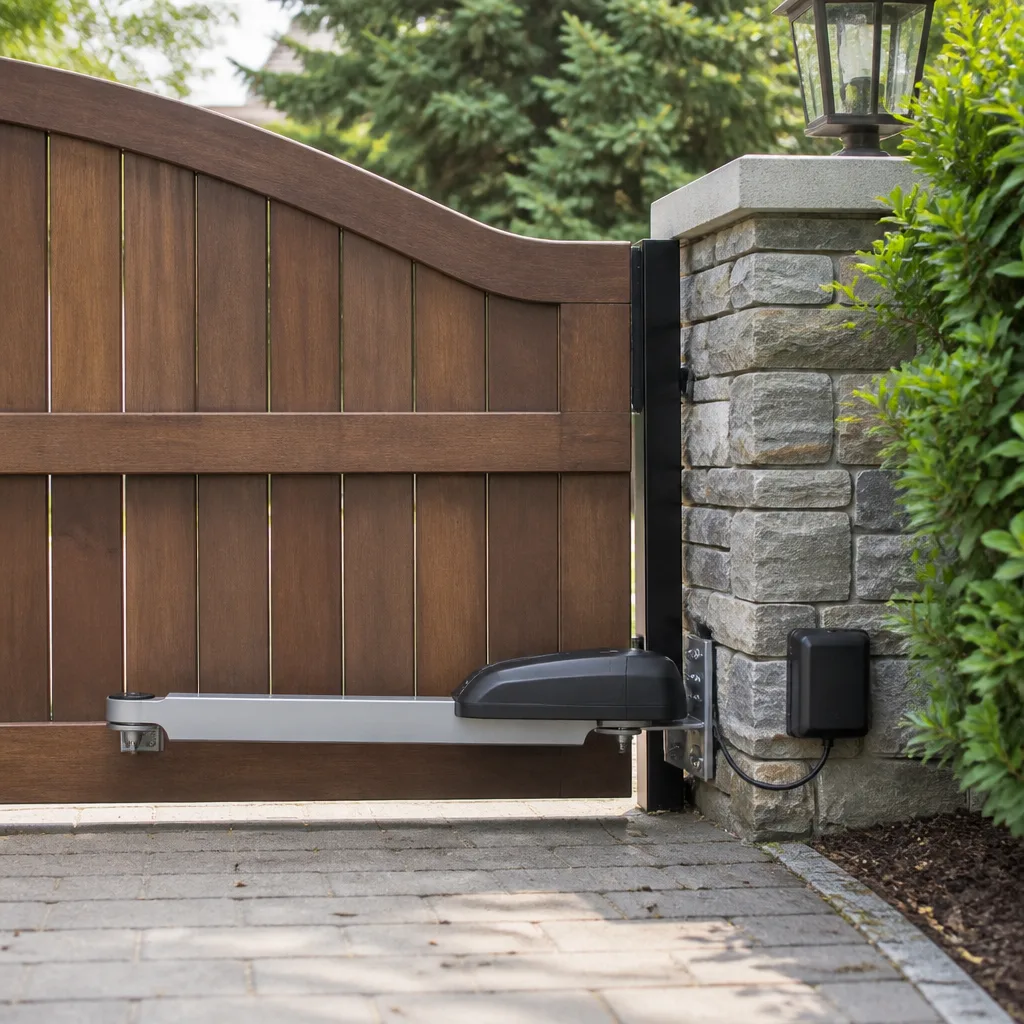
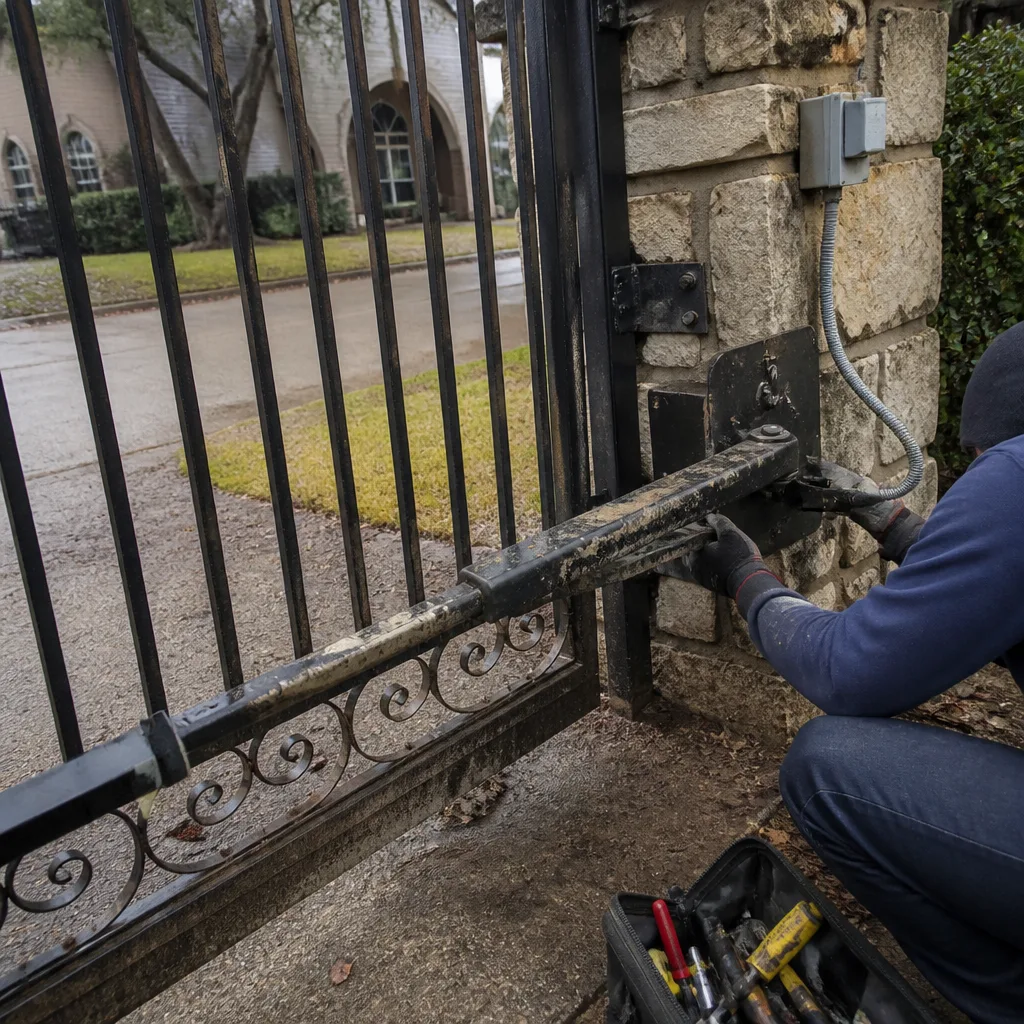 Before
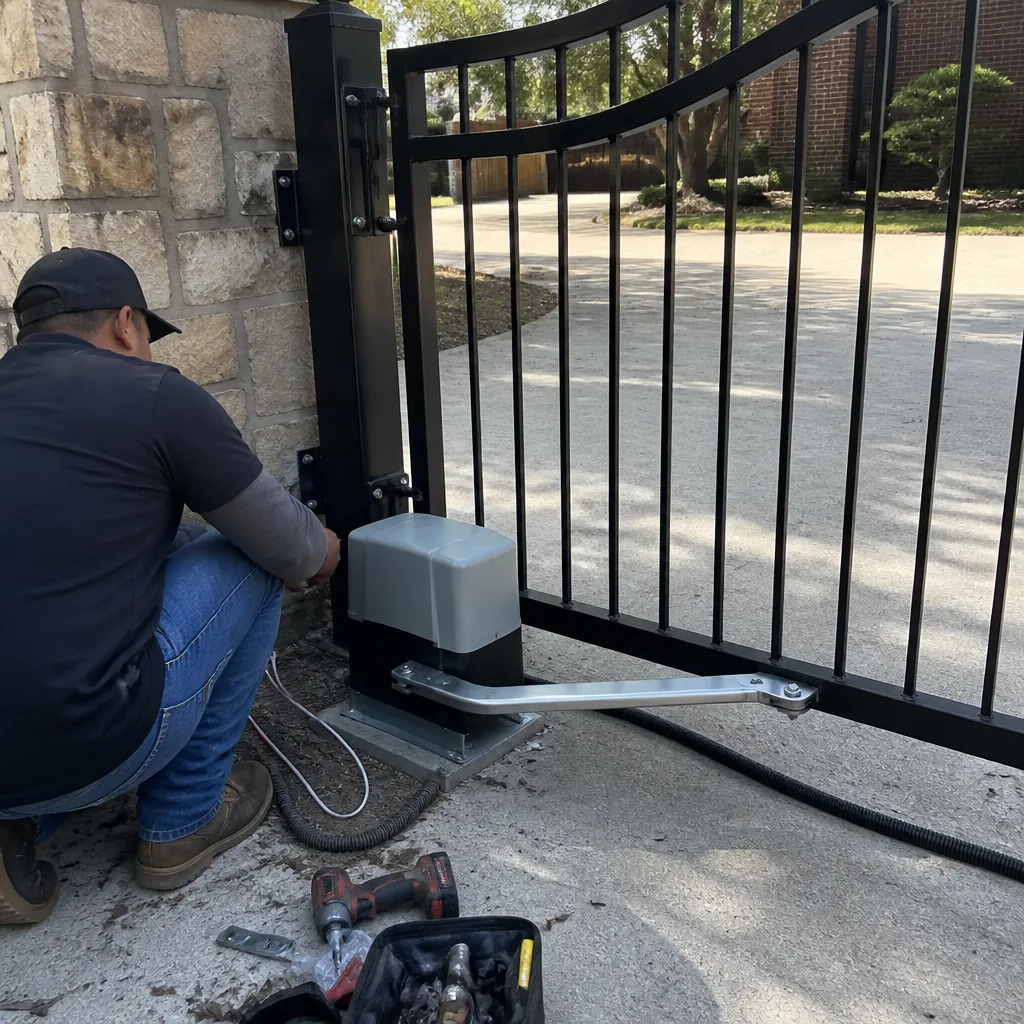 After
After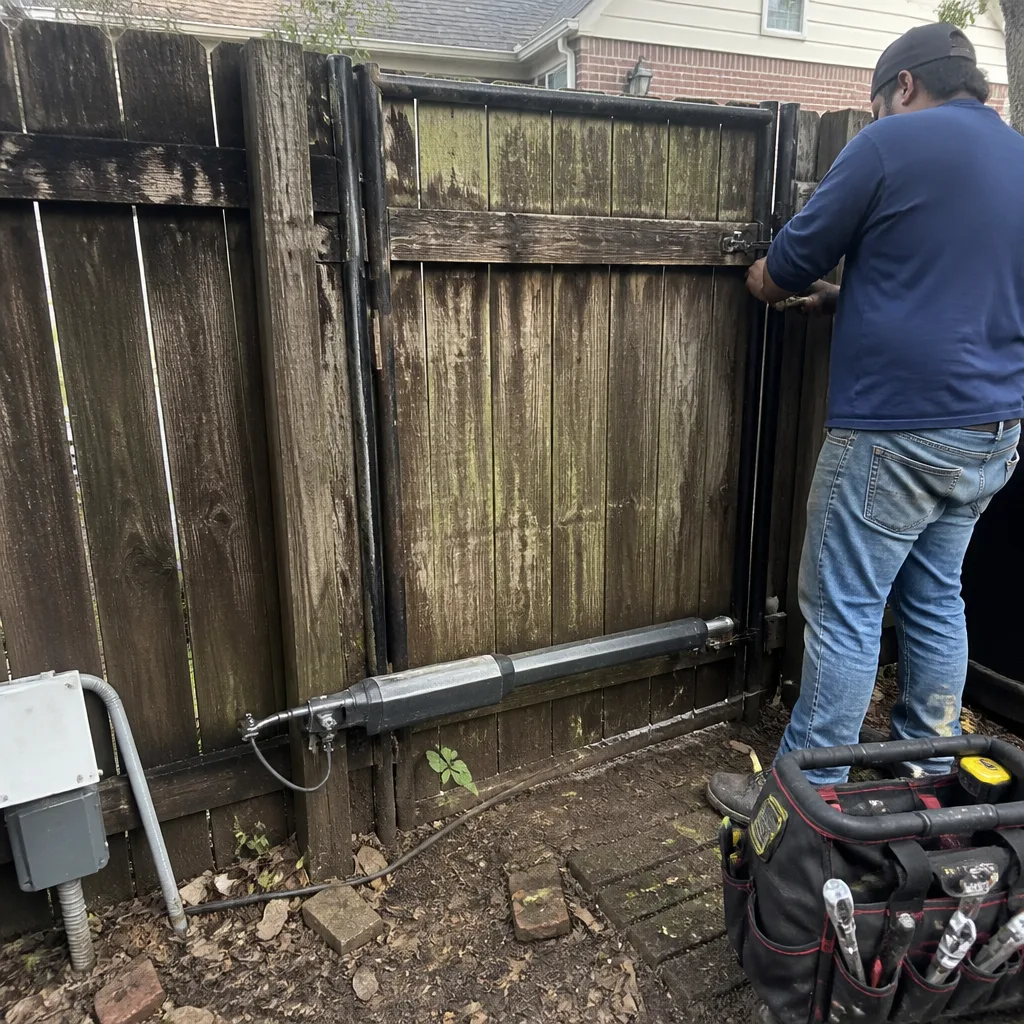 Before
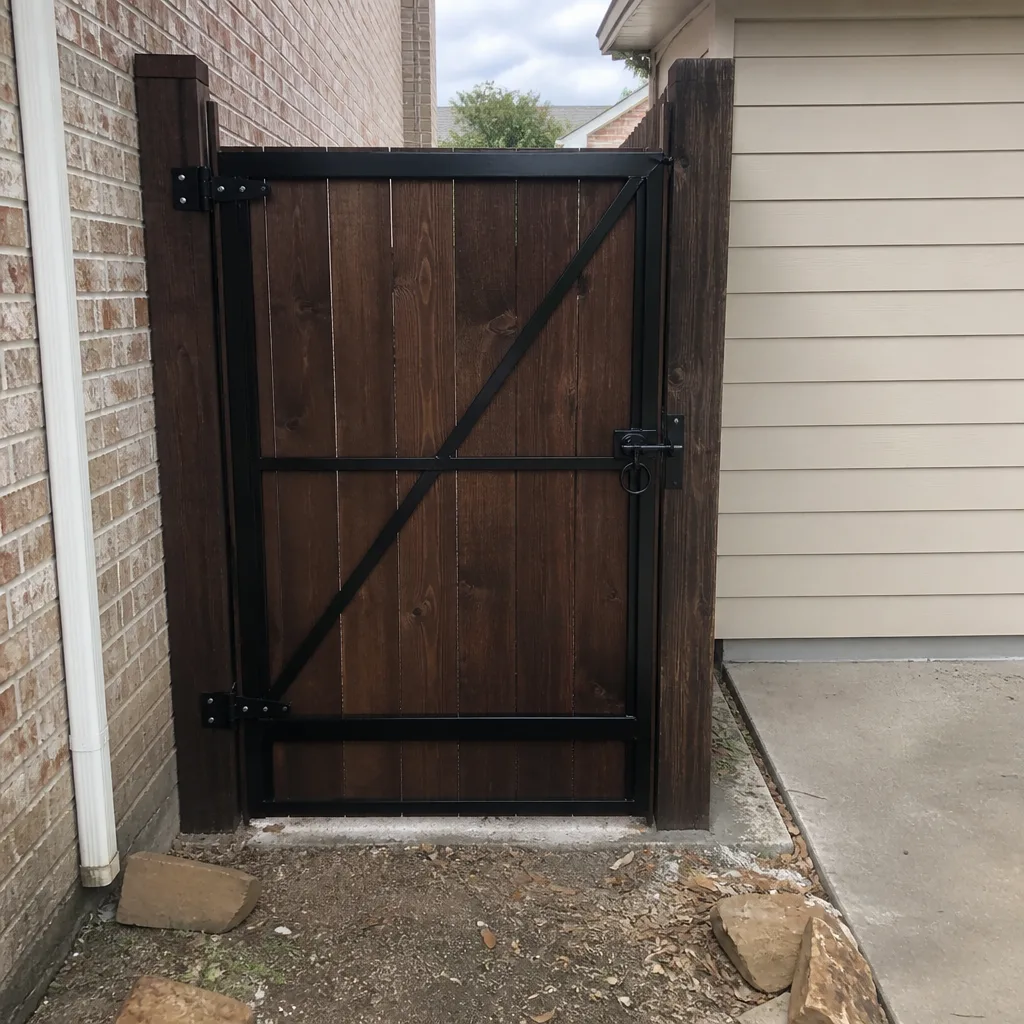 After
After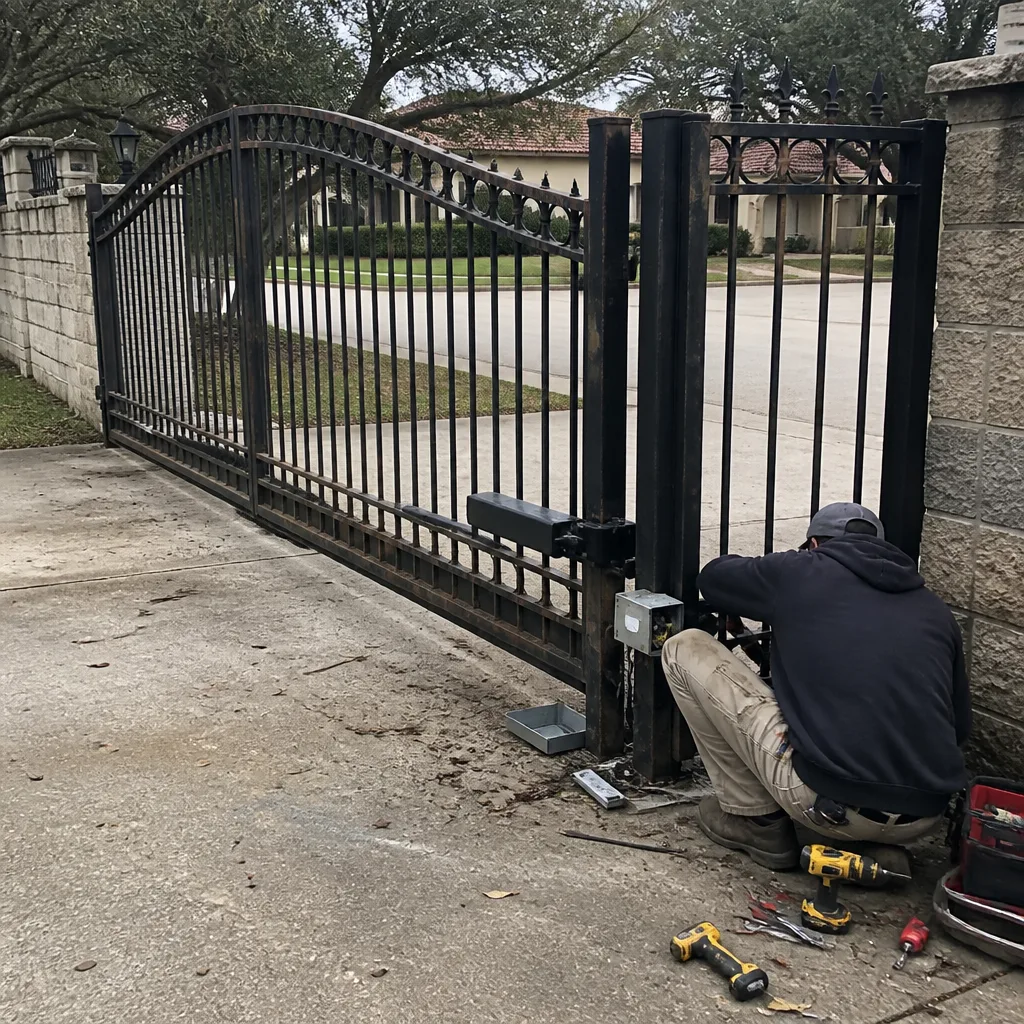 Before
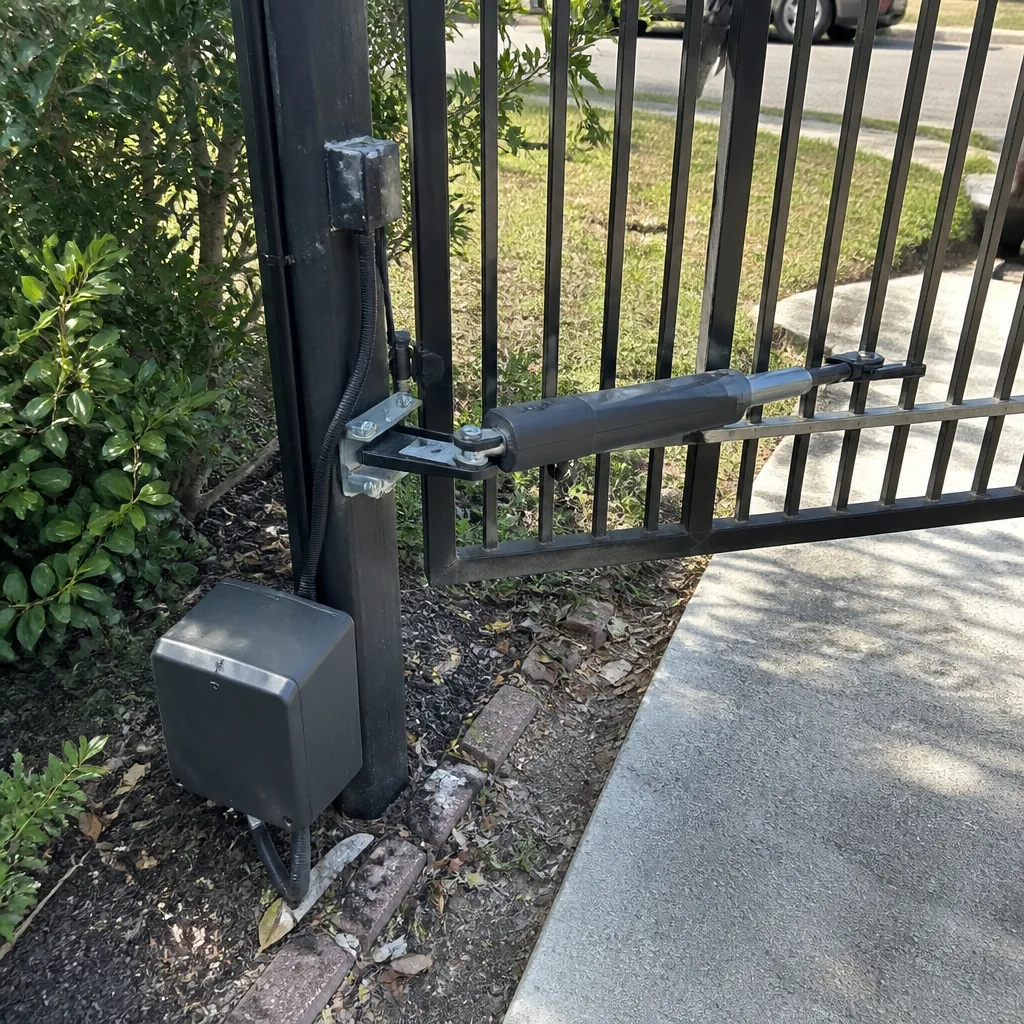 After
AfterGate Repair Warning Signs: A Missouri City Homeowner’s Reference Guide
A gate that “pauses before it closes” isn’t just annoying. It’s a limit-switch or operator torque symptom that, left alone for one Texas summer, typically ends in a burned motor or a bent track requiring full operator replacement. Most gate failures in Missouri City announce themselves two to six weeks in advance through specific, observable signs. The homeowners who catch them early pay repair costs. The ones who miss them pay replacement costs. This guide names the evidence, not the vague feelings, so you know what you’re looking at before you pick up the phone, and our more guides & resources can help with ongoing maintenance.
Quick Answer
Gate repair warning signs in Missouri City fall into eight observable patterns: a pause before closing, grinding during travel, a sagging gate leaf, inconsistent remote response, slow close speed, intermittent remote failure, post lean after wet weather, and rust streaking from weld seams. Each sign maps to a specific component, and catching any of them early typically means a repair bill of $150 to $450 instead of a full operator or gate replacement running $1,200 to $3,800. Document what you see with photos before calling anyone.
Table of Contents
- Pause on Close: The Limit-Switch Warning You Can See
- Grinding on Open: Mechanical Wear You Can Hear
- Sagging on One Side: Hinge and Post Fatigue in Missouri City Soil
- Inconsistent Remote Response: Electrical vs. Mechanical Symptoms
- Slow Close Speed and Intermittent Failure: The Two Signs Homeowners Ignore
- Missouri City-Specific Warning Signs: Post Lean and Weld-Seam Rust
- What to Photograph When You Spot a Symptom
- Common Mistakes to Avoid
- When to Call a Professional
- Frequently Asked Questions
- The Bottom Line
BeforeAfterPause on Close: The Limit-Switch Warning You Can See
A gate that stops mid-travel, waits a beat, then continues closing is telling you something specific. The limit switch, which tells the operator where the gate should stop moving, has drifted out of position or is failing to register. On a Viking or Ghost Controls operator, this often shows up as a two-to-three-second hesitation about 18 inches from the closed position. On DoorKing and Elite units, the pause tends to happen closer to midway travel.
We’ve seen this in First Colony and Lake Olympia where gates run 8 to 12 cycles a day. The fix when caught early is a limit-switch adjustment or replacement, typically $95 to $220 including the part. Wait six weeks, and the operator keeps driving against a misread position until the motor overheats or the arm bracket bends. That job runs $700 to $1,400 for a motor replacement on most swing-gate operators.
The practical test: stand and watch one full close cycle. Count the pause. If it happens in the same spot every time, that’s a limit-switch issue. If the pause moves around, you’re looking at a torque or obstruction-sensor problem instead. Write down what you observed. It matters.
Grinding on Open: Mechanical Wear You Can Hear
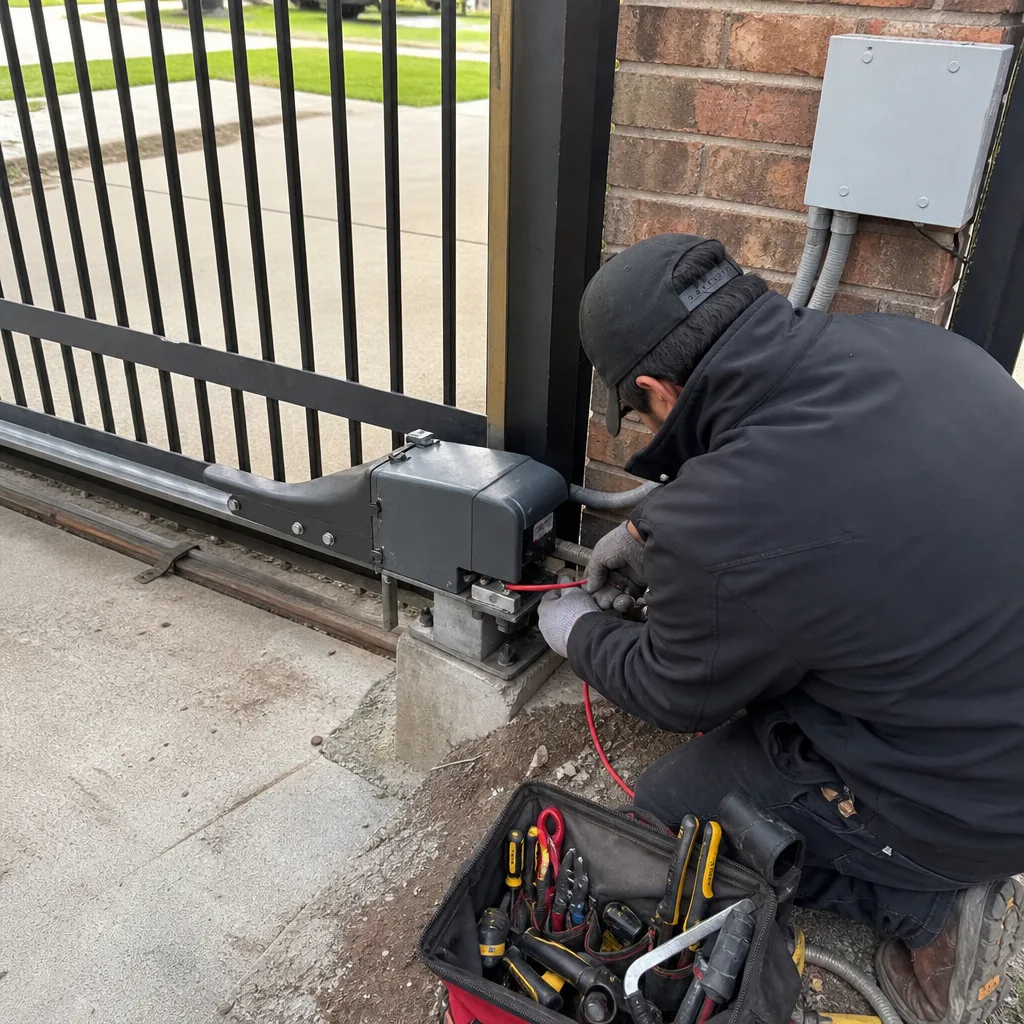
Grinding is never normal. A healthy gate operator makes a low, consistent hum, like a refrigerator heard through a wall. Grinding means metal is touching metal where it shouldn’t be, or a gear is losing teeth and the loose fragments are circulating through the drive assembly.
On slide gates, grinding on open most often implicates the drive chain tension or the nylon idler wheels under the gate frame. In Missouri City’s humidity, chain lubrication breaks down faster than in drier climates, and we regularly see chains with surface rust inside 18 months of installation. On swing gates, grinding usually points to the operator’s internal gearbox or the arm pivot bushings.
Here’s the sequence to sort it:
- Open the gate manually using the release handle, if equipped. If the grinding disappears when moved by hand, the problem is in the operator’s drive assembly, not the gate hinges.
- Listen for where the sound peaks. Grinding louder at the start of travel suggests a worn gear. Grinding that peaks mid-travel suggests a bent track section or a failing idler wheel.
- Check the chain or belt for visible rust. Surface rust on a slide-gate chain is a Missouri City warning sign in itself.
Grinding caught in the first two weeks is typically a lubrication and tension issue, under $150. Grinding ignored for a season becomes a gearbox rebuild or full operator head replacement, $650 to $1,600 depending on brand. The gate motor and opener service in Missouri City we perform most often starts with exactly this symptom.
Sagging on One Side: Hinge and Post Fatigue in Missouri City Soil
A sagging gate leaf is the most visually obvious warning sign and the one homeowners talk themselves out of. “It’s always looked a little off.” No, it hasn’t. Gates don’t settle gradually over a decade like a house foundation. When a gate leaf drops a half-inch at the latch side, something specific failed: a hinge pin wore, a hinge weld cracked, or the post itself has moved.
Missouri City’s clay-heavy soil expands and contracts dramatically with the wet and dry seasons. We see post lean most often in neighborhoods built on former agricultural land, where the top six feet of soil moves like a sponge. When the post moves, the gate leaf sags, the latch misses the receiver, and then the opener strains to push a gate that’s fighting its own weight.
The diagnosis path:
- Measure the gap between the gate bottom rail and the ground at the hinge side and the latch side. A difference over half an inch is a mechanical problem, not a cosmetic one.
- Look at the hinge itself. Fresh metal flaking around the pin, or a visible dark line at the weld, means the hinge is failing.
- Check the post. If the post leans outward even slightly, the gate’s entire weight is now hanging off the hinges at an angle they weren’t built for.
Sag caught early is a hinge or bearing replacement, $180 to $400. Sag ignored until the latch stops catching becomes a post reset or replacement, plus the gate re-hang, $900 to $2,200. That’s the difference a two-minute inspection makes.
Inconsistent Remote Response: Electrical vs. Mechanical Symptoms
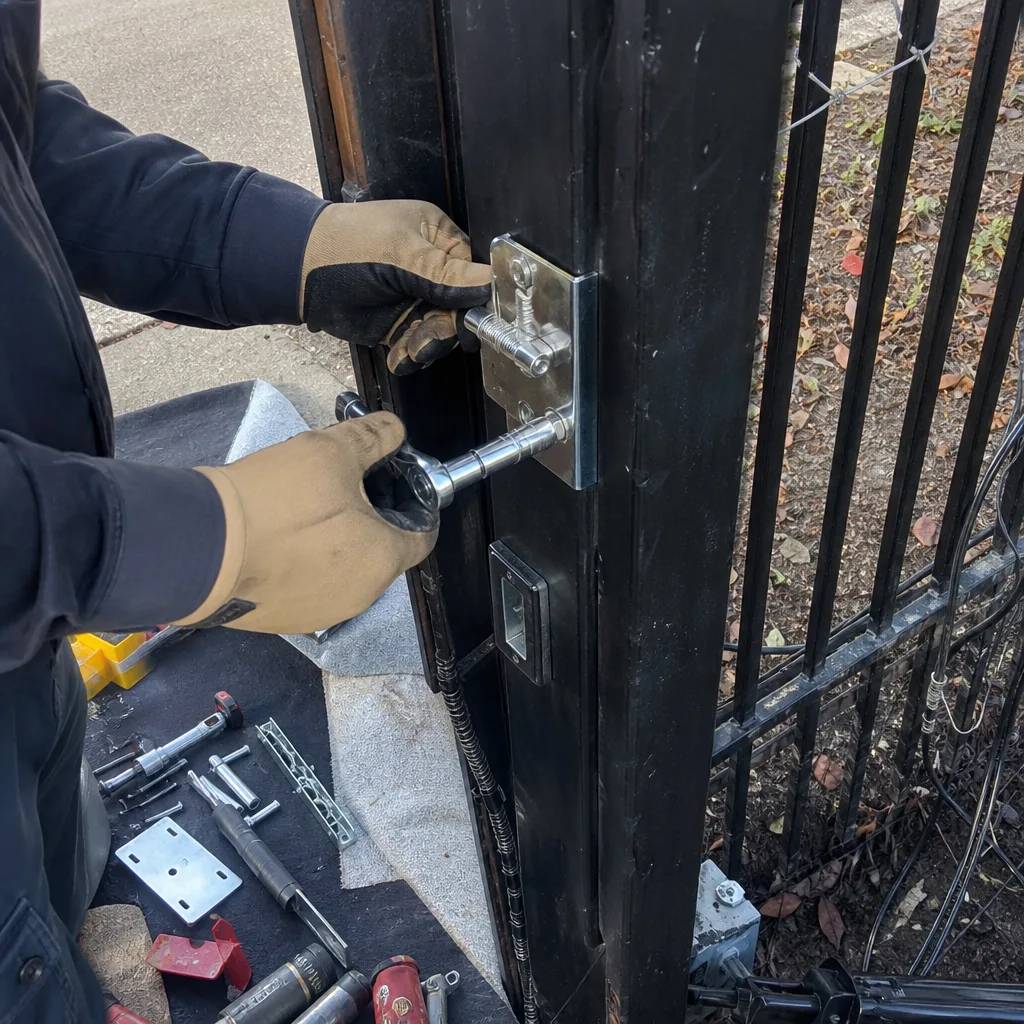
When a remote works from 40 feet sometimes and zero feet other times, homeowners tend to blame the battery. Sometimes it is the battery. But the pattern of the failure tells you which system to investigate.
Electrical warning signs are consistent in their inconsistency. The remote fails from the same direction every time, or it works in the morning and not the afternoon, or it required a new battery last month and already seems weak again. That points to the receiver board or antenna, not the remote itself. On a DoorKing or Elite operator, a failing receiver often shows up as intermittent range before it fails entirely.
Mechanical warning signs behave differently. The remote opens the gate, but the gate stutters or strains. The remote works fine, but the gate only opens halfway then reverses. That’s not a remote problem at all. That’s an obstruction-sensor or limit-switch problem wearing a remote-problem costume.
The test that sorts them:
- Try the wired keypad or push-button station mounted on the post. If the gate operates normally from the wired control, the problem is in the wireless signal path: remote, receiver, or antenna.
- Try the remote from the same side of the gate but closer. If it works at 10 feet but not 40, it’s receiver sensitivity or antenna position.
- If the gate misbehaves the same way from both wired and wireless controls, the problem is in the operator or gate mechanics, not the remote.
Remote and receiver repair runs $85 to $280 in Missouri City, depending on whether it’s a simple reprogramming or a receiver board replacement. Calling it a “remote problem” and replacing batteries every six weeks costs more in batteries and frustration than the actual fix.
Slow Close Speed and Intermittent Failure: The Two Signs Homeowners Ignore
These are the two warning signs that turn into emergencies most often, because neither one feels urgent.
Slow close speed. A gate that closes noticeably slower than it opened, or slower than it used to, is drawing more current through the operator. The motor is working harder to move the same gate. Causes include a partially seized hinge, a low-voltage condition at the operator, or a failing capacitor on the motor start circuit. Every week that goes by, the motor runs hotter. Missouri City’s summer heat compounds this, because the operator’s internal temperature is already higher before the added strain. The terminal event is a motor that burns out mid-cycle, leaving the gate stuck wherever it stopped.
Intermittent remote failure. The remote works most days. Sometimes it takes three presses. Sometimes it’s dead for an hour and then fine. Homeowners tolerate this for months because it “still works most of the time.” What’s actually happening: the receiver board is degrading, or the remote’s internal micro-switch is worn to the point of marginal contact. When it fails completely, it’s usually at night, during rain, or when you’re late for work, and the gate won’t move at all.
Both signs share the same economics: address them while the gate still operates, and you’re paying $120 to $350. Wait for the complete failure, and you’re paying $700 to $1,500 plus the inconvenience of a gate that won’t move while you wait for parts. Our gate repair service in Missouri City handles these caught-early cases multiple times a week.
Missouri City-Specific Warning Signs: Post Lean and Weld-Seam Rust
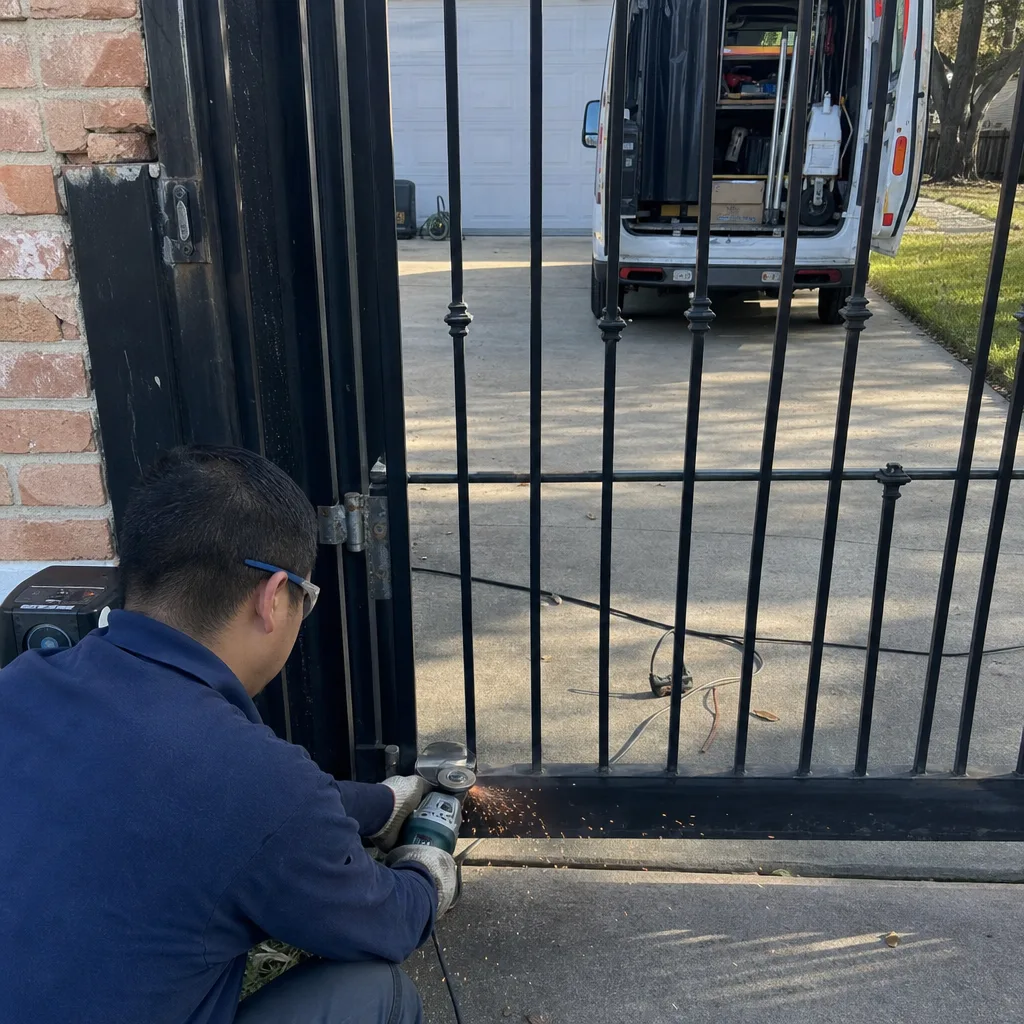
Two warning signs show up in Missouri City more than anywhere else in the Houston metro we’ve worked: post lean after wet season and rust streaking from weld seams after summer storms. Our Seasonal Gate Repair Care for Missouri City: Year-Round Homeowner’s Guide covers how to stay ahead of both.
Post lean. Missouri City sits on soils with high clay content that expand when saturated and contract when dry. After a wet spring, gate posts can move a measurable amount, often a quarter-inch to three-quarters of an inch at the top. The post usually doesn’t fail immediately. But the gate swing geometry changes, the latch alignment drifts, and the operator begins compensating for a gate that’s now fighting its own path. Over the following dry season, the soil contracts and the post may move again, or it may stay where it is. Each movement cycle loosens the post footing a little more. Homeowners who catch an early post lean pay $400 to $900 for a post reset and re-set. Homeowners who let two or three wet-dry cycles pass pay $1,500 to $3,000 for a full post replacement with new concrete.
Rust streaking. The Gulf Coast’s humidity and the salt content in rain near the coast mean weld seams on steel gates rust before powder coating elsewhere. The telltale sign is a thin brown-orange line running down from a welded joint after rain. That’s water working into a pinhole in the weld. If you catch the streak while it’s still a surface cosmetic issue, a local sand, primer, and touch-up runs $150 to $350. If the rust penetrates through the tubing, you’re looking at section replacement and re-welding, $600 to $1,800.
Both signs are visual. You don’t need tools to catch them. You need to look at your gate after heavy weather and actually register what you’re seeing.
What to Photograph When You Spot a Symptom
When you call a gate company after noticing a warning sign, the conversation usually starts with the company asking what you’re seeing. The estimate you get before anyone visits is only as good as the information you provide. Photographs close that gap.
What to shoot:
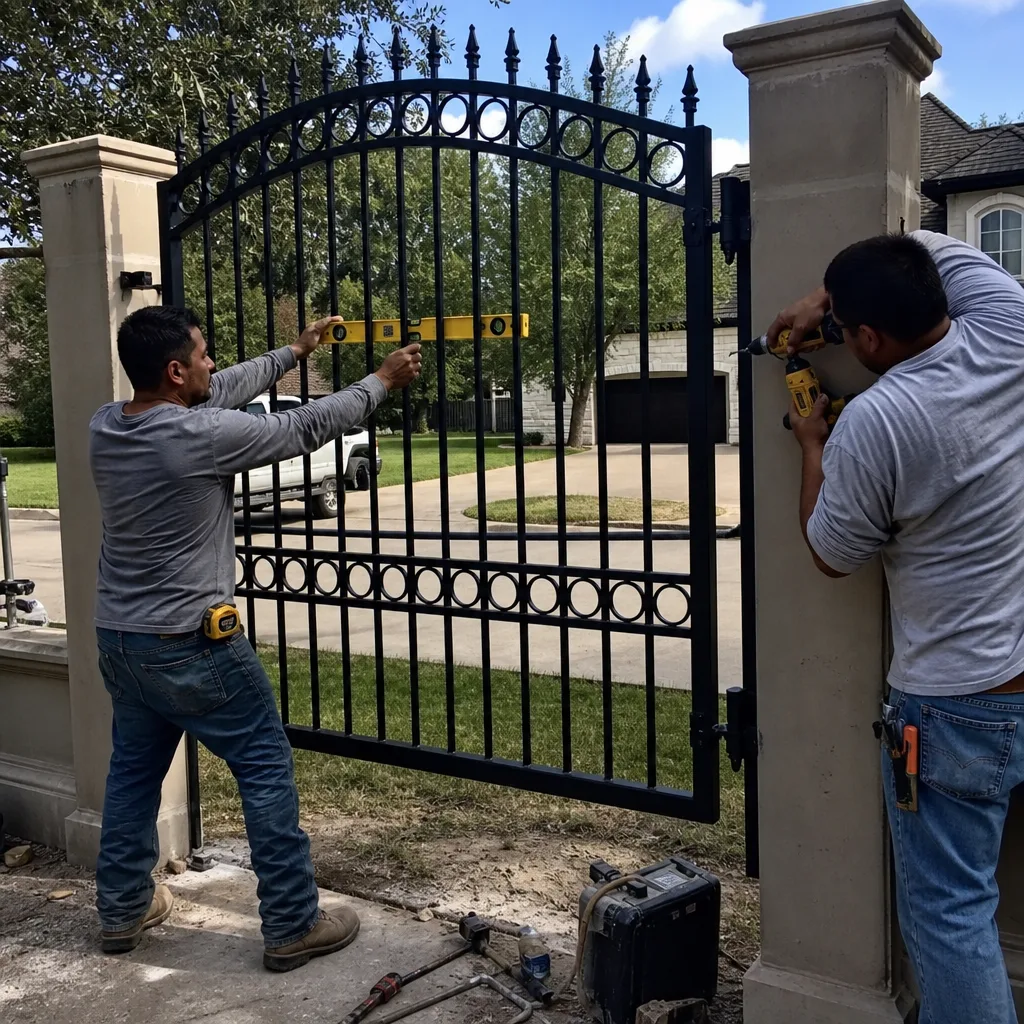
- The symptom itself. If the gate sags, photograph the gap difference between hinge side and latch side with a tape measure visible. If it pauses, note in writing where in the cycle the pause occurs.
- The operator label plate. The brand and model number tell the technician what parts are involved before they arrive. A Viking operator and a Ghost Controls operator use different parts. The label plate eliminates guesswork.
- The hinge and post area. Shoot wide enough to show the post, the hinge, and where the gate attaches. Close enough to show any visible wear, rust, or cracking.
- The full gate in both open and closed positions. Sometimes the symptom is in the geometry: a gate that’s square at rest but twisted under load, or a track that’s visibly out of line.
- Any rust or staining. Photograph rust streaks as soon as you notice them. The earlier they’re documented, the more likely the repair is a surface treatment rather than a metal replacement.
- Lubricating a grinding gate without diagnosing the grind first. Grease masks the sound. It doesn’t fix the worn gear or loose chain. You’re buying quiet weeks while the damage accelerates. Diagnose first, lubricate second.
- Adjusting the limit switches yourself on a modern operator. On many units the limit settings are stored in the control board’s memory, and moving the physical cams without re-zeroing makes the problem worse. If you don’t have the manual and a meter, call someone who does.
- Replacing the remote battery every month instead of testing the receiver. A draining battery every 30 days means the remote is transmitting constantly or the receiver is stuck energizing. That’s a board issue, not a battery issue.
- Ignoring a sagging gate because “the latch still catches.” The latch catches until it doesn’t. The day it stops catching is usually the day the hinge weld lets go, and the gate is now a hazard, not an inconvenience.
- Power-washing the operator housing. Missouri City’s humidity already stresses the seals. Pressure washing drives water into the wiring compartment and leads to corrosion inside the control board. Wipe it down. Don’t blast it.
- Waiting until the gate won’t open at all to call. A gate that shows warning signs is a repair call. A gate that won’t move is an emergency call. The same job costs more when you’re also paying for urgency.
We file this under Haven Standard Clause 4: evidence on every job. When we arrive, our technicians photograph what we found, what we adjusted, and what we installed. You get that photo log before we leave. It works both ways, and it means the next technician who touches your gate doesn’t have to rediscover anything. If you already have photos, the first visit is faster and the written price is firmer.
Common Mistakes to Avoid
When to Call a Professional
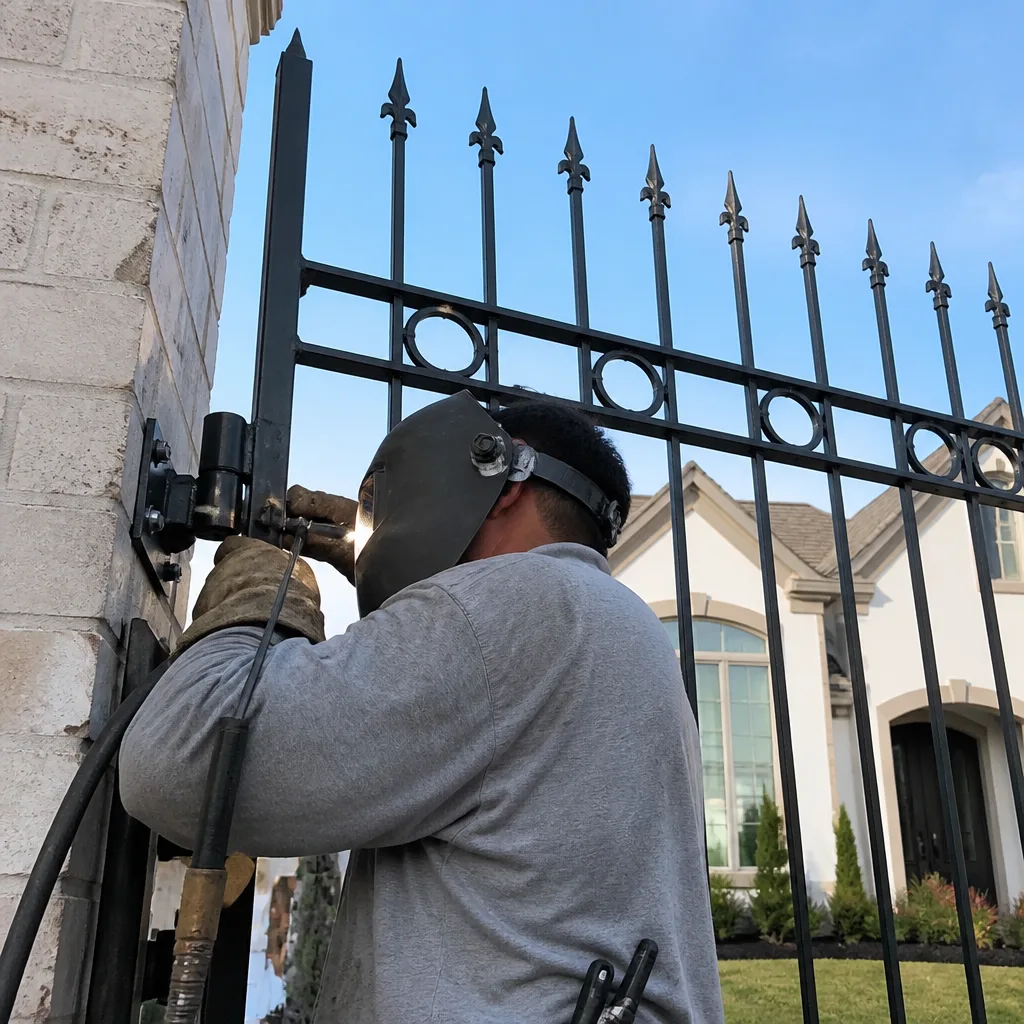
Call when the warning sign is present and measurable, not when the gate has already failed. A pause in close, a new grinding sound, a gate leaf that’s dropped half an inch, or a remote that only works from ten feet away are all repair calls-see How to Hire a Gate Repair Contractor in Missouri City: A Step-by-Step Guide for what to expect. A gate that won’t move at all, a gate that reversed onto a vehicle, or a post that’s visibly leaning more than an inch is an emergency call.
If you’re unsure whether what you’re seeing is a real warning sign or just an older gate being an older gate, send us photos or describe the symptom. We’ll tell you what we think it is and what it likely costs before you commit to anything. Vance Gate Repair Missouri City offers Gate Repair services with free estimates in Missouri City. Call (346) 253-1761 and a live person answers, day or night. The price we put in writing before any work starts is the price you pay. That’s Haven Standard Clause 1, and it applies to every job we take.
Frequently Asked Questions
Gate repair in Missouri City typically runs $150 to $450 for common mechanical and electrical fixes like limit-switch adjustments, hinge replacement, receiver board repair, and chain tensioning. Full operator motor replacement runs $700 to $1,600, and post resets run $400 to $900. Every price is written down before work starts, so you know the number before you approve anything. Call (346) 253-1761 for a free estimate on your specific gate.
The first signs of a failing gate motor are slower-than-normal travel, a pause mid-cycle, increased noise during operation, and the motor housing feeling hot to the touch after a full cycle. In Missouri City’s summer heat, motor failures come faster because the operator’s internal temperature starts higher. If you notice any of these, document what you see and call before the motor fails completely. The repair is cheaper and faster while the gate still runs.
Yes, in most cases. A sagging gate is usually a hinge, bearing, or post alignment issue rather than a gate frame failure. If the frame is intact, we replace the worn hinge or bearing and re-align the gate, typically $180 to $400. If the post has moved, we reset it for $400 to $900. Full gate replacement is only necessary when the frame itself is rusted through or welded joints have failed in multiple places.
Intermittent operation is usually a marginal connection, a degrading receiver board, or a failing capacitor rather than the remote battery. Test with the wired keypad if you have one: if the wired control works reliably, the problem is in the wireless path. If the wired control is also unreliable, the problem is in the operator or the gate mechanics. Either way, intermittent is a warning sign, not a quirk.
We service nine automation brands: LiftMaster, FAAC, BFT, Linear, Viking, Ghost Controls, DoorKing, Elite, and Mighty Mule. If your operator is one of these, we can diagnose and repair it without steering you toward a replacement you don’t need. If it’s a brand not on that list, we’ll tell you honestly whether we can source parts and what your options are.
A leaning post changes the swing geometry of the gate, putting load on hinges and the operator they weren’t designed to carry. The post usually doesn’t fall suddenly. It degrades gradually, and each wet-dry cycle in Missouri City soil loosens it further. Left alone long enough, the post moves far enough that the gate binds against the ground or the latch and stops operating entirely. Catch the lean early and the fix is a post reset. Miss it and you’re paying for new concrete and a full re-hang.
The Bottom Line
Gates fail on a schedule, and the schedule is readable weeks in advance. A pause on close, a grinding sound, a sagging leaf, a remote that works “most of the time”: each one maps to a specific component and a specific repair dollar amount. The homeowners who catch these signs early in Missouri City pay $150 to $450 and get years more service from their gate. The ones who wait pay $1,200 to $3,800 and get a gate that doesn’t move while they wait for parts. Look at your gate this week. Photograph what you see. If something’s off, call (346) 253-1761 and get a written price before anyone touches a tool.
Written by Adrian Vance, Owner at Vance Gate Repair Missouri City, serving Missouri City since 2014.