
Last updated September 20, 2026
Free on-site gate assessment - hinges, posts, and your LiftMaster or Nice gate operator checked before anything is quoted
The assessment is free and the quote is the invoice.
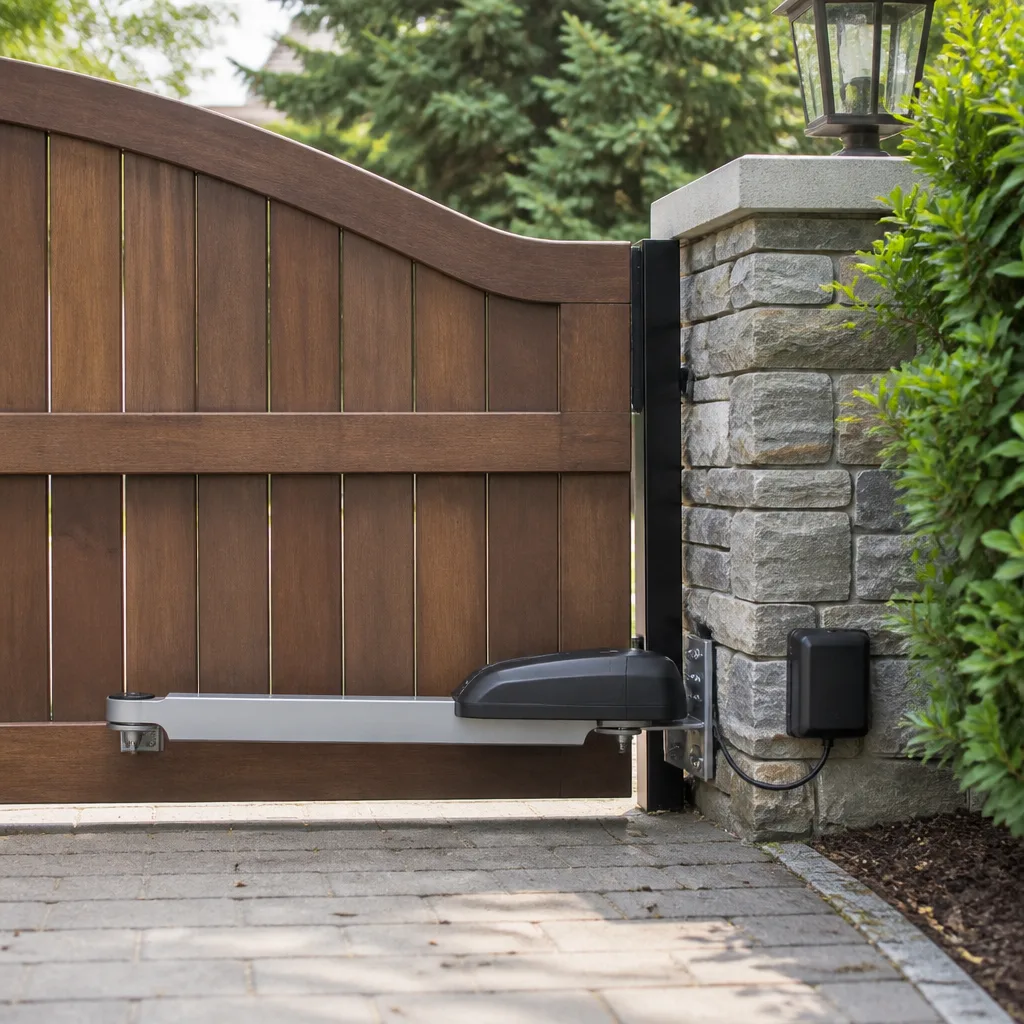
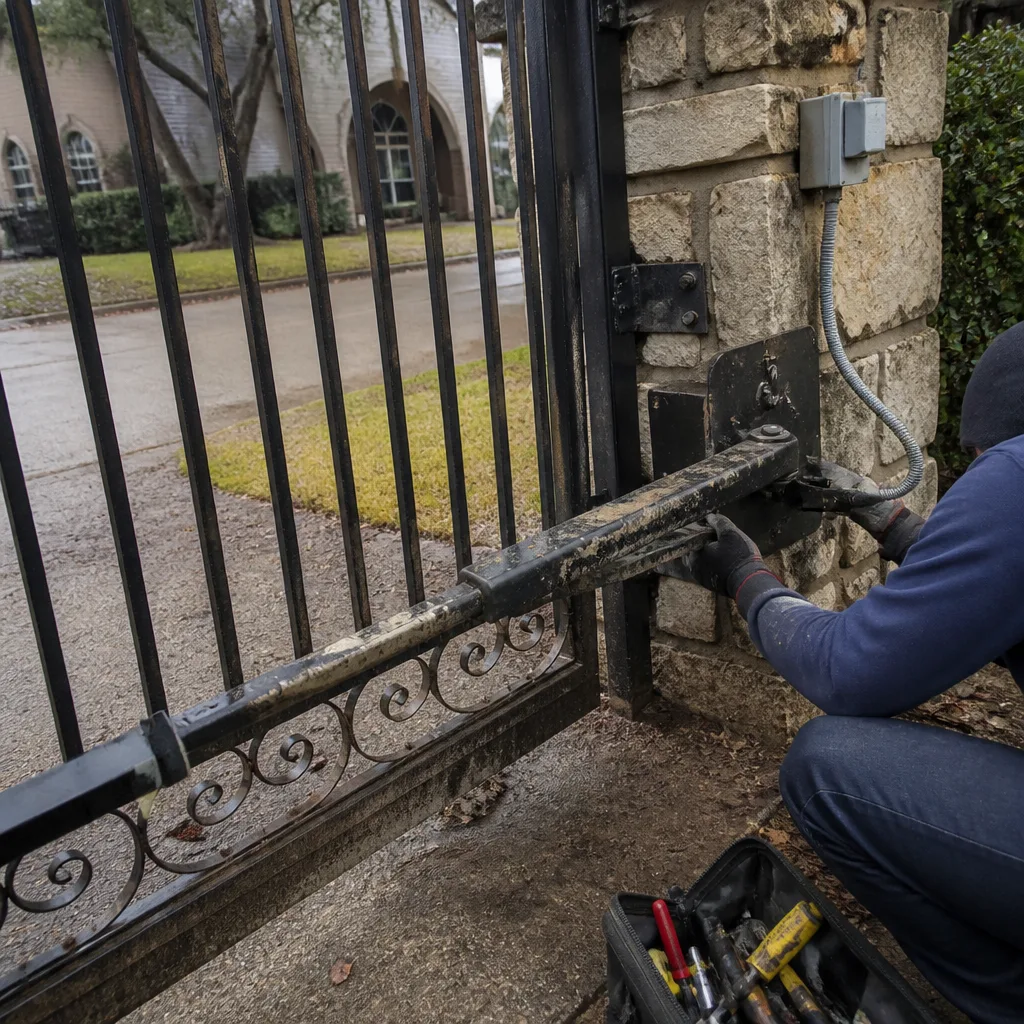 Before
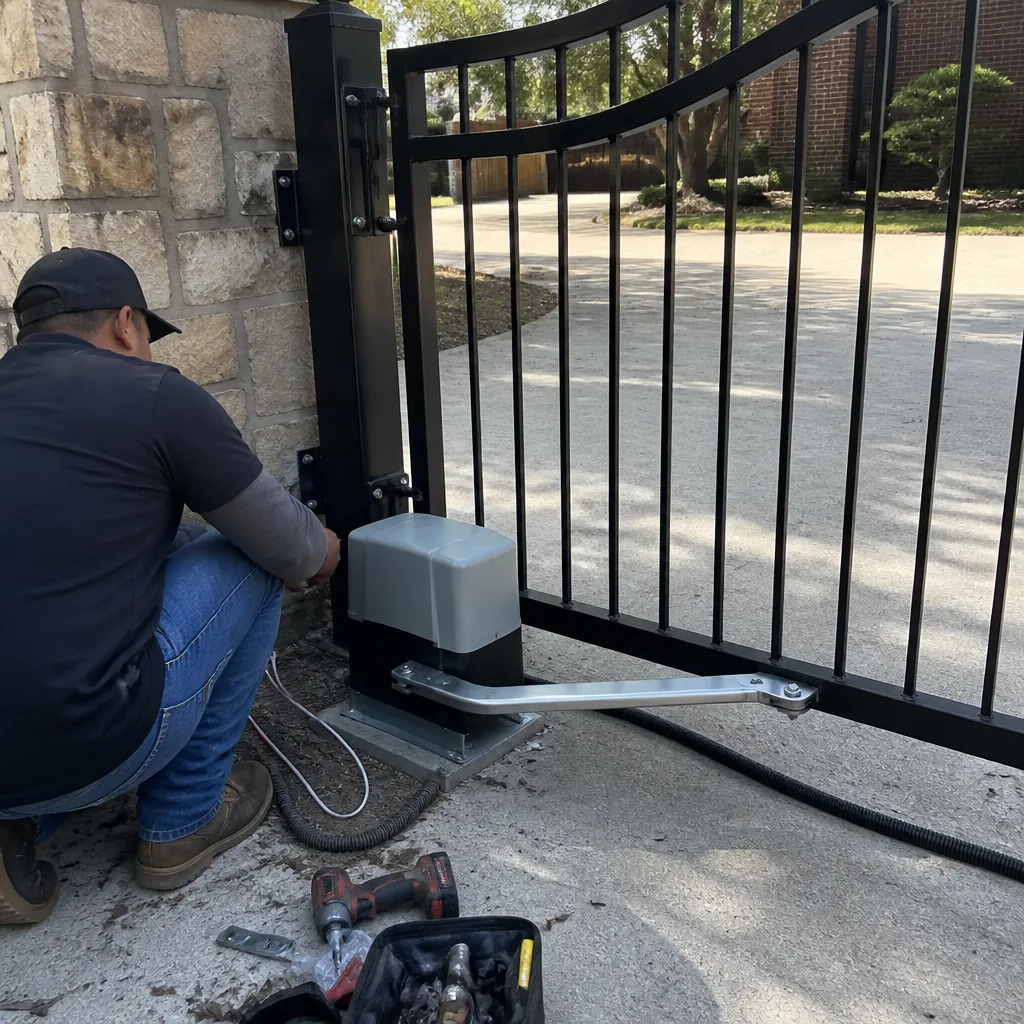 After
After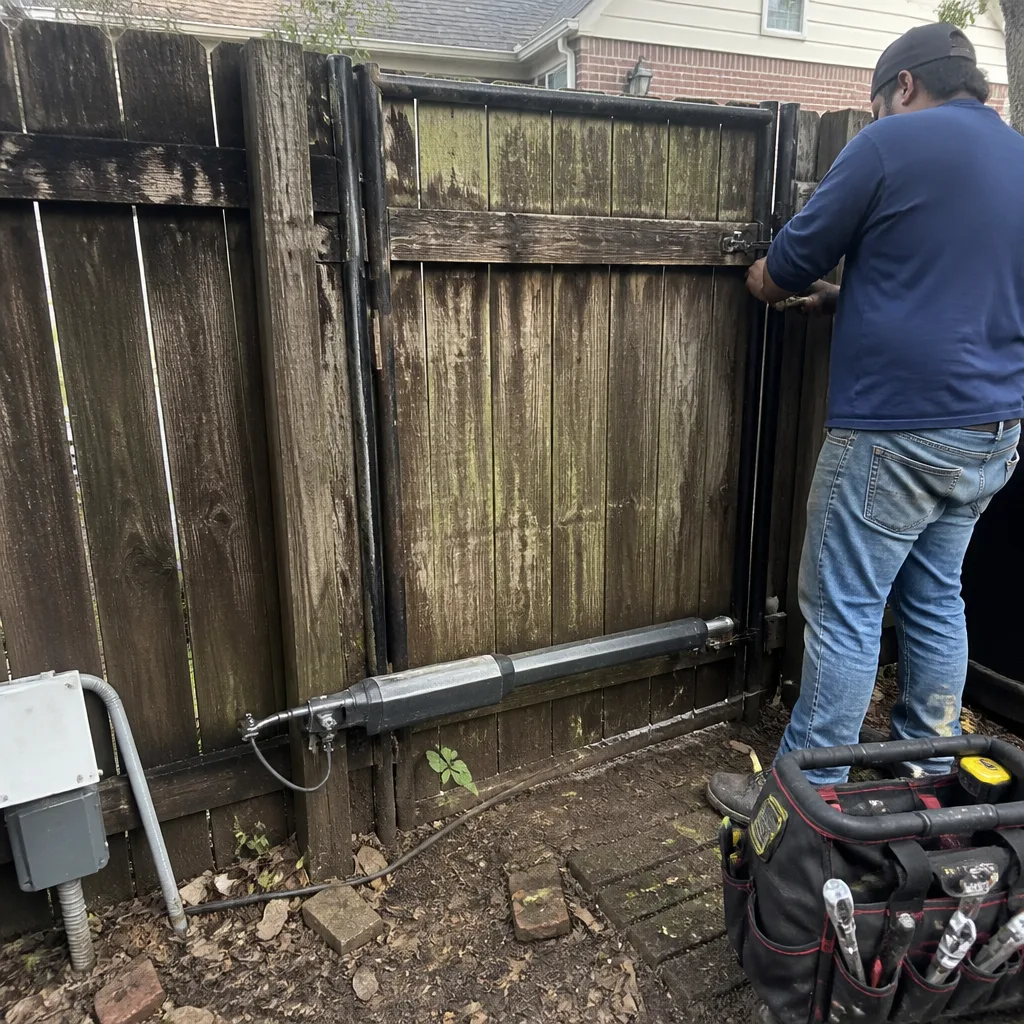 Before
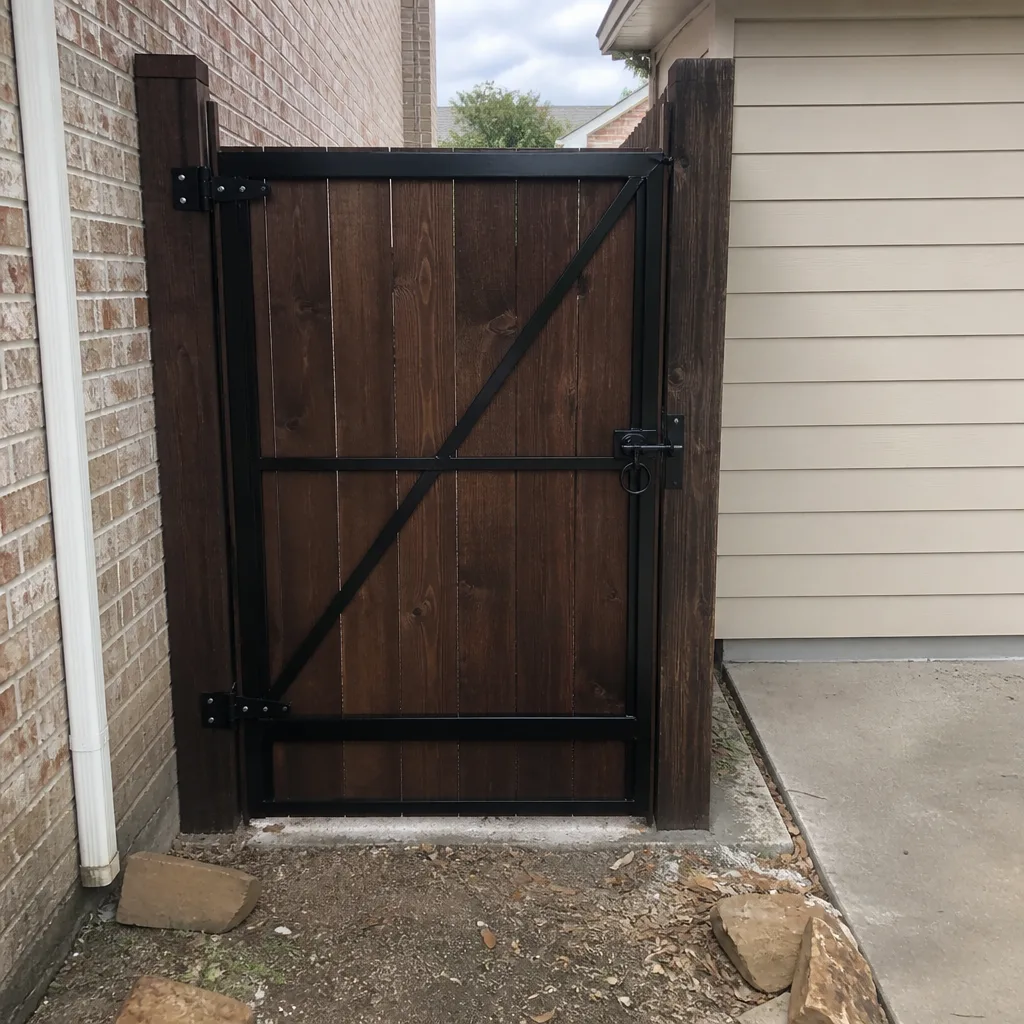 After
After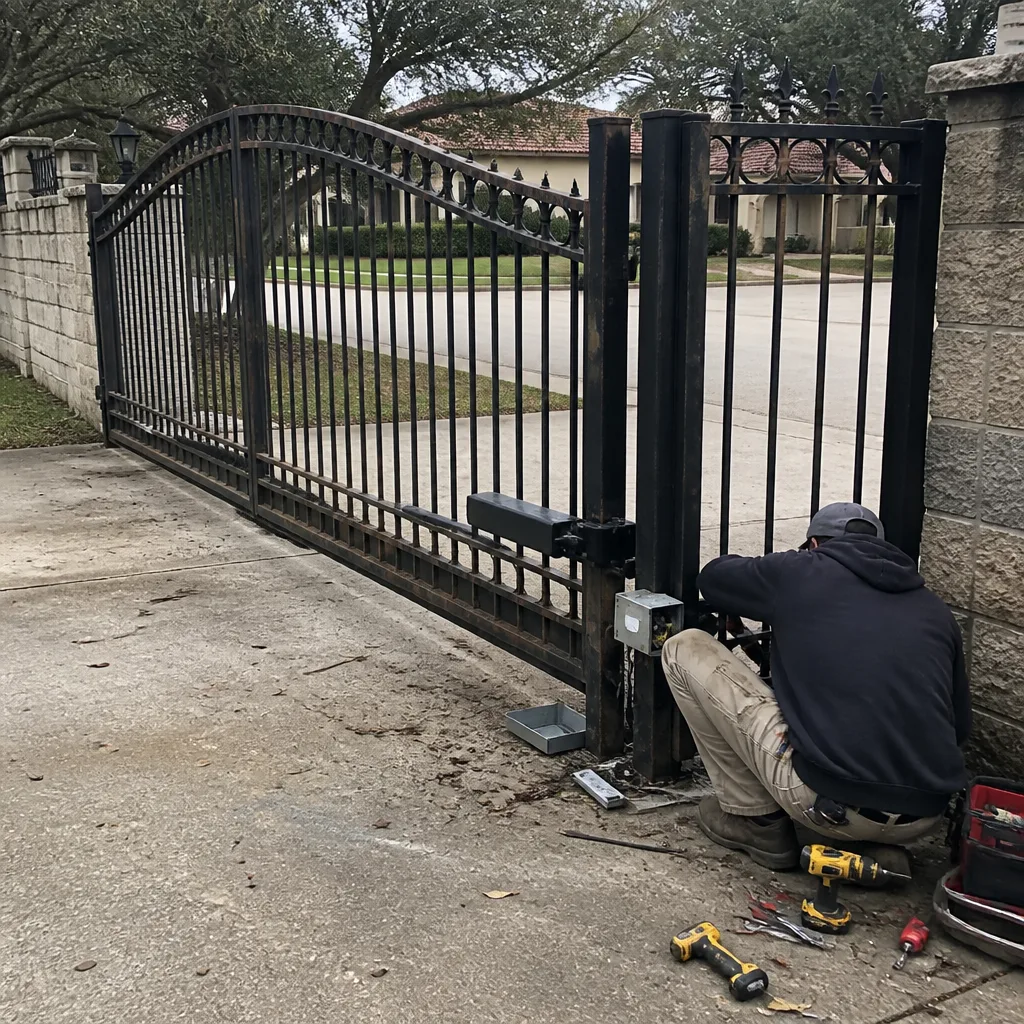 Before
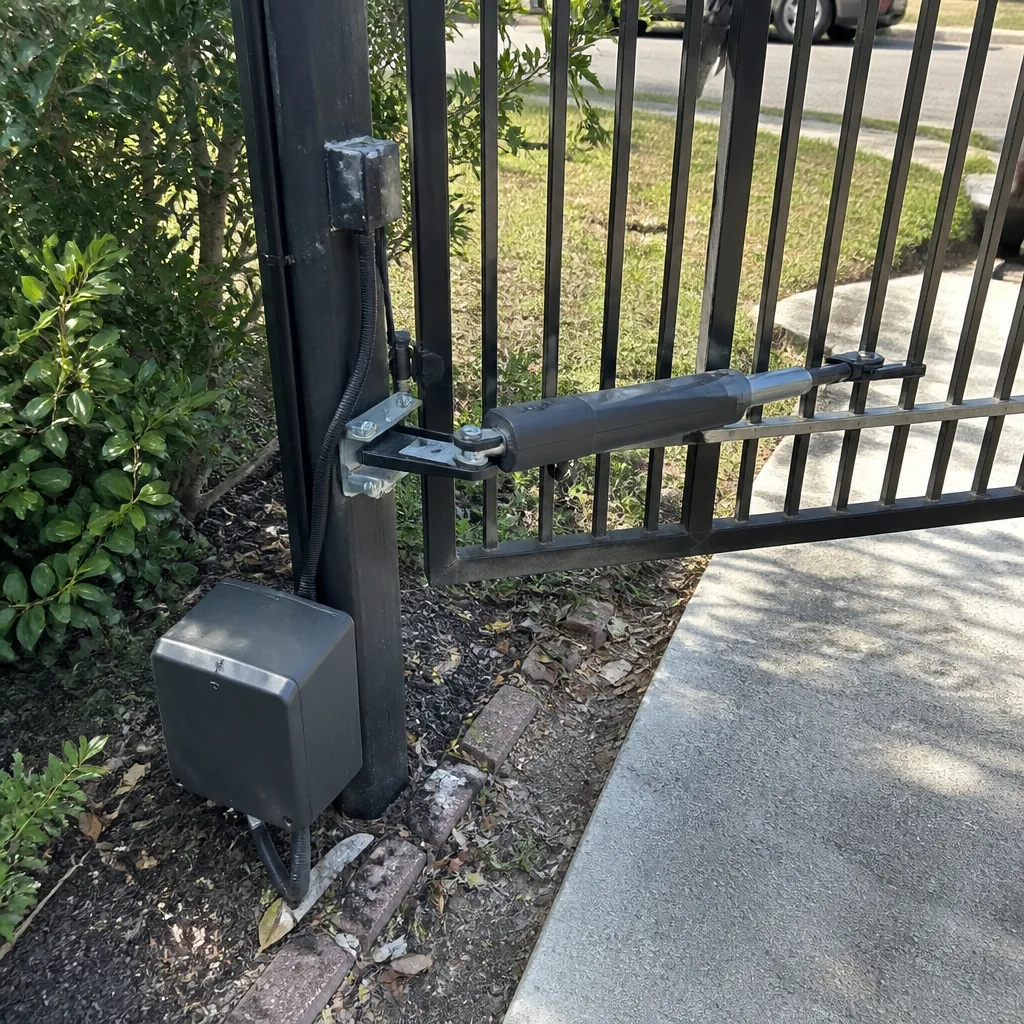 After
AfterThe Complete Guide to Gate Repair in Missouri City
Here’s a number most Missouri City homeowners never hear: roughly seven out of ten gate repairs we perform involve a fault that was misdiagnosed on a previous service call, or never diagnosed at all. The gate failed, someone came out, the gate worked for a few months, and then the same underlying problem resurfaced with a different symptom. This guide breaks down why that happens. You’ll learn how the mechanical, electrical, and control systems in your gate interact, which failure patterns are common in Missouri City specifically, and what a thorough repair actually looks like when it’s done right. No brand cheerleading. Just the way these systems fail and what fixing them properly costs.
Quick Answer
Gate repair in Missouri City typically costs between $185 and $650 for most mechanical and electrical fixes, while swing-gate motor replacements run $950 to $2,400 depending on the brand and whether the mounting bracket survived the failure. For a detailed breakdown, see our Gate Repair Cost Breakdown: The Missouri City Homeowner’s Reference for 2026. Most repairs take 1 to 3 hours on site, and the single most important factor in whether the repair lasts is whether the technician documented what they found and what they changed. A written scope and photo record before any work begins is the difference between fixing a gate once and paying for the same fault twice.
Table of Contents
- The Three Systems Behind Every Gate Failure
- Why Missouri City Soil Causes Gate Failures That Look Electrical
- Swing Gates vs. Slide Gates: Different Machines, Different Failures
- What Gate Repair Actually Costs in Missouri City
- The Written Scope: Why It Prevents Repeat Repairs
- What a Complete Repair Record Should Contain
- Working With What’s Already on the Property: Brand Compatibility
- Common Mistakes to Avoid
- When to Call a Professional
- Frequently Asked Questions
- The Bottom Line
BeforeAfterThe Three Systems Behind Every Gate Failure
Every automated gate, whether it swings or slides, runs on three overlapping systems: mechanical, electrical, and control logic. The mechanical system is the physical structure: hinges, wheels, track, posts, the gate leaf itself. The electrical system delivers power: the motor, capacitor, wiring, limit switches, photo-eyes. The control logic is the brain: the circuit board, receiver, keypad, and any vehicle-detection loops. Here’s the part most homeowners never hear from a technician: a fault in one system will often present as a symptom in another.
A gate that stops halfway and reverses? Most people assume the motor is weak. In our experience across Missouri City, that exact symptom is frequently a mechanical bind, a hinge or wheel dragging because a post has shifted, which then overdraws the motor and trips a thermal cutoff. The electrical system is reacting to a mechanical problem. The technician who replaces the motor without addressing the bind has fixed the symptom. The gate will fail again, often within a year.
The opposite happens too. A gate that visibly drags on the track might get greased and adjusted repeatedly, when the actual fault is a failing capacitor that no longer delivers enough starting torque. The control board then sends the motor a run command, the motor can’t execute it, and the board errors out. Three systems, one observable problem. A good diagnostic follows the chain, not just the symptom.
How the three systems interact:
- Mechanical drag forces the motor to work harder, which overheats windings and eventually burns the capacitor.
- Electrical degradation (low voltage, corroded connections) can cause the control board to misread limit-switch positions and stop the gate in the wrong place.
- Control-logic malfunctions (a bad receiver, a corrupted board setting) can command the motor to reverse at the wrong moment, which over time stresses hinges and wheel assemblies.
This is why a technician who only knows how to replace parts will keep replacing parts. The job of a proper repair is to identify which system initiated the failure and which systems have been damaged downstream. That’s the difference between a $200 fix that lasts five years and a $900 repair that buys you eleven months.
Why Missouri City Soil Causes Gate Failures That Look Electrical
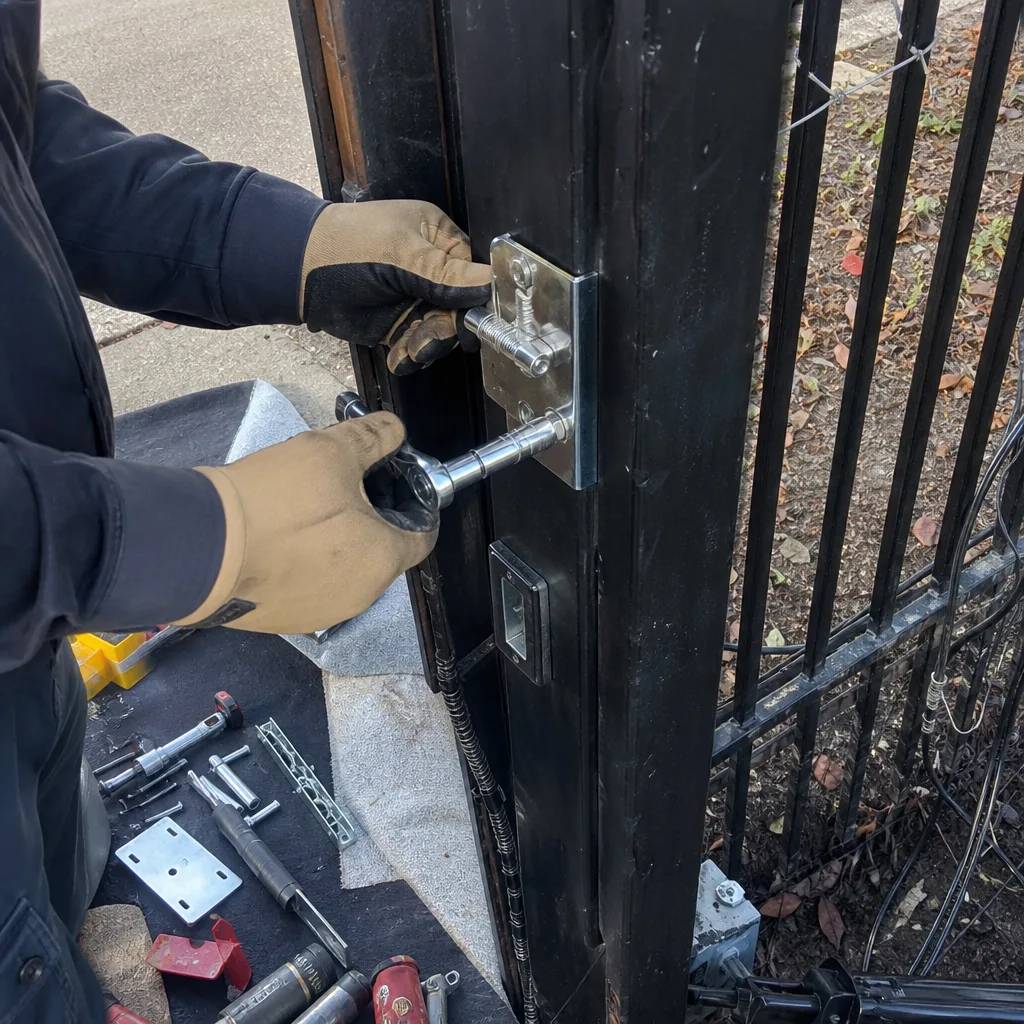
Missouri City sits on a particular kind of problem: expansive clay soil. The same gumbo clay that heaves driveways and cracks foundations also moves gate posts. During wet seasons the clay swells; during dry stretches it contracts and pulls away from the concrete footing. Over a few years, a gate post that was poured dead-plumb can drift several degrees out of alignment. Homeowners in communities like Sienna, Riverstone, and Lake Olympia deal with this constantly, even on newer construction.
Here’s why this matters for gate repair: a post that has shifted half an inch changes the entire geometry of the gate. On a swing gate, the hinges no longer share the load evenly. The gate sags. The latch no longer lines up with the receiver. The motor, still trying to do its job, now pushes against resistance that wasn’t there when it was installed. Eventually the motor draws more current than the board expects, and the board trips an overload error. The homeowner sees a flashing light on the control board and assumes the electronics failed. The electronics were the last link in the chain.
On a slide gate, the problem shows up differently. A shifted post means the track is no longer level from end to end. The gate will roll smoothly for fifteen feet, then slow as it climbs a subtle incline created by the heave. The motor’s limit switch, which was set for the original travel distance, now cuts power slightly too early or slightly too late. The gate bounces. The homeowner calls about a “motor problem.”
What tells us the soil is the root cause:
- The gate worked reliably for years, then gradually developed a bind or a sag with no obvious impact event.
- Visible gaps appear between the post base and the surrounding concrete or stone.
- The gate leaf no longer sits level, measured from the top rail.
- The problem worsens after heavy rain and improves slightly during dry spells.
The fix is mechanical: reset the post or re-shim the hinge plates, then re-level the gate leaf, then re-set the travel limits and test the current draw on the motor. If the motor and board are still healthy, that’s the end of it. If the overload has already damaged the capacitor or the board, those get replaced too, but only after the mechanical cause is corrected. Replacing the electronics without addressing the post guarantees the same failure returns.
Swing Gates vs. Slide Gates: Different Machines, Different Failures
Missouri City has a mix of both styles, though swing gates dominate in the residential subdivisions with wider lots and longer driveways, while slide gates appear more often on corner lots and properties with steep driveway grades where a swing gate would drag. Knowing which type you have changes what you should watch for.
Swing Gates
Swing gates are simpler in concept but harder on their components. The entire weight of the gate leaf hangs from two or three hinge points, and every open-close cycle applies torque to the hinges, the post, and the operator arm. The most common failure points, in the order we typically encounter them across Missouri City:
- Hinge wear and sag: The gate leaf drops over time, which misaligns the latch and stresses the operator arm. This is the single most common swing-gate repair we perform.
- Operator arm or bracket failure: When the gate sags, the operator arm no longer moves in a straight line. The bracket bolts loosen, the arm bends, or the internal gears strip.
- Limit-switch drift: The gate stops a few degrees short of closed, or over-travels and bounces back. This is often a control-system adjustment, not a motor replacement.
- Photo-eye misalignment: The infrared safety beam that stops the gate if anything crosses the path gets knocked out of alignment by weather, landscaping, or the post shift mentioned above. The symptom is a gate that reverses for no visible reason.
Slide Gates
Slide gates carry their weight on wheels or a cantilever system rather than hinges, which means they fail differently. The tradeoff is that the track or rail becomes the critical component.
- Track obstruction and wear: Dirt, gravel, and landscaping debris accumulate in the track. In Missouri City’s wet springs, this becomes a grinding paste that wears wheels and rollers prematurely.
- Wheel or roller bearing failure: A single seized wheel can drag the gate out of alignment and overload the motor. This failure often sounds like a grinding or squealing noise that homeowners report weeks before the gate actually stops.
- Drive-chain or belt stretch: Slide gates that use chain or belt drives need tension adjustment as the chain stretches. When the chain slips, the gate stutters or stops mid-travel.
- End-stop and limit failure: If the gate’s mechanical end-stops are damaged, the gate can over-travel and derail. The limit switches then command the motor to stop in the wrong position.
One point worth making clearly: swing-gate problems are often blamed on the motor when they’re actually hinge or post problems. Slide-gate problems are often blamed on the track when the actual fault is a failing wheel bearing that’s been dragging for months. A technician who works on both types regularly can usually isolate the cause within the first twenty minutes on site. For a deeper look at what a full repair visit covers, see our Gate Repair in Missouri City page.
What Gate Repair Actually Costs in Missouri City
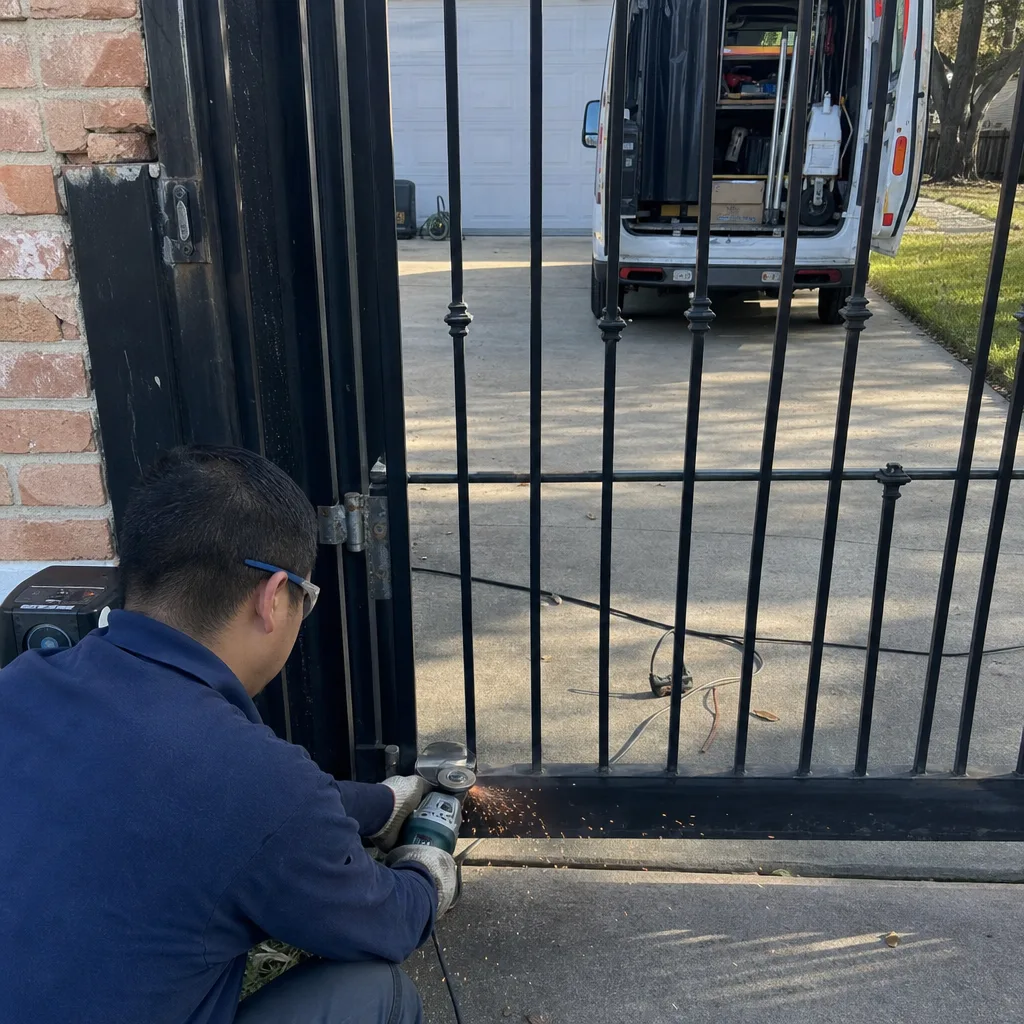
We publish these ranges because our customers asked for them, and because a written price before work starts is the entire point of our Gate Repair services. These numbers reflect what residential gate repair realistically costs in the Missouri City market as of the current year. They are not bids, because every gate is different, but they will tell you whether a quote you’re holding is reasonable.
| Repair Type | Typical Range | What Affects the Price |
|---|---|---|
| Hinge replacement and gate re-level | $185-$420 | Gate weight, number of hinges, post condition |
| Photo-eye realignment or replacement | $95-$260 | Wire condition, mounting hardware |
| Limit-switch adjustment and travel reset | $120-$240 | Control board type, access to the operator |
| Capacitor replacement | $140-$310 | Motor brand, capacitor rating |
| Control board replacement | $275-$750 | Brand, board generation, programming required |
| Swing-gate motor/operator replacement | $950-$2,400 | Brand, horsepower, arm bracket condition |
| Slide-gate wheel or roller replacement | $220-$580 | Wheel diameter, axle condition, track state |
| Post reset or re-shim | $300-$900 | Post size, concrete condition, gate weight |
A few notes on these numbers. First, the low end assumes the surrounding components are healthy. A hinge replacement on a gate with a shifted post is a partial fix; the price will be higher because the post work is part of the job. Second, operator replacement prices are heavily brand-dependent. A basic Mighty Mule residential operator costs less than a LiftMaster or FAAC unit, and the existing mounting hardware may or may not be reusable. Third, we never do work without a written price delivered before anything is touched. If a company won’t commit to a number in writing, the number will change after the work is done. That’s not a pricing policy, it’s a business practice, and Missouri City homeowners have learned to ask for it.
For a full breakdown of installation-related costs, visit our Gate Installation in Missouri City guide.
The Written Scope: Why It Prevents Repeat Repairs
The most expensive gate repair in Missouri City is the one you pay for twice. Here’s how it happens: a homeowner calls a company, the technician arrives, diagnoses the problem verbally, and fixes whatever is most visibly wrong. The homeowner pays. The technician leaves. Three months later the gate fails again, but now the symptom is different, so a different technician arrives from the same company or a new one, and the diagnostic process starts over from zero. Nobody has any record of what was done the first time. The homeowner pays again to rediscover the same underlying fault.
A written scope breaks this cycle before it starts. A written scope is a document that states, in plain language, what the technician found, what will be repaired, what parts will be used, and what the total price is. It’s delivered before any work begins, not after. Here’s what that document does:
- It locks the price. The number on the page is the number you pay, unless additional work is discovered, diagnosed, and approved by you in writing before it’s performed.
- It creates accountability. If the gate fails again within the warranty period, there’s a record of exactly what was replaced and what was checked. The technician can’t blame a different component without the documentation to support that claim.
- It transfers knowledge. When you own a written record of the repair, the next technician doesn’t have to guess. They can see what was already ruled out. This matters enormously in a trade where documentation is the exception rather than the norm.
We call this the Haven Standard, and it’s been the operating rule at Vance Gate Repair since Adrian Vance founded the company in 2014. For more guides & resources on gate maintenance and repair, visit our blog. Clause 1 is simple: have it in writing. The price, the scope, the parts, the labor. If a gate company won’t write it down, walk away.
What a Complete Repair Record Should Contain
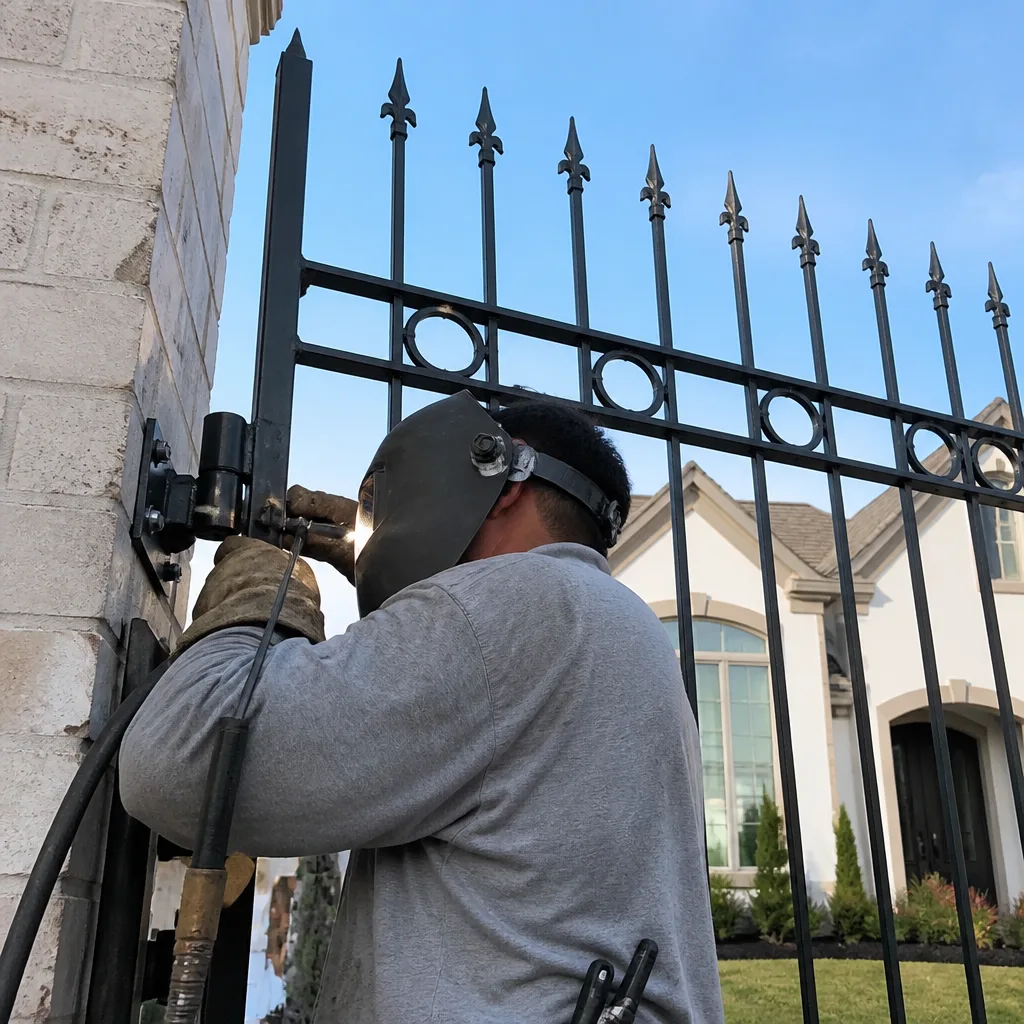
Most gate repair receipts in Missouri City contain one line: “gate repair, $400.” That’s not a record. That’s a receipt with no diagnostic value. A complete repair record is the difference between a technician who documents and a technician who guesses. Here’s what it should contain, every time:
- Photographs: Before and after photos of the gate, the operator, the control board, and the specific components that were replaced or adjusted. If the hinge was worn, there should be a photo of the worn hinge. If the limit switch was reset, there should be a photo of the new setting.
- Wiring diagram notes: Any electrical change gets documented. What wire was moved, what terminal it now occupies, and why. This is the single most useful piece of information for future diagnostics, and the single most frequently missing piece in residential gate work.
- Limit-switch readings: The actual numbers. Not “the limit was off” but “the limit switch was set 12 degrees past travel; we reset it and photographed the new position.” This turns a vague adjustment into a measurable fact.
- Part numbers: The exact part installed. “Replaced capacitor” means nothing. “Replaced capacitor, Emerson 40µF 370V, p/n 43-251865-11” means a future technician can source the right part in five minutes instead of disassembling the operator to identify it.
- Current draw readings: A healthy motor draws a known amperage range. A motor that’s dragging a bind draws more. Documenting the reading at time of service provides a baseline for future comparison.
- Photo log left with the homeowner: Not filed in a company database where the homeowner can’t access it. Handed over, emailed, or otherwise delivered. You own the record of what was done to your property.
This is the documentation habit Adrian Vance developed on commercial access-control sites starting in 2014, and it carries over to every residential driveway gate we touch. The customer pays for the repair; the record is part of the repair, not an upgrade. If a company charges extra for photos of their own work, they’re telling you something about how they operate.
Working With What’s Already on the Property: Brand Compatibility
There are nine major gate-automation brands on the market, and Missouri City properties carry all of them: LiftMaster, FAAC, BFT, Linear, Viking, Ghost Controls, DoorKing, Elite, and Mighty Mule. Some are residential-focused, some commercial-grade, and some span both. The difference matters because the operator on your gate dictates the parts availability, the diagnostic approach, and the programming procedure.
A homeowner with a failing LiftMaster operator doesn’t need a company that specializes in LiftMaster. They need a company that can diagnose a LiftMaster correctly and replace it if replacement is truly necessary. The same applies to a FAAC hydraulic operator on a heavy ornamental gate or an Elite slide-gate operator on a commercial-grade residential installation. The skill isn’t in knowing one brand deeply; it’s in understanding how all of them behave under load, how their limit-setting procedures differ, and when a board failure is really a wiring failure.
We service all nine brands and never steer a customer toward replacing an operator that can be repaired. If the motor windings are healthy and the board is intact, the fix is a fix. The brand on the label doesn’t change the physics of the failure. What changes is the parts cost, the availability, and sometimes the programming labor. A Mighty Mule operator is generally inexpensive to repair and simple to reset. A LiftMaster or FAAC unit costs more for parts, but the repair logic is the same: identify the initiating fault, correct it, then address any downstream damage. For more detail on operator-specific repairs, see our Gate Motor & Opener in Missouri City page.
Common Mistakes to Avoid
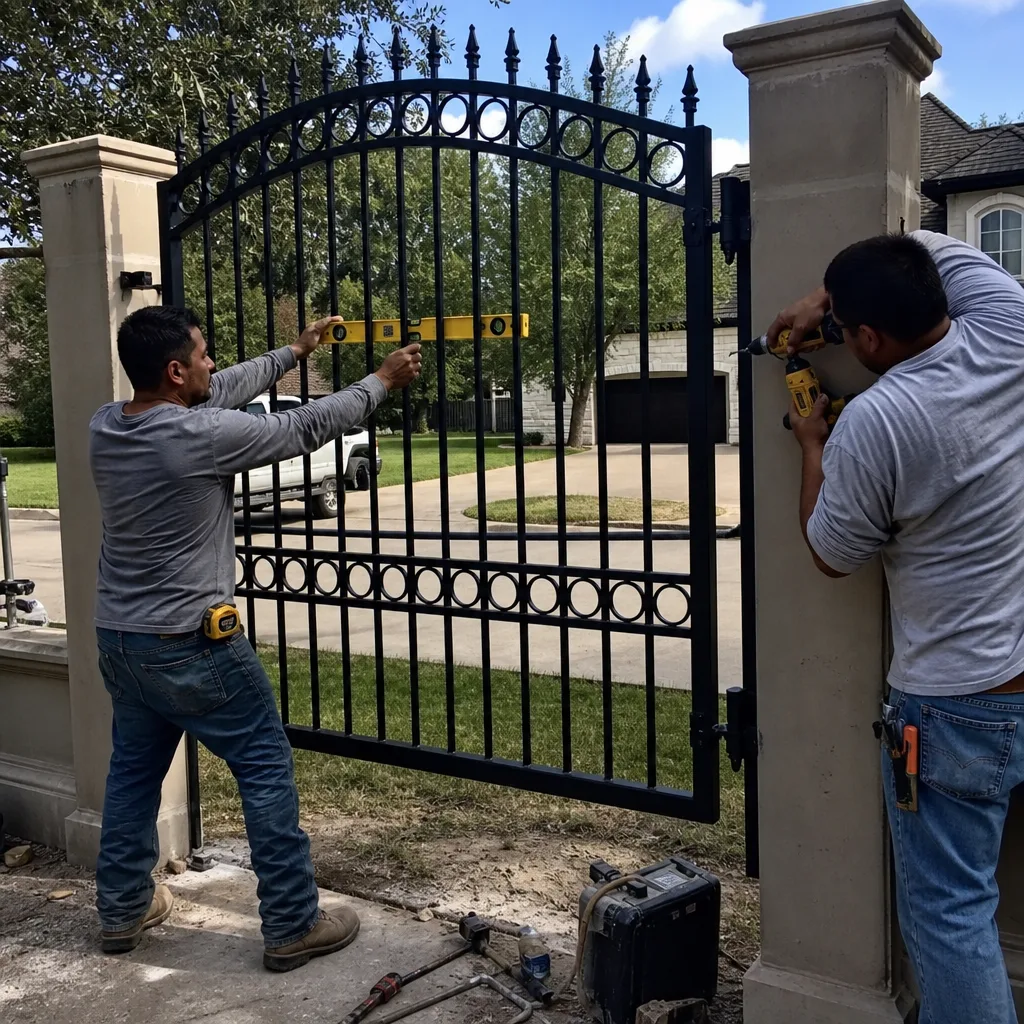
- Accepting a verbal estimate with no written scope. A verbal number isn’t a contract and isn’t a diagnostic record. If it’s not in writing, it didn’t happen. Demand the price on paper before any tool is picked up.
- Replacing the motor before checking the post alignment. In Missouri City’s clay soil, a shifted post is the root cause of many “motor failures.” A new motor on a misaligned gate will burn out the same way the old one did.
- Ignoring a slow-developing sag or drag. Gates rarely fail suddenly. They sag, they slow, they make a new noise. Every month of ignored mechanical wear adds stress to the electrical and control systems. A $200 hinge fix becomes a $1,500 operator replacement when deferred long enough.
- Letting a technician leave without a photo record. If there are no photos of what was found and what was changed, the next repair starts from zero. You’ve paid for information; make sure you receive it.
- Assuming a gate that reverses for no reason has a “ghost” problem. It’s almost always a photo-eye misalignment, a limit-switch drift, or a control-board setting issue. All three are diagnosable. None of them require a new gate.
- Mixing aftermarket parts without checking compatibility. A generic capacitor or limit switch that “fits” may not match the operator’s electrical specs. The cheap part can destroy the expensive board downstream.
- Putting off a repair because the gate still opens manually. A gate that’s stuck open is a security gap and a safety liability, especially for Missouri City homeowners with pools or young children. The repair doesn’t get cheaper by waiting.
When to Call a Professional
Some gate repairs are genuinely simple: tightening a loose hinge bolt, clearing debris from a slide track, replacing a keypad battery. But the moment a gate stops mid-travel, reverses unexpectedly, makes a grinding noise, or trips a breaker, you’re beyond the homeowner maintenance zone. Gate operators contain high-tension components and line-voltage electrical connections. A swing-gate arm under tension can release forcefully if disassembled incorrectly, and a slide gate that derails can weigh hundreds of pounds. If you’re not certain what’s wrong, the safest move is a diagnostic visit from a trained technician. Vance Gate Repair Missouri City offers free estimates in Missouri City, and every visit includes a written scope and photo record before any work begins. Call (346) 253-1761 and a live person will answer, at any hour.
Frequently Asked Questions
Most gate repairs in Missouri City run between $185 and $650, with operator replacements ranging from $950 to $2,400 depending on the brand and the condition of the mounting hardware. The exact price depends on which system has failed and whether downstream damage has occurred. We deliver a written price before any work starts, so the number you’re quoted is the number you pay. Call (346) 253-1761 for a free estimate.
The most common causes are a misaligned photo-eye, a drifted limit switch, or a control board that has lost its travel programming. In Missouri City, post shift from clay soil can also change the gate’s stopping position, which confuses the board into issuing a reverse command. A diagnostic visit will identify which system is responsible in the first 20 minutes.
Most mechanical and electrical repairs are same-day jobs, because the parts are common and the diagnostic time is short. Operator replacements may require ordering a specific brand or generation, especially for LiftMaster, FAAC, or Elite units, but the initial diagnostic and written scope happen on the first visit. We’ll tell you before we arrive what to expect.
We service nine major gate-automation brands: LiftMaster, FAAC, BFT, Linear, Viking, Ghost Controls, DoorKing, Elite, and Mighty Mule. We don’t steer customers toward replacing an operator simply because it’s a brand we see less often, and we don’t push replacement when a repair will outlast the remaining life of the operator.
A proper repair includes a written price before work starts, a diagnostic explanation of which system failed and why, photographic documentation of what was found and what was changed, limit-switch readings where applicable, and a written record of part numbers installed. If a technician can’t provide all of those, they’re not documenting their work.
Look for a visible gap between the post base and the surrounding concrete, a gate leaf that no longer sits level, or a bind that worsens after rain. These are signs of post shift from Missouri City’s expansive clay soil. A technician can confirm it by measuring gate level and motor current draw. Call (346) 253-1761 and we’ll check it before recommending any motor work.
The Bottom Line
Gate repair in Missouri City is a systems problem, not a parts problem. The mechanical, electrical, and control-logic systems in your gate fail in overlapping ways, and the technician who treats them as separate issues will leave you with a gate that works temporarily and fails permanently. The soil under Missouri City makes this worse by shifting posts and misaligning gates in ways that masquerade as electrical faults. The defense is documentation: a written scope, a written price, and a photo record of every adjustment. That’s what turns a repair into a durable fix. If you’re in Missouri City and your gate is failing, start with a diagnostic visit and a written estimate. Call (346) 253-1761 or visit our Vance Gate Repair Missouri City home page to schedule service.
Written by Adrian Vance, Owner at Vance Gate Repair Missouri City, serving Missouri City since 2014.